





Real Cash Online Pokies in Australia: Bitcoin Explained
 Available in AU
Bitcoin changes how an account may be funded, while each pokie’s reels, rules and credit display remain tied to that game.

- Bitcoin Pokies Are Slot Games, Not a Separate Kind of Casino
- Free Play and Real-Money Play Are Different Modes
- Casino Apps: Account Setup Is Only the First Step
- Real-Money Pokies and the Australian Legal Boundary
- Bitcoin Deposits: Addresses, Amounts and Recognition Delays
- What “Fast and Low-Cost” Bitcoin Payments Actually Mean
- Free-Play Claims, Bonus Contributions and Bet Limits
- Playing Without a Deposit: What Free Play Does—and Does Not—Establish
- Bitcoin Withdrawals: Requests, Queues and Stuck Payments
- Verification Before the First Payout
Bitcoin Pokies Are Slot Games, Not a Separate Kind of Casino
“Bitcoin pokies” describes a payment feature, not a different category of game. The term refers to digital slot machines that accept Bitcoin as a form of payment. The underlying game remains a pokie: play takes place through its own reels, symbols and rules. Bitcoin changes how value may be handled around the game; it does not turn the game into a new kind of machine.
That distinction matters because casino language often blends together several separate things: the game, its credit display and the payment method. In my experience, that blending can make a familiar slot interface sound more unusual than it is. A Bitcoin label may describe how an account is funded, but it does not tell the player how a particular game represents its stakes or outcomes.
The credit display belongs to the game itself. Credits shown in one pokie are not a universal balance shared by every other game. A specialist review describes the Bitcoin value attached to those credits as dependent on the individual game and the prevailing BTC price. That is a source-specific observation, not a fixed rule that can be assumed to apply across every title or operator. The practical point is narrower: a credit is a game-level unit, and its relationship to Bitcoin needs to be understood in that context.
This is why a number on a game screen should not automatically be read as a Bitcoin amount. It may be a count of credits used by that game’s own interface. The apparent simplicity of a credit balance can hide a conversion question: what amount of Bitcoin, if any, does the displayed credit represent at that point? The answer is not contained in the word “credit” alone.
A useful mental separation is:
- Pokie: the digital slot game and the rules built into it.
- Game credits: the units displayed and used within that particular game.
- Bitcoin: the payment form associated with the casino account or transaction.
Those layers can interact, but they are not interchangeable. A credit balance in one game should not be assumed to carry over as the same number of credits in another. Nor does the Bitcoin label establish that every game uses identical credit values. The game’s own presentation and the operator’s stated terms determine how the figures connect.
The phrase can also create a misleading impression that Bitcoin itself is part of the game mechanics. In the basic meaning, it is not. A pokie does not become a blockchain game merely because Bitcoin is accepted for payment. The reels, symbols and game rules remain those of a digital slot machine; the payment method sits outside that game logic. This is a terminology distinction, not a claim about the quality or suitability of any particular service.
I have seen payment language do more work than it should. “Bitcoin pokie” can sound like a special product with a unique format, when the plain description is more modest: a digital slot game in a setting that accepts Bitcoin. That wording says something about payment, but little about the game’s mechanics, its credit scale or the way a balance is shown. Those details cannot be inferred from the label.
The same caution applies to descriptions of value. Bitcoin is priced in a changing market, while game credits are presented as units inside a specific title. Combining those two ideas into one simple figure may obscure the fact that they are different measures. A displayed credit count is not, by itself, a stable Bitcoin valuation. The relevant relationship can vary with the game and with the BTC price described by the source.
For Australian readers, the term should therefore be read descriptively rather than as a special assurance. It identifies the kind of digital game and the payment form associated with it. It does not, on its own, establish what a credit is worth, whether a balance is shared across titles, or what other conditions apply. Those are separate questions. The label answers only the first one: a Bitcoin pokie is a slot game that accepts Bitcoin.
- Bitcoin pokie describes a payment feature, not a separate game category
- Game credits are internal units and not universal balances
- A Bitcoin label does not define game mechanics or credit values
- The payment method remains outside the game’s logic
Free Play and Real-Money Play Are Different Modes
Online pokies can be offered in free-play mode or real-money mode. The screen may look similar in both, but the label describes a meaningful difference: whether play uses no-cost access or money at stake. A free-play session is for trying the game, not for earning a cash balance. Real-money play is the mode in which money is involved.
That distinction matters because an attractive result on screen does not, by itself, mean a player has won money. In free play, a displayed result belongs to the trial session. It is not a cash entitlement, and it should not be treated as a balance that can be withdrawn. The same visual language—spinning reels, a win animation, a displayed total—can appear in either mode. The appearance alone does not tell the whole story.
I have seen how this ambiguity can work in practice. A game can present a convincing simulation of a paid session, while the underlying mode determines whether any real funds are involved. The interface is not the distinction. The mode is.
What free play can show
Free play allows the game to be tried without making that session a real-money one. It can give a sense of how a game behaves and how its controls are arranged. It can also make the experience feel familiar before a player encounters a different mode. None of that turns free-play results into cash.


This is where the wording around “winning” can blur the boundary. A game may show a successful round in free play, but the result remains part of that mode. It does not establish that the same result would occur in real-money play, nor that a cash payout is available. A simulated result is not a payment.
The distinction is especially easy to miss when promotional copy puts the emphasis on the game rather than the mode. A phrase such as “try before you play” can describe a free-play option, but it does not mean the trial itself produces withdrawable funds. The practical question is not whether the game displays a win; it is whether the session is explicitly operating in a real-money mode.
What changes in real-money play
Real-money pokies involve money rather than a free-play session. That is the central difference; it should not be inferred from graphics, sound effects or a result displayed on screen. The mode must be identified as such. A real-money label is not interchangeable with a free-play label, even when both versions appear to offer the same game.
The phrase “real cash casino games” can also suggest that cash is simply another feature of the game. It is not. The game’s presentation and the financial nature of the session are separate matters. A familiar interface does not make a free trial a paid session, and a result in one mode does not carry over as a result in the other.
- Identify the active mode before interpreting results
- Treat free-play results as trial data
- Use free play to learn game controls
- Assume identical screens have identical consequences
- Treat simulated wins as cash entitlements
- Use trial outcomes to forecast real-money performance
For the same reason, a player cannot use a free-play outcome as evidence of likely real-money performance. The trial shows what happened in that trial. It does not establish what will happen after switching modes. Treating a simulated win as a forecast is a category error.
Read the mode, not the animation
The most reliable way to keep the distinction clear is to identify which mode is active before interpreting a result. The words used by a game or site should make that plain. If the mode is described as free play, the session should be understood as a trial, not as a route to a cash payout. If it is described as real-money play, money is involved; that does not mean a win is assured.
I have found that the confusing part is rarely the spin itself. It is the assumption that identical-looking screens must have identical consequences. They do not. Free play and real-money play may share a visual format while differing in what the session represents.
So the practical separation is simple: free play lets a person try online pokies without making the session a cash-earning one; real-money play is a different mode involving money. A displayed win in the first mode remains a displayed result, not withdrawable cash. No crossover.

Casino Apps: Account Setup Is Only the First Step
An account screen can make a casino app feel ready to use. That impression is narrower than it looks. Registration creates a set of login details; it does not, by itself, establish what services are available or what will happen later if an account is reviewed. I have seen the distinction blurred in promotional copy: “quick setup” describes the form, not the whole relationship with an operator.
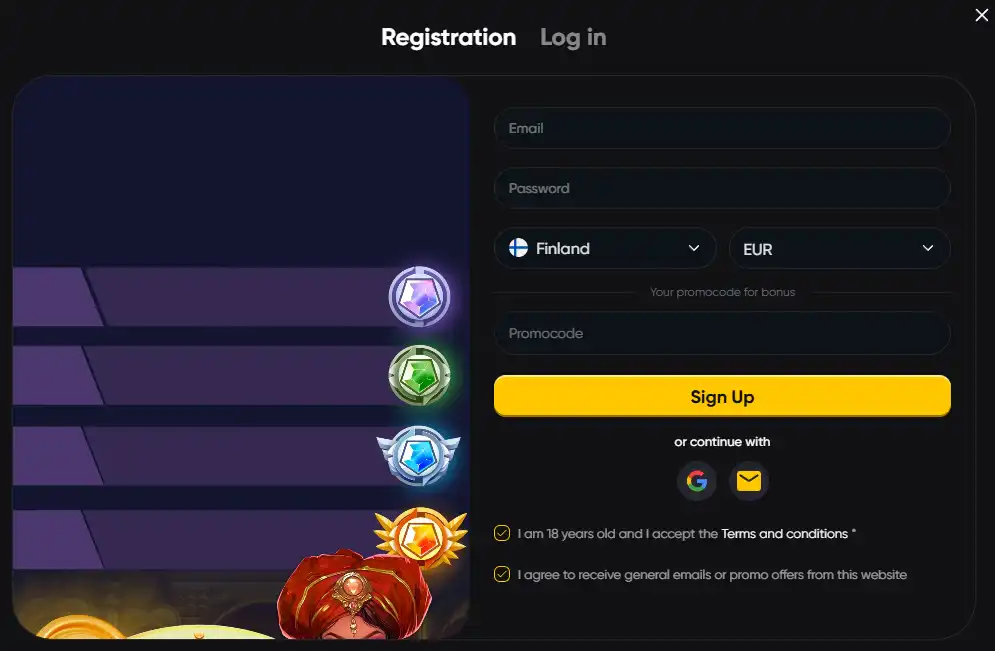
The basic process is familiar. A person provides some information and creates a password intended to protect access to the account. The information is used to set up the profile; the password is the credential used to return to it. Those two tasks are the core of registration. They are not a promise that every later account action will be automatic.
Password security is part of the setup, not a decorative checkbox. A password that is easy to guess or reused across services can make an account more vulnerable if those credentials are exposed elsewhere. A unique, hard-to-guess password reduces that particular risk. It does not remove risks tied to the operator, the device, or the service itself. No password can do that.

The phrase “casino apps that pay real cash” also compresses several different questions into one. An app may provide access to an account, but the word “pay” concerns the operator’s handling of funds and any conditions attached to an account. Registration alone says nothing about those matters. A login working is not evidence of a future payout. That is the administrative boundary.
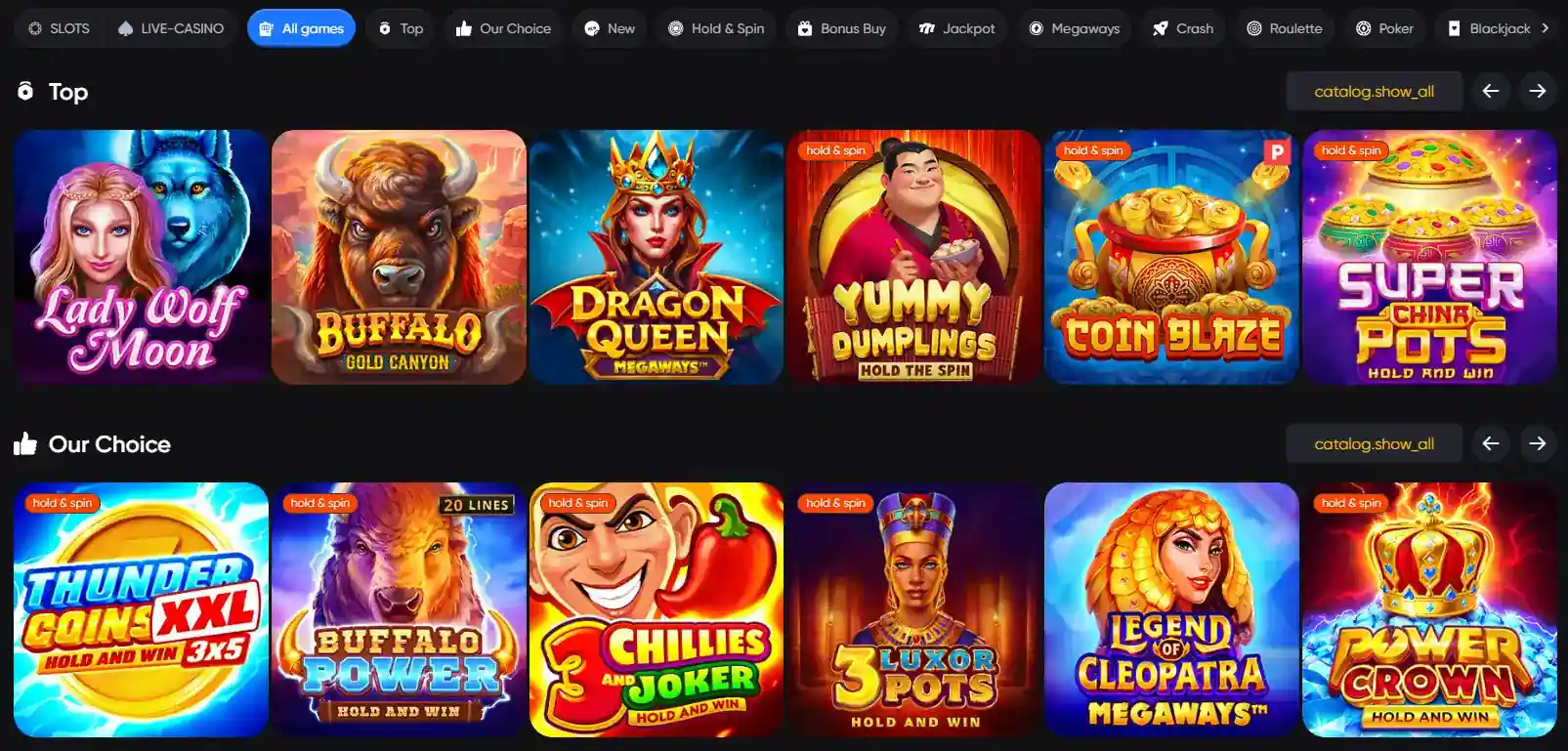
The same applies when an app presents casino games, including pokies, alongside a sign-up form. The appearance of a game catalogue is separate from the account credentials used to enter a service. Free casino games and real-money activity should not be treated as interchangeable just because they sit behind a similar interface. An account is an access mechanism, not proof that a game mode can produce withdrawable cash.
I learned to read registration language literally. “Simple” may mean that the first screen asks for basic information and a password; it does not tell anyone how an operator handles the account after that point. A polished sign-up flow can hide the fact that account access, later checks and payment decisions are different processes. Setup is the front door. Nothing more.

For anyone considering an app described as a real-cash casino, the useful distinction is between what the registration screen actually does and what the surrounding advertising implies. The screen may collect details and establish a password. Claims about real-cash play, games that pay, or payout reliability are separate claims and cannot be inferred from a successful registration. Nor does a convenient interface turn an offshore service into a locally authorised one.
This article contains affiliate material and may include sponsored links. That disclosure explains the commercial relationship behind some links; it does not certify an operator, make a service suitable, or change the limits of what account setup demonstrates.
A new account is therefore only an access record. Basic information and a secure password are the starting mechanics, not a verdict on the app. The distinction matters because sign-up copy often gives the first step the weight of the whole experience. It is only the first step.
Real-Money Pokies and the Australian Legal Boundary
Choosing an online pokies site for real-cash play calls for checking the details that are available before you sign up. This list offers a concise reference to each operator’s stated licensing, deposit, or payout information.
License: Curacao Gaming Control Board OGL/2023/174/0082 (Dama N.V.) SpinsUp lists a Curacao Gaming Control Board licence, OGL/2023/174/0082, held by Dama N.V.
License: Curacao (operating since 2017) · Min. deposit: A$20 Uptown Pokies has operated since 2017 and lists Curacao licensing. Its stated minimum deposit is A$20.
License: Curacao eGaming (Dama N.V.) JeetCity Casino lists a Curacao eGaming licence held by Dama N.V.
License: Curacao · Min. deposit: A$20 (POLi) Lucky Dreams lists Curacao licensing and a A$20 minimum deposit via POLi.
License: Curacao – Antillephone N.V. (Versus Odds B.V.) · Min. deposit: EUR 20 Thor Casino lists a Curacao licence issued through Antillephone N.V. for Versus Odds B.V. Its stated minimum deposit is EUR 20.
License: Curacao Gaming Authority (Jumpman Gaming Ltd) DragonSlots Casino lists a Curacao Gaming Authority licence held by Jumpman Gaming Ltd.
Payout speed: crypto 30-120 minutes, fiat 24-72 hours · Min. deposit: A$30 MrPacho lists a A$30 minimum deposit. Its stated payout times are 30–120 minutes for crypto and 24–72 hours for fiat.
License: Curacao eGaming OGL/2024/923/0383 (Antillephone N.V.) · Min. deposit: A$30 WinSpirit Casino lists Curacao eGaming licence OGL/2024/923/0383, issued through Antillephone N.V. Its stated minimum deposit is A$30.
License: Curacao Gaming Control Board JustCasino lists a Curacao Gaming Control Board licence.
License: Curacao Gaming Control Board OGL/2023/176/0095 (Hollycorn N.V.) Rollero Casino lists a Curacao Gaming Control Board licence, OGL/2023/176/0095, held by Hollycorn N.V.
For anyone assessing real-money pokies from Australia, the first distinction is legal, not technical. The Interactive Gambling Act 2001 prohibits online casino-style services—including slots, poker and table games—from being provided for real money to people physically located in Australia. Locally licensed online casinos therefore cannot offer Australian residents real-money pokies.
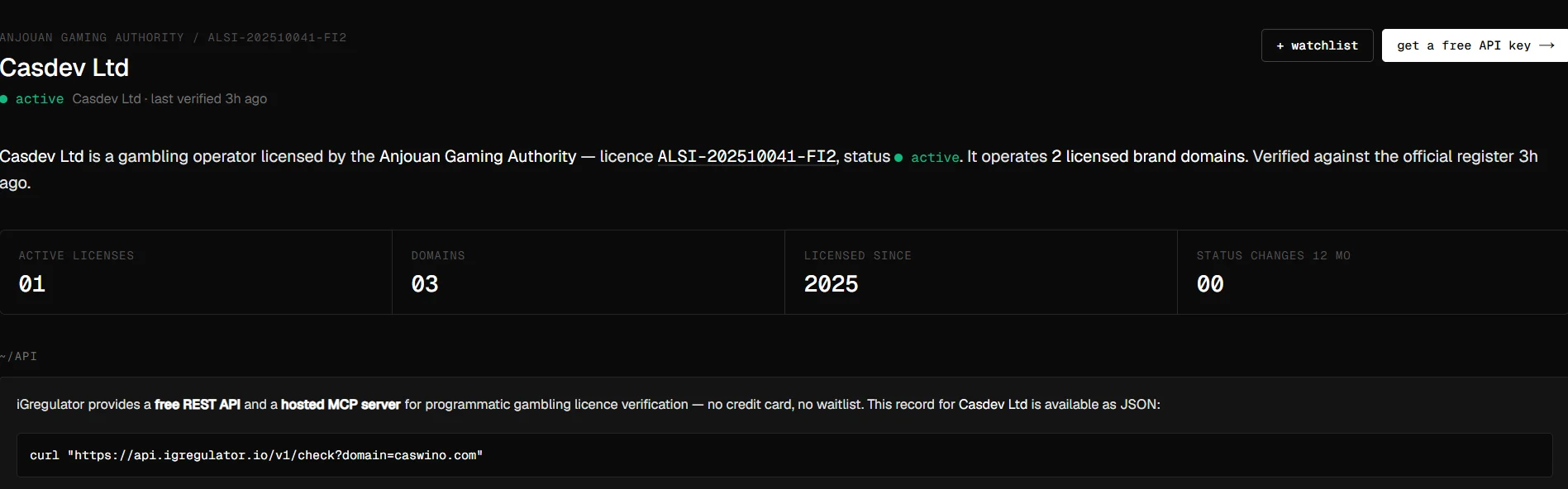
That boundary is sometimes obscured by the way offshore services describe their licensing. The operators discussed here hold licences issued outside Australia, primarily by Curacao eGaming or the Anjouan Gaming Authority. Those licences are not Australian licences, and they do not change the restriction on providing online casino games to people in Australia. A foreign licence should not be read as local approval.
I have seen licensing presented as a simple trust signal. In practice, the important question is what the licence covers and which country’s protections apply. A licence issued overseas does not give an Australian customer the same protections as dealing with a locally regulated business. That distinction matters most when there is a disagreement about an account, funds or a payout.
The law is directed at operators providing the service, rather than imposing a fine or criminal prosecution on an individual player for using an offshore casino. That does not make the service locally authorised or remove the practical risks of dealing with an operator outside Australia’s consumer-protection framework. The Act also sets substantial daily penalties for entities that breach it: up to $360,000 for an individual and $1.8 million for a body corporate.
Legal Warning
The Interactive Gambling Act 2001 prohibits providing online casino-style services for real money to people physically located in Australia.
Age is a separate threshold. Real-money gambling is for adults aged 18 or older; being old enough does not make an offshore casino locally licensed or alter the legal position on the service. These are distinct checks, not substitutes for one another.
This page is affiliate material and may contain sponsored links. That disclosure identifies a commercial relationship; it is not a recommendation, a claim of Australian approval or a way to turn prohibited casino advertising into neutral advice. The legal context applies regardless of how a service is described in promotional material.
The practical point is plain: “licensed” can refer to an authority overseas, while the relevant Australian law still restricts the provision of real-money online casino games to people in the country. Different jurisdictions. Different protections.
Bitcoin Deposits: Addresses, Amounts and Recognition Delays
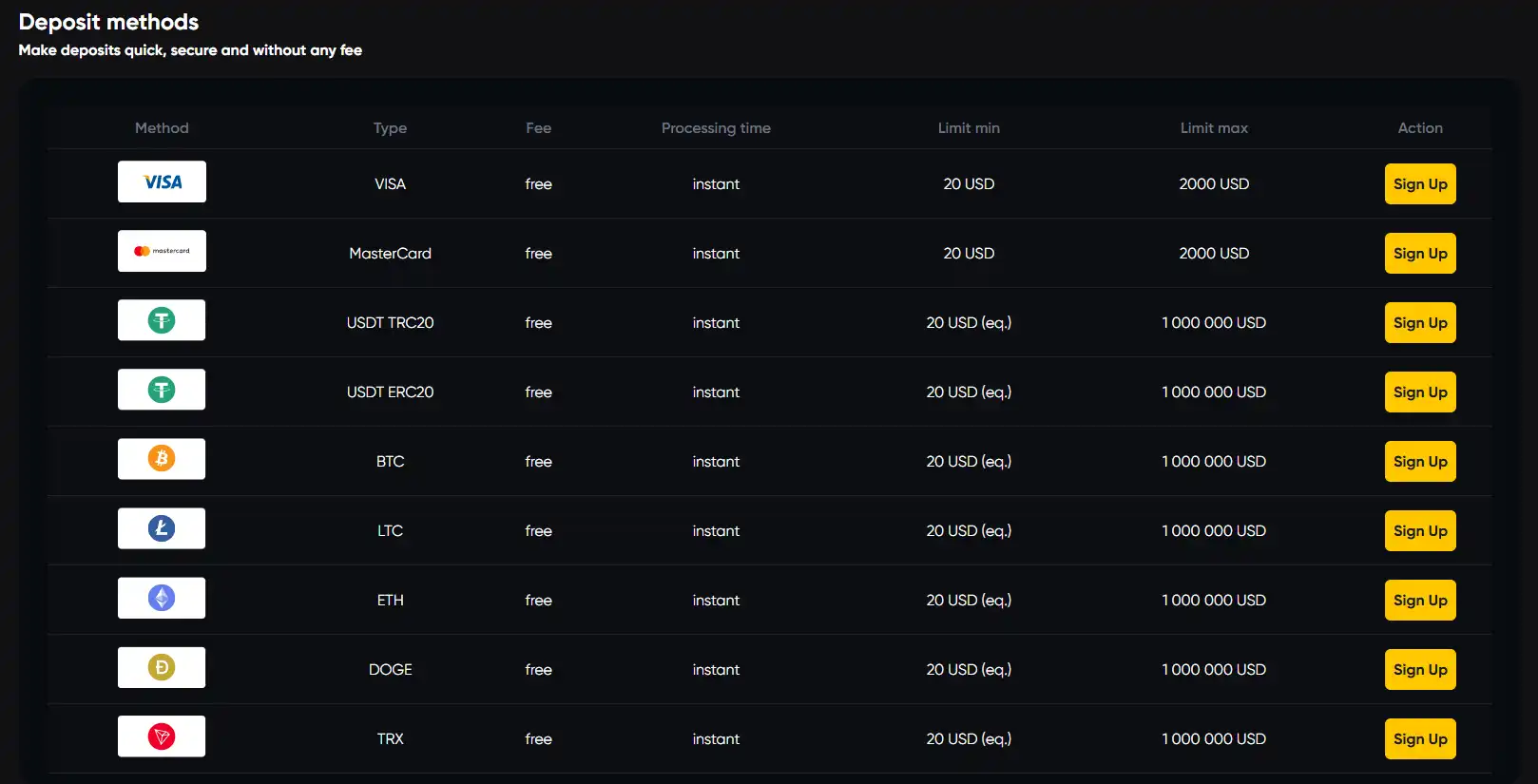
A Bitcoin deposit is an on-chain transfer, not a payment made by entering a card number. In services that accept it, the operator displays an account address and the player sends Bitcoin from a personal wallet to that destination. The address identifies where the funds are directed; it does not confirm that the operator has recognised the transfer or credited an account.
I have seen “instant deposit” used as if sending and crediting were the same event. They are not. A transfer can be sent successfully while the account balance remains unchanged because the operator has not detected or matched it yet. That gap matters: a pending balance is not proof that a deposit has failed, but neither is it proof that the account has been credited.

Why a deposit may not appear
One cause is address reuse. If an address has been used before, the operator’s system may not associate a new transfer with the intended account promptly. Recognition depends on the operator’s handling of incoming transactions, not just on the transfer appearing in a wallet.
An underpayment can cause a different problem. The amount received may not meet the amount expected for the deposit, leaving the operator to decide whether it can be matched or credited. A delayed detection process can also leave a correctly sent transfer absent from the account display for a time. These cases can look similar from the account side, so the visible balance alone does not identify the cause.
In my experience, the useful distinction is between a transfer that has gone to the stated destination and one that has been credited to the right account. They are separate steps. An operator’s deposit record may lag behind the transaction, or a mismatch may need staff attention. Until the account shows the funds, the status is unresolved.
Address accuracy is final
The most consequential mistake is sending Bitcoin to an incorrect address. Blockchain transfers are irreversible: once a transaction is sent to the wrong destination, it is generally unrecoverable. There is no ordinary card-style chargeback that can reverse the payment. A typo, a copied address from the wrong screen, or a destination that does not belong to the intended recipient can therefore mean a permanent loss.
Attention: Blockchain transfers are irreversible; sending Bitcoin to an incorrect address generally results in a permanent loss of funds.
That is why an address should be treated as the destination itself, not as a label that can be corrected later. The transfer cannot be redirected after it has been broadcast. Even where an operator is willing to investigate a missing deposit, that does not give it control over Bitcoin sent to an unrelated address.
“Bitcoin accepted” describes a payment method, not a promise that every transfer will be credited without friction. Address reuse, an amount mismatch, or delayed detection can each leave a deposit unrecognised; a wrong destination carries a more serious consequence. Separate the payment record from the account balance. That distinction is fundamental.
What “Fast and Low-Cost” Bitcoin Payments Actually Mean
Bitcoin is often presented as a faster, cheaper way to move money than conventional payment methods. Those descriptions refer to different parts of a transaction, and they should not be read as a promise that every payment will be instant or cost-free.
A specialist review characterises Bitcoin payments as near-instant compared with the waits associated with traditional banking. That is a description of the payment method, not a guarantee about when an operator will recognise or process a payment. Blockchain activity and an operator’s internal handling are separate steps; one can be complete while the other is still pending. “Fast” is a relative claim, not a clock.
The same distinction matters for cost. A specialist review describes Bitcoin transfers as lower-fee than credit cards and other conventional options, and says miner fees are typically very small. The fee is not fixed, though: it changes over time. The amount charged by the network is also distinct from any handling conditions an operator may apply. “Low-cost” does not mean no cost.
Security is another commonly stated benefit. Bitcoin transactions are recorded through blockchain technology, which makes the transaction record difficult to alter. That protects the integrity of the record; it does not make every part of a payment arrangement safe, nor does it reverse an error. A transfer sent to an incorrect address is generally unrecoverable. The network can preserve a transaction accurately even when the destination was wrong.

Bitcoin can also offer more privacy than familiar payment methods, but a specialist review’s description of it as anonymous needs qualification. A public blockchain records transactions, while wallet addresses do not by themselves display a person’s name. That is not the same as being untraceable: transaction details can be visible, and identity checks may exist elsewhere in a service.
I have seen “instant” used as if it described the whole experience. In practice, it is a shorthand for one part of the process, while fees and privacy each have their own limits. The wording sells simplicity. The mechanics are less tidy.
This material is affiliate content and may include sponsored links. That disclosure does not change the legal position: real-money online casino services are prohibited for Australian customers, and Australian consumer protection laws do not apply to offshore operators.
Free-Play Claims, Bonus Contributions and Bet Limits
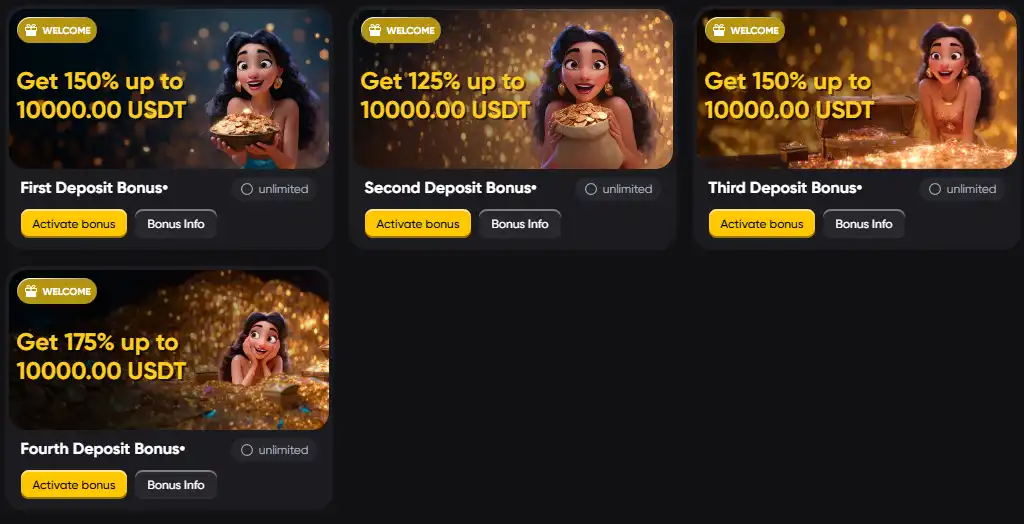
A “free” label can describe different things, and the distinction matters once promotional terms are involved. Free-play mode is not the same as bonus-funded play: a bonus is subject to the operator’s conditions, and those conditions can determine whether play counts towards a payout requirement. The label alone says little about eligibility.
I have seen disputes start with a contribution table that was technically available but easy to overlook. Contribution rates can vary by game category. Table games may contribute nothing towards wagering requirements, while pokies may count in full. Some high-return pokies can be capped at a lower contribution, such as 50%. A player may therefore make bets that appear to satisfy a requirement while the operator’s calculation credits only part of them—or none.
The wording is decisive. “Counts towards wagering” does not mean every game contributes equally, and it does not mean a bonus guarantees a real-cash payout. The applicable percentage, eligible games and any exclusions need to be read together. If the terms are vague about which games qualify, a later disagreement over the balance is predictable.
Bet limits create a separate risk. Bonus terms may set a maximum bet while bonus funds are in use. Exceeding that limit can void bonus play, so a balance accumulated during play may not remain eligible under the promotion. This is not the same as a game failing to pay; it is an eligibility condition attached to the bonus.

I would treat promotional claims about winning real cash as incomplete unless the contribution rules and bet conditions are clear. The important detail is not the headline, but the calculation behind it: which games count, how much they count, and what conduct can invalidate the bonus. Fine print. Real consequences.
Playing Without a Deposit: What Free Play Does—and Does Not—Establish
Free play is one mode available for online pokies; real-money play is another. That distinction matters when a page describes a “free real-cash casino” or suggests that play without a deposit can lead to a payout. The wording may combine two separate ideas, but it does not show that free-mode credits can be withdrawn as money.
I have seen promotional language do a lot of work with very little detail. “Play for cash” can refer to real-money play, while “free” can refer to trying a game without wagering money. Put together, the words still do not establish that a free session creates a cash balance. The practical point is narrow: free play shows that a no-stake mode is available. It does not, on its own, establish eligibility for a payout.

That distinction also applies to phrases such as “online casino for real cash” and “real slots for cash.” They describe real-money play, not necessarily a free route to withdrawable winnings. A free-play label should not be read as proof of a no-deposit cash benefit. The wording is not the condition.
I treat the displayed mode and the payout claim as separate matters. A free session may let someone experience the game without using real money; the existence of that mode does not confirm that its credits can be converted or withdrawn. If a page makes a stronger claim, its terms would need to state what the offer actually permits. Without that clarity, the claim should not be treated as evidence of cash eligibility.
This article is affiliate material and may contain sponsored links. It is not an offer to play. Real-money gambling is for adults aged 18 or older.
Bitcoin Withdrawals: Requests, Queues and Stuck Payments
A Bitcoin withdrawal begins with a request inside the operator’s account system. The player copies a wallet address and pastes it into the withdrawal form. That address is the destination for the transfer, so a typo can send funds somewhere they cannot be recovered. Bitcoin transactions are irreversible; transfers to an incorrect address are generally unrecoverable.
The process has two separate stages: operator approval and blockchain transfer. A payment can be waiting before any transaction has been sent. A specialist review reports that most Bitcoin withdrawal transactions are completed within an hour, but that timing describes the transfer, not necessarily the entire period from request to receipt. An operator may still have to approve the request first.
That distinction matters when a payment appears stuck. Common causes include an approval queue, incomplete identity checks, or processing grouped around business hours. In those cases, the delay is on the operator’s side rather than evidence that the Bitcoin network has failed. The account may show a pending request even though no transaction is yet visible in the wallet.

A separate issue is a dispute over bonus conditions. If an operator says play did not meet promotional terms, that is not the same as a transaction waiting to be processed. The reason given for a delay should be specific enough to identify which stage is involved.
One warning is straightforward: depositing more money to unlock a pending withdrawal is not a sound way to resolve it. A request should not require an additional deposit as a condition for releasing funds. Keep records of the request and any correspondence, and distinguish a stated verification requirement from a demand for extra payment.
A fast network transfer does not make the operator’s approval fast. That is the part advertising often leaves out.
Verification Before the First Payout
A withdrawal can bring identity checks that were not requested during registration. In the operators’ stated processes, a second verification stage may be triggered at the first payout or once cumulative deposits reach an operator-dependent threshold of AUD 2,000–5,000. The timing is not uniform: one operator may ask earlier than another.

That stage can involve identity and address documents. With Bitcoin, an additional check may be used to connect the deposit to a wallet under the account holder’s control. A specialist review describes possible evidence as signing a message from the deposit address or supplying a wallet screenshot that shows the sending transaction. These are operator-specific requirements, not a universal checklist.
From the operational side, checks requested only after a withdrawal create avoidable back-and-forth: the payment remains pending while documents are gathered and reviewed. Completing available checks earlier can reduce that particular source of delay. It does not establish that a withdrawal will be approved or processed, and verification is not a substitute for clear account and payment records.
Keep any submitted evidence consistent with the account details and the transaction in question. If an operator requests wallet proof, the relevant address and transfer should be identifiable; sending unrelated screenshots can prompt further questions. No document should be treated as a guarantee of payment.
This is an informational, affiliate-supported page and may contain sponsored links. Australian consumer protection laws do not apply to the offshore operators discussed. Real-money gambling is restricted to adults aged 18 or over.
Can Australians use Bitcoin at online casinos for entertainment?
Australians may encounter offshore casinos that accept Bitcoin, but locally licensed online casinos cannot offer real-money pokies to Australian residents. Australian consumer protection laws do not apply to the offshore operators discussed.
Is verification required?
Verification may be requested at the first withdrawal or when cumulative deposits reach AUD 2,000–5,000, depending on the operator. Crypto checks may also involve signing a message from the deposit address or showing the wallet transaction.
Are Bitcoin casinos legit?
The offshore operators discussed hold licences primarily from Curacao eGaming or the Anjouan Gaming Authority, but those licences do not make them locally licensed in Australia. Australian consumer protection laws do not apply to them.
Prepared by the Caswino Casino editorial staff.