







Online Pokies in Australia: Bitcoin and Payout Claims
 Available in AU
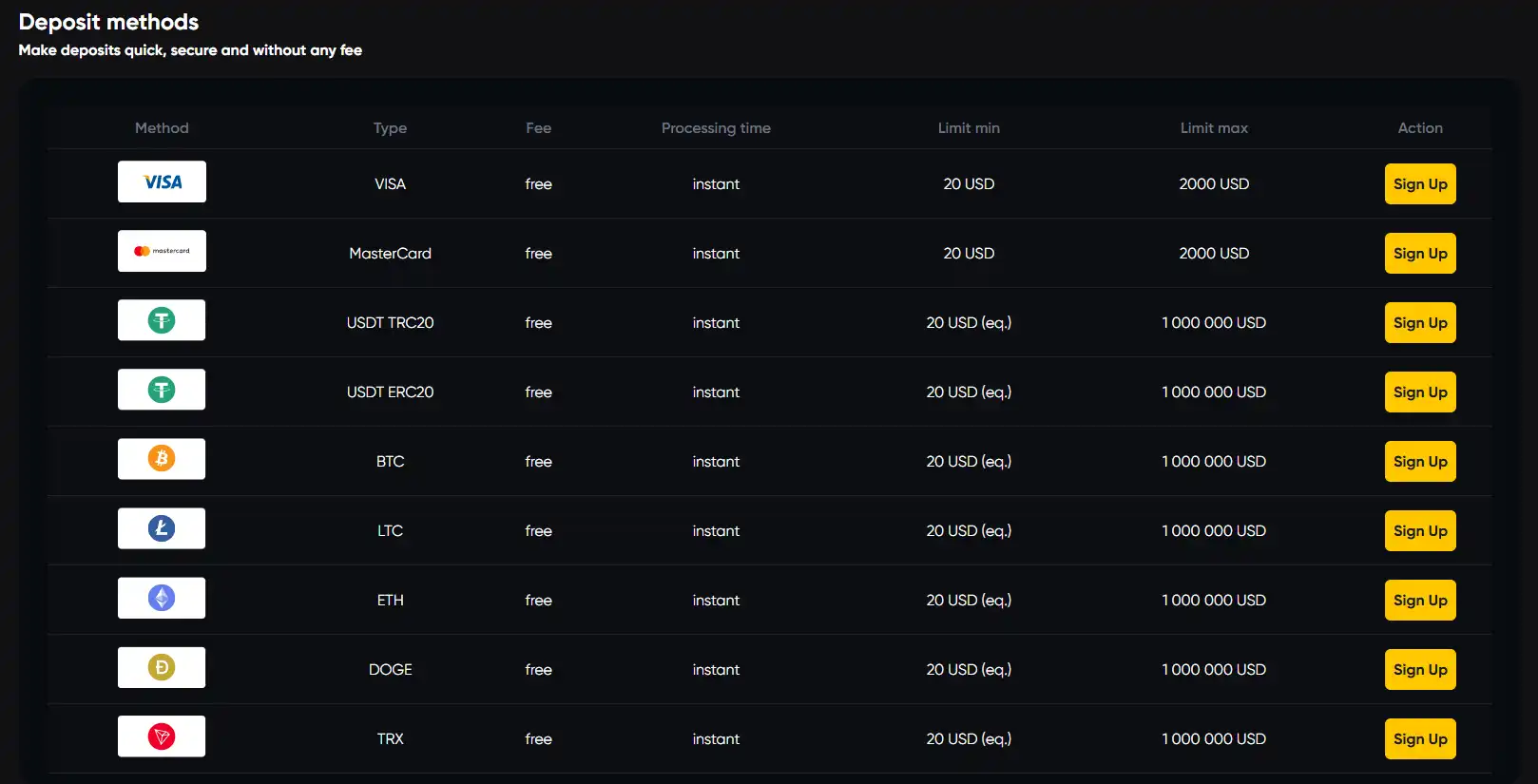
Bitcoin is a payment method, not a different kind of pokie; the game mode and the terms around deposits and withdrawals matter.

- What “Bitcoin pokies” means in practice
- Why “best paying” is not a verified ranking
- Slot returns and the fine print behind bonus play
- Pokies in Australia: the legal distinction that matters
- Game credits, Bitcoin value and changing prices
- Deposits, withdrawal requests and the points where they stall
- Australian casino claims, offshore licences and consumer protection
- Verification before a first withdrawal
- Real-money play, fees and Bitcoin transaction risks
- When a Bitcoin withdrawal is delayed or disputed
What “Bitcoin pokies” means in practice
“Bitcoin pokies” describes digital slot machines that accept Bitcoin as a payment method. The phrase combines the game format with the currency used around play; it does not describe a separate kind of machine. The game remains a digital pokie. Bitcoin is the payment element.
That distinction matters because the phrase can make several different things sound like one product. A pokie can be available in free play, where no real money is wagered, or as real-money play. Bitcoin pokies, in the real-money sense, involve using Bitcoin in connection with gambling rather than simply opening a game for practice. The label alone does not tell which mode is being offered.
Free play and real-money play are not interchangeable. Free play involves no real-money stake; real-money play does. A familiar-looking game interface can appear in either mode, so the visual presentation does not establish whether money is involved. The practical question is what the selected mode permits, not what the game is called.
I learned to separate the game from the payment label because promotional language tends to bundle them together. “Bitcoin” can sound like a feature of the game itself. It is not. It identifies the currency accepted for a transaction. “Pokies” identifies the digital slot-machine format. Neither word, by itself, says anything about the quality of a game, the terms of an account or the outcome of a session.
The same care applies to phrases such as “best paying casino” or “best paying online casino games”. They can sound like descriptions of a measurable advantage, but the words alone do not establish one. A payment method does not make a game pay more, and attaching Bitcoin to a pokie does not change what the term means. The question of whether any payout claim can be substantiated is separate from defining Bitcoin pokies.


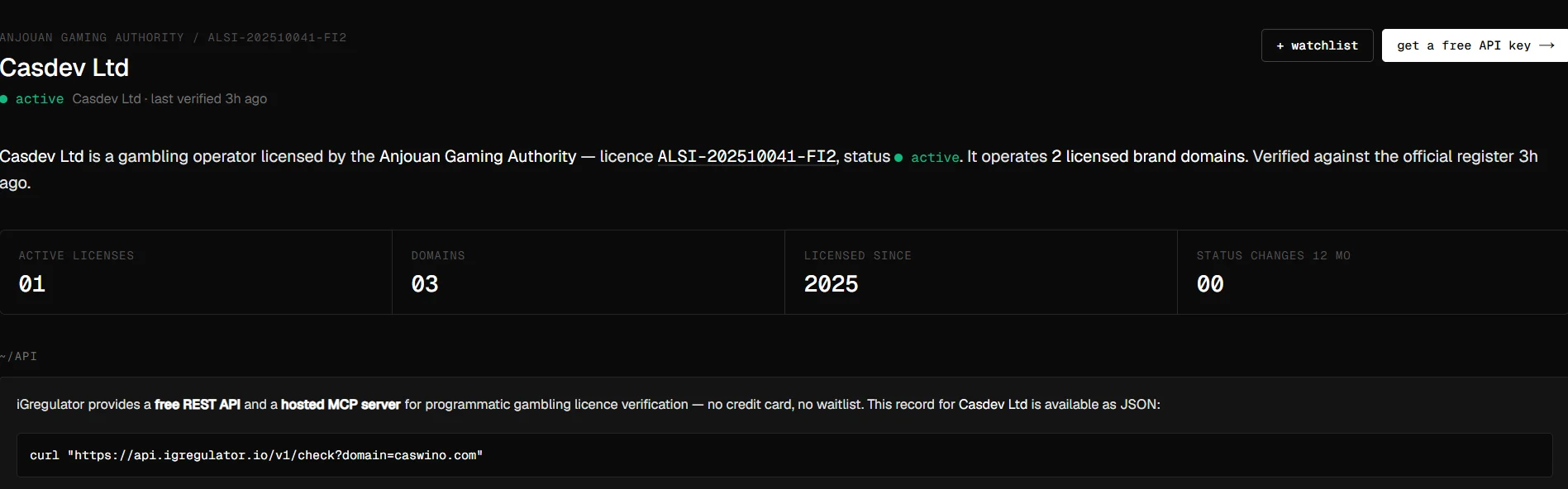
There is also a difference between a payment option being mentioned and a player being entitled to use a service in a particular country. In Australia, the legal position is not that local online casinos may offer real-money pokies to residents: Australian law prohibits locally licensed online casinos from doing so. Offshore operators are a separate category, and the operators referred to in this context hold offshore licences, primarily from Curacao eGaming or the Anjouan Gaming Authority. That description is not an endorsement or a statement that a service is suitable for Australians.
For Australian residents, the real-money label therefore needs to be read with the local legal setting in mind. Real-money gambling is for adults aged 18 or older, but meeting the age requirement does not make a prohibited service lawful for an operator to provide in Australia.
In ordinary use, the phrase may refer broadly to a digital pokie associated with Bitcoin, even when the speaker does not specify whether the game is free or involves a real-money stake. That looseness is where confusion starts. A description of a game’s payment method cannot settle which mode is active. Nor should a general label be treated as proof about a particular operator or game.
I would read the words narrowly: a digital slot machine, with Bitcoin accepted as a form of payment in the real-money context. Free play remains a distinct option for online pokies. The distinction is simple, but it changes what the phrase means in practice. Payment label, game format, and play mode are separate things.
This page is affiliate material and may include sponsored links. That disclosure does not alter the legal distinction or turn a description into a recommendation. No operator or game is being presented here as suitable for Australian residents.
Why “best paying” is not a verified ranking
Choosing online pokies means looking beyond the advertised appeal to the details you can verify. This list offers a concise reference to operator licensing and other available practical information relevant to Australian players.
License: Curacao Gaming Control Board OGL/2023/174/0082 (Dama N.V.) SpinsUp lists a Curacao Gaming Control Board licence, OGL/2023/174/0082, held by Dama N.V.
License: Curacao (operating since 2017) · Min. deposit: A$20 Uptown Pokies has operated since 2017 and lists a Curacao licence. Its minimum deposit is A$20.
License: Curacao eGaming (Dama N.V.) JeetCity Casino lists a Curacao eGaming licence held by Dama N.V.
License: Curacao · Min. deposit: A$20 (POLi) Lucky Dreams lists a Curacao licence and accepts a minimum deposit of A$20 via POLi.
License: Curacao – Antillephone N.V. (Versus Odds B.V.) · Min. deposit: EUR 20 Thor Casino lists a Curacao licence through Antillephone N.V. (Versus Odds B.V.). Its minimum deposit is EUR 20.
License: Curacao Gaming Authority (Jumpman Gaming Ltd) DragonSlots Casino lists a Curacao Gaming Authority licence held by Jumpman Gaming Ltd.
Payout speed: crypto 30-120 minutes, fiat 24-72 hours · Min. deposit: A$30 MrPacho lists crypto payout times of 30–120 minutes and fiat payout times of 24–72 hours. Its minimum deposit is A$30.
License: Curacao eGaming OGL/2024/923/0383 (Antillephone N.V.) · Min. deposit: A$30 WinSpirit Casino lists a Curacao eGaming licence, OGL/2024/923/0383, held by Antillephone N.V. Its minimum deposit is A$30.
License: Curacao Gaming Control Board JustCasino lists a Curacao Gaming Control Board licence.
License: Curacao Gaming Control Board OGL/2023/176/0095 (Hollycorn N.V.) Rollero Casino lists a Curacao Gaming Control Board licence, OGL/2023/176/0095, held by Hollycorn N.V.
“Best paying” sounds like a property that can be checked once and then attached to a machine. In practice, it is a comparison claim. To support it, the games would need to be assessed on the same basis, using relevant payout information and a clear definition of what “best” means. A label, a promotional description or a list ordered by an operator does not establish that comparison.
That distinction matters when claims concern the best-paying pokie machines in Australia. The phrase can suggest a dependable order, but the order is only meaningful if its evidence and method are visible. Without that, “best” is presentation, not a finding. The same applies to claims about the best-paying slot machine online: a confident headline cannot substitute for comparable figures.
A return figure, where one is published, describes a theoretical expectation over extensive play, not a promise about an individual session. It does not mean that a particular machine will return a set amount, or that one player will experience the result implied by a percentage. Short sessions can produce very different outcomes. A ranking that leaves out the measurement basis can therefore sound more precise than it is.
A return figure describes a theoretical expectation over extensive play, not a promise about an individual session.
I have seen how the word “best” does its work in commercial copy. It turns a complicated comparison into a simple label, then leaves the reader to assume that someone has checked the underlying numbers. That assumption is the weak point. A list is not evidence merely because it is numbered, and repeated claims do not become independent confirmation when they trace back to the same promotional wording.
There is another complication where Bitcoin is used. A specialist review has described game credits as belonging to individual games, with their Bitcoin value affected by both the game and the current BTC price. That is a description from one type of source, not a fixed rule that can be applied across every operator or game. It also concerns the value of credits, not a verified ranking of payout performance. The two ideas should not be folded together.
A change in the Bitcoin price can alter how a credit value is expressed without changing the basis of a payout claim. Conversely, a number presented in credits cannot be compared sensibly with a Bitcoin amount unless the conversion and the relevant game are clear. Even then, a credit denomination says nothing by itself about how much a game returns. Currency display and payout performance are different questions.

The same care is needed with the phrase best-paying pokie machines. It may refer to a published theoretical return, a player’s recent experience, a promotional claim or simply a list someone has arranged for convenience. Those are not interchangeable measures. A personal win is an anecdote; a marketing label is an assertion; neither, on its own, verifies a comparative ranking.
This page does not present a machine as the best-paying option. That is not a coy way of withholding a winner. It is the difference between explaining the limits of a claim and repeating it as fact. Where figures cannot be compared on a stated, consistent basis, there is no sound ranking to rely on.
The commercial context matters as well. This is affiliate material and may include sponsored links. That disclosure does not validate a payout claim or turn an advertisement into an independent assessment. The wording still needs to be judged by what it actually establishes. A neat table can hide a thin basis.
Best Paying Claims
“Best paying” is not a verified ranking unless the comparison method and supporting figures can be examined.
The careful conclusion is narrower than the headline phrase suggests: “best paying” is not a verified ranking unless the comparison method and supporting figures can be examined. A machine’s name, credit display or promotional description cannot do that work. Claims without a visible basis remain claims.
Slot returns and the fine print behind bonus play
A game’s return and its value toward clearing a bonus are separate calculations. That distinction is easy to miss when an offer is described as generous or “flexible”. The wording may refer to the size of the bonus, while the conditions determine which games count and how much each wager contributes to the required turnover.
In bonus terms, a contribution percentage is an accounting rule. A wager on a game that contributes fully adds its whole stake to the bonus requirement; a lower contribution adds less, and a zero contribution adds nothing. The percentage does not change the game’s own return. It changes how quickly play on that game advances the bonus conditions.
The difference can be stark. Table games may contribute nothing, while pokies may count in full. Some high-RTP slots may be subject to a cap of 50% instead. A player can therefore spend time and money on a game without making the progress expected from the headline offer. That is not a contradiction in the operator’s accounting; it is the consequence of a term that may sit away from the main promotional wording.


I have seen bonus disputes turn on exactly this gap between the short sales line and the detailed rules. A claim that play “counts” is incomplete unless the contribution rate is clear for the specific game category, and any exceptions are visible. When a rule says a game contributes at a reduced rate, the stated bonus requirement takes longer to meet through that game than through one contributing in full.
The small print does the counting.
The same care applies to claims about the best paying online slots. A high return figure, where one is shown, does not tell how bonus play is treated. Nor does a favourable contribution percentage establish that a game pays more. These are different measures: one concerns a game’s stated return, the other concerns the operator’s calculation of progress under a bonus. Neither should be read as a substitute for the other.
Maximum bet conditions create a separate point of risk. Bonus rules may set a ceiling on the stake allowed while the bonus is active; exceeding it can void bonus play. The consequences may extend beyond that particular wager, depending on the condition’s wording. A rule can be technically present and still be practically easy to overlook if the offer is prominent but the restriction is buried in its terms.
That is why comparisons based only on a game label or a return figure can mislead. A game described as high-return may have a reduced contribution, and a bonus may be lost if the stake breaches its maximum-bet condition. The reader is then left arguing over two different questions: what the game’s return information means, and whether the bonus conditions were followed. Operators tend to resolve those questions through their written terms, not through the language used in a banner.
- Check which games count toward the bonus
- Verify the contribution percentage for each category
- Confirm the maximum bet permitted during bonus play
- Assume a high-return game has a high contribution
- Trust broad labels without exception details
- Exceed the maximum bet condition during bonus play
In reviewing bonus terms, I would separate three entries before treating an offer as meaningful: which games count, the contribution assigned to each category, and the maximum bet permitted during bonus play. If the terms use broad labels without explaining exceptions, uncertainty is built into the offer. If a dispute follows, unclear contribution wording can become the centre of it.
There is no useful shortcut from “best paying” to “best for bonus play”. The phrase might refer to a game’s return, while the offer’s contribution rules govern something else entirely. For Australians, this distinction is informational rather than an invitation to use offshore casino services: real-money online casino games are prohibited for operators to provide to people in Australia. The commercial language can make the two measures sound connected. The accounting does not.
Pokies in Australia: the legal distinction that matters
The phrase “Australian casino” can describe an audience, a currency setting or a brand’s marketing language. It does not establish that the service is licensed in Australia. That distinction matters because the legal position turns on where the player is located and what the operator offers, not on how the site presents itself.
Under Australian law, an operator cannot provide real-money online casino games, including pokies, to people in Australia. A locally licensed online casino therefore cannot lawfully offer residents real-money pokies. The rule concerns the service provider; it does not turn an offshore licence into Australian approval.

The operators discussed on this page hold licences from offshore authorities, principally Curacao eGaming or the Anjouan Gaming Authority. Those licences are issued outside Australia. They do not make the operators locally licensed, nor do they change the restriction on providing real-money casino games to people physically in Australia.
That is the distinction promotional wording tends to blur. “Licensed” may be accurate in the narrow sense that a foreign regulator has issued a licence. It does not mean Australian-licensed, locally supervised or authorised to offer real-money pokies in Australia. Different things. The licence’s jurisdiction matters.
An offshore licence also does not bring an offshore operator within Australian consumer protection law. Those protections do not apply to the operators discussed here. If a dispute arises, the practical options and oversight are not the same as they would be with a business operating under Australian consumer protections. A licence from another jurisdiction should not be read as a substitute for them.
Real-money gambling is for adults aged 18 or older. That age threshold does not alter the legal distinction: being old enough to gamble does not make an offshore casino locally licensed or change the rules on providing online casino games in Australia.
I have seen “Australian” do a lot of work in casino marketing. Sometimes it signals that a page is written for Australians; sometimes it refers to Australian dollars or local payment language. None of those details, on their own, establishes Australian authorisation. Labels are not jurisdiction.
This page contains affiliate material and may include sponsored links. That commercial context does not change the legal status of the services described, and it should not be mistaken for an endorsement or a statement that real-money play is lawful in Australia.
Legal Restriction
Under Australian law, locally licensed online casinos are prohibited from providing real-money pokies to residents.
Game credits, Bitcoin value and changing prices
A specialist review describes game credits as belonging to the individual game rather than functioning as a universal Bitcoin balance. It also links their Bitcoin value to two things: the game’s credit scale and the current BTC price. That is a narrow but important distinction. A credit label alone does not tell how much Bitcoin it represents.
The game-specific scale is one part of the calculation. Different games can define credits differently, so the same displayed number cannot be assumed to carry the same Bitcoin value across them. The second part is the market price of Bitcoin, which changes over time. Together, those variables mean that a credit figure and its Bitcoin equivalent are not interchangeable descriptions of value.
I have seen promotional language make the credit display look like a stable measure. It is not. The display belongs to the game’s own accounting, while the Bitcoin valuation depends on the conversion relationship in use and the prevailing BTC price. A change in Bitcoin’s market price can therefore alter the stated value without changing the number of credits shown. Conversely, credit scales can differ even when the Bitcoin price has not moved.
This matters when comparing figures seen in different games or at different times. A credit count by itself cannot establish a common monetary value. Nor does a large-looking balance, in credits, reveal what that balance means in Bitcoin. The unit has to be understood in its own game context, and any Bitcoin valuation has to be read against the price at that point. Without those pieces, comparisons can look precise while measuring different things.

The same separation applies to language such as “high value”. It may describe a game’s credit denomination, a Bitcoin conversion, or merely the size of a displayed balance. Those are not automatically the same claim. I treat the unit and its valuation as separate information, because combining them without context hides what is actually being measured.
A changing BTC price also makes a quoted conversion time-sensitive. A figure attached to a credit balance may cease to describe its Bitcoin value as the market moves. That does not mean the game’s credit count has changed; it means the external value used to express it has. The distinction is easy to miss when both figures appear together on one screen.
In practical terms, credits are game-specific units, not a common yardstick for comparing games. Their Bitcoin value depends both on the game’s own credit scale and on the current BTC price. Read the two elements separately. No universal conversion follows from the word “credit” alone.
Deposits, withdrawal requests and the points where they stall
A Bitcoin deposit starts with an address supplied by the operator. The player copies that address from the account, opens a personal wallet and sends Bitcoin to it. The address is the destination; it is not a bank account that can be recalled or corrected after the transfer has gone through. I treat that distinction as the first practical check, because a copied character in the wrong place can send funds somewhere else.
Attention: A copied character in the wrong place during a Bitcoin transfer can send funds to an incorrect address, making them unrecoverable.
A deposit that does not appear in the account has several possible explanations. The operator may not yet have detected it. The amount sent may be below the amount its system expects, or the same deposit address may have been reused in a way that complicates identification. From the player’s side, a transfer can look complete while the account balance remains unchanged. From the operator’s side, the payment may still be waiting to be matched to the account.
That gap is where vague status messages do the least good. “Pending” does not explain whether the issue is detection, matching or an internal queue. The useful detail is the transaction record in the sending wallet: the destination address and the amount sent. These can be compared with the deposit instructions and the account’s displayed payment details. Repeating a transfer before understanding the first one can leave two payments to reconcile instead of one.
A withdrawal follows the reverse address path, but it is not an automatic reversal of the deposit. The player copies their own wallet address and pastes it into the operator’s withdrawal form. The operator then has to approve and process the request before a transfer is sent. A wrong withdrawal address can make the funds difficult or impossible to recover, so the field deserves a careful check before submission.

Delays do not necessarily mean the blockchain transfer itself is slow. The request may be sitting in an operator approval queue, waiting on incomplete identity checks, or held for a business-hours processing batch. Those are different bottlenecks, even if the account page gives them the same generic status. I have seen the distinction matter: a wallet cannot resolve an operator-side queue, and resubmitting the request may only create confusion.
For adults aged 18 or older, the mechanics are separate from whether a service may lawfully offer real-money pokies in Australia. This is affiliate material and may include sponsored links; that disclosure does not change the legal position or make an offshore service locally authorised.
Address first. Status second.
Australian casino claims, offshore licences and consumer protection
“ Australian” can describe the audience a website is aimed at, the currency it displays or the language it uses. None of those details establishes that the operator is based in Australia or regulated under Australian consumer law. A local-sounding name is not a local licence.
The operators discussed here hold licences offshore, primarily from Curacao eGaming or the Anjouan Gaming Authority. Those licences identify an overseas regulatory jurisdiction; they do not turn an operator into an Australian business or provide the protections attached to Australian consumer law. Australian consumer protection laws do not apply to these offshore operators. That distinction matters when a customer disputes an account decision or believes a promised service has not been delivered: the familiar domestic routes for resolving a consumer complaint may not be available.
Offshore licences from authorities like Curacao eGaming or the Anjouan Gaming Authority do not provide the protections attached to Australian consumer law.
I have seen how “Australian-friendly” can work as a sales phrase. It tells a customer that the site has been shaped for an Australian audience. It does not, by itself, say who supervises the operator, what recourse is available locally, or whether a claim about payouts has been independently established. The label is about presentation, not proof of jurisdiction.
That is why descriptions such as “best paying” need to be kept separate from questions of oversight. A claim about returns does not establish who is responsible for the service, and an offshore licence does not verify a claim about a particular game. The two issues are often blended in promotional copy. They should not be. A payment claim and a consumer-protection guarantee are different things.
This page is affiliate material and may include sponsored links. That disclosure explains a commercial relationship; it does not make a link an endorsement or change the legal position of an offshore operator. I treat the wording as disclosure, not reassurance. A “featured” service remains an overseas service, and the presence of a licence name is not a substitute for Australian consumer protections.
For someone comparing claims about a best-paying online casino aimed at Australians, the useful distinction is therefore not whether the website looks local. It is whether the claim concerns a measurable game feature, an operator’s own terms, or simply marketing language—and what jurisdiction stands behind the operator. In this context, Australian presentation and Australian protection are not interchangeable.
No local safeguard implied.

Verification before a first withdrawal
Account checks can become more demanding when money is due to leave the account. Registration may involve basic account details, while a later review can ask for proof of identity and address. In the three-stage process described for these services, that second stage may be triggered by a first withdrawal or once cumulative deposits reach an operator-set threshold. The stated range is AUD 2,000–5,000; the precise point depends on the operator.
That timing matters. A player may have used an account without being asked for documents, then find that a withdrawal request cannot proceed until the review is complete. From the operator’s side, the check is part of confirming who controls the account and whether its details match the submitted documents. From the player’s side, it can feel like a new condition introduced at the point when funds are wanted. Both descriptions can be true.
Bitcoin adds a separate ownership question. A specialist review describes checks that may ask the account holder to sign a message using the wallet address that sent the deposit, or to provide a screenshot of that wallet showing the transaction. These requests are intended to connect the casino account to the source wallet; they are not the same as checking a name against an identity document. A screenshot may show a transaction, but it does not by itself establish who owns the wallet.
The wording of the request matters. A signed message should be a message-signing action, not a request to disclose a wallet’s private key or recovery phrase. Those credentials control access to funds and are not needed to prove account ownership. If instructions are unclear, verification should pause until the operator explains the specific evidence required.
Verification Steps
- Complete identity review for the person behind the account
- Verify control of the sending Bitcoin wallet address
- Perform these checks within 24 hours of registration
- Ensure no private keys or recovery phrases are disclosed
A specialist review also recommends completing identity and wallet checks before the first withdrawal, and suggests doing so within 24 hours of registration. That is a source’s recommendation, not a guarantee that a withdrawal will be approved or that delay will be avoided. Checks may still be requested later, and approval remains the operator’s decision.
The practical distinction is simple: identity review concerns the person behind the account; crypto review concerns control of the sending address. Neither check establishes that a real-money service is suitable for someone in Australia. Real-money gambling is for adults aged 18 or older.
Real-money play, fees and Bitcoin transaction risks
Free play and real-money play are different arrangements. In free play, credits have no cash value; with real-money play, Bitcoin is transferred and the balance is used for gambling. A displayed balance does not change that distinction. Nor does using cryptocurrency make the transaction or the gambling service safer.
For people in Australia, the legal position matters: the Interactive Gambling Act 2001 prohibits operators from providing real-money online casino games to people physically located in the country. The operators discussed on this page are offshore, and Australian consumer protection laws do not apply to them. Real-money gambling is restricted to adults aged 18 or older. This page is affiliate material and may include sponsored links; that disclosure is not an endorsement or a way around the legal restrictions.
Bitcoin transfers also involve miner’s fees. These vary over time. A specialist review describes them as usually minuscule, but that is a reported characterisation, not a fixed charge or a promise about the cost of any particular transfer. The amount can change between transactions, so a past fee is no guide to the next one.
The more serious practical risk is an incorrect address. Blockchain transfers cannot be reversed by a casino or a bank; cryptocurrency sent to the wrong address is generally unrecoverable. A copied address can still be wrong, and a valid-looking transaction record does not mean the intended recipient received the funds. The transfer itself is final.
This is why “fast” is not the same as “safe” or “reliable.” A Bitcoin payment can avoid some steps associated with conventional banking, but it introduces address and fee risks, while the operator still controls its own account processes. A deposit should never be treated as recoverable simply because it was sent digitally.
When a Bitcoin withdrawal is delayed or disputed
A pending withdrawal does not, by itself, show whether a transfer is moving through the network or waiting for the operator’s approval. A specialist review has reported that most Bitcoin withdrawals are completed within an hour, but that is a report, not a dependable deadline. An operator-side queue or review can hold up a request before any transaction is sent.

A security review can be legitimate, but it can also be used to delay payment after a significant win. The risk deserves particular attention when the account is new or the request is the first large withdrawal. A changing list of demands, or an unexplained pause after the requested information has been supplied, is a reason to keep a clear record of messages and the withdrawal status.
The worst response is to send more money to “unlock” a stuck payout. A request for an additional deposit is not proof that the withdrawal will be released; it can deepen the loss. Do not treat a promise of payment as evidence that another transfer is required.
Real-money online casino services are prohibited for people in Australia, and offshore operators are not covered by Australian consumer protection laws. Real-money gambling is for adults aged 18 or older. This page is affiliate material and may contain sponsored links; that commercial relationship is not an endorsement or assurance of payment.
Prepared by the Caswino Casino editorial staff.