







$1 Minimum Deposit Pokies in Australia: What It Means
 Available in AU
Operator limits and payment-provider thresholds can differ, while Australian law prohibits offshore operators from providing online pokies locally.

- Why a “$1 Minimum” Rarely Means a $1 Deposit
- What “Best” Means When the Deposit Is Only $1
- The $1 Deposit: A Nominal Floor, Not a Usable Budget
- Australian Dollars, Crypto, and the Offshore Market
- PayID’s $1 Claim Meets the AU$10–AU$20 Reality
- A $1 Deposit Is Not the Same as $1 of Play
- The Payment Method Sets the Minimum
- First Deposits and the Cost of Moving Small Amounts
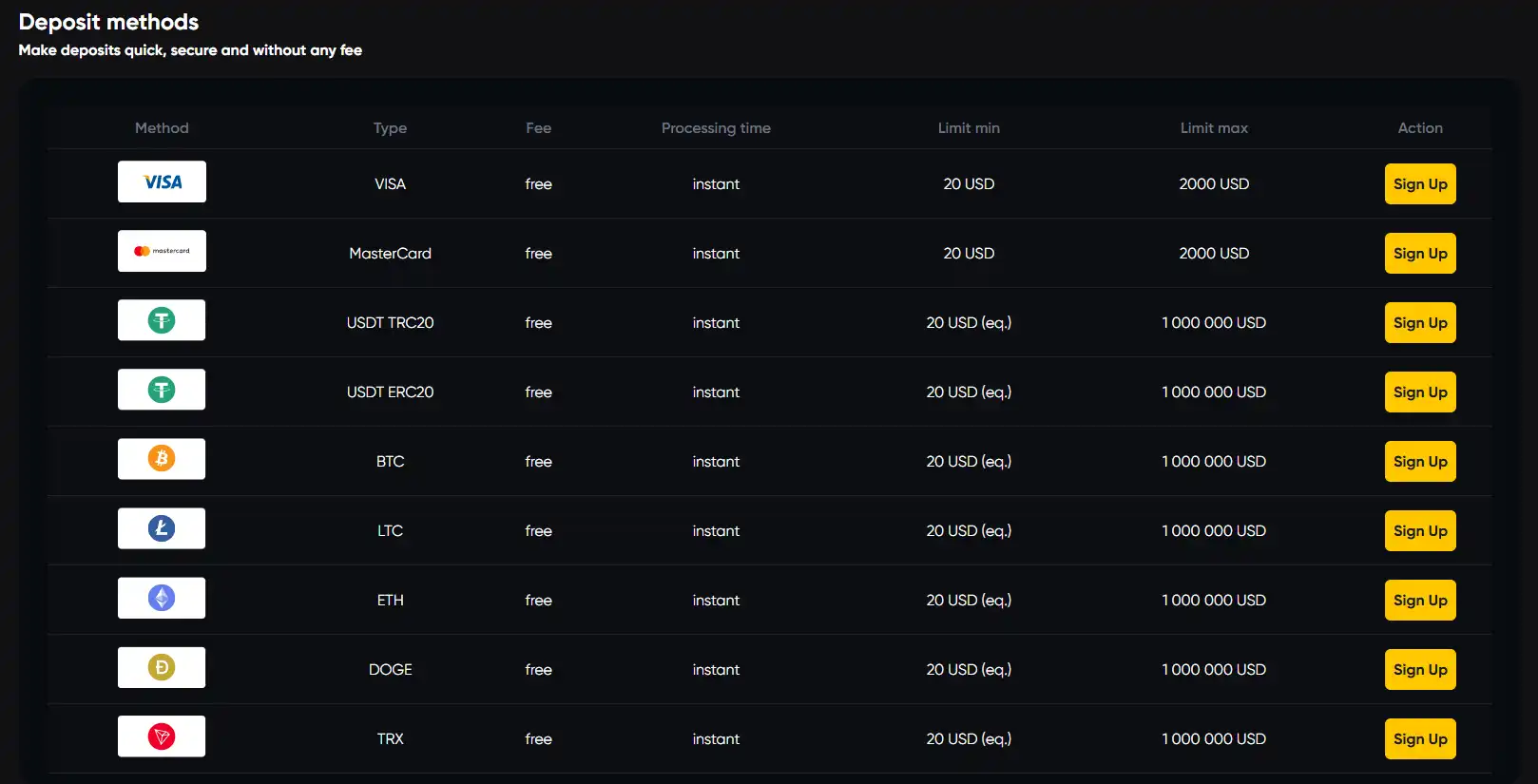
- Which Payment Routes Can Accept a $1 Deposit?
Why a “$1 Minimum” Rarely Means a $1 Deposit
A “$1 minimum” can describe the amount an online casino operator says its cashier will accept. It does not establish that the payment route selected will process a transaction of that size. The operator and the payment provider set separate conditions: the first may have no minimum deposit of its own, while the second may refuse an amount below its threshold. The figure on a page can therefore be technically accurate about the operator’s cashier and still fail to describe what can actually be sent.
That distinction matters when a small deposit is presented as a way to access real-money pokies. In Australia, the Interactive Gambling Act 2001 prohibits operators from providing online casino games, including pokies, to people physically in the country. A payment claim does not change that legal position. The mechanics below explain what deposit and cash-out thresholds mean; they are not an endorsement of using an offshore casino.
A specialist review of Australian payment options describes a usable deposit floor in the AU$10–AU$20 range. That is a reported range, not a fixed rule for every operator or payment service. The amount can vary according to the cashier’s current settings and the provider’s own conditions. If the operator’s page says “$1 deposit”, the relevant check is whether that amount is accepted at the point where the payment is actually submitted, not merely whether the words appear in a promotion or general description.
The small print may also treat a deposit differently from a payment method’s ordinary transaction. The operator may display an amount as its minimum while the provider applies a higher minimum, a fee, or both. A fee is especially consequential when the intended transfer is small: even where a transaction is accepted, the amount credited may not match the amount sent. The cashier’s confirmation and the provider’s fee information matter more than the headline.
Cash-out rules create a separate floor. A specialist review reports that minimum cash-out amounts commonly fall between AU$20 and AU$50, though the threshold is not universal. This is not the same as a deposit minimum. A small amount credited to an account may sit below the operator’s cash-out threshold, so the account balance and the amount eligible for payment are not necessarily interchangeable. The displayed balance alone does not establish that a cash-out can be requested.

The direction of payment can affect timing as well as the minimum. Deposits and cash-outs may follow different processing steps, and a successful deposit does not demonstrate that a later payment will be equally quick. Bank transfers are particularly awkward for small amounts: they can take several business days to process, and the sending bank may charge a fee. When the transfer itself is modest, a delay or charge can outweigh the apparent convenience of a low cashier minimum.
This is why “instant” and “low minimum” should be read as separate claims. One describes processing speed, the other an accepted amount; neither proves the other. A payment can be available but have a floor above $1, or be capable of accepting a small amount but take time to clear. A general site statement may not spell out every distinction, so the final transaction screen and the payment provider’s terms are the practical reference points.
There is also a difference between the amount entered and the amount that reaches the account. Provider charges, exchange or conversion handling, and the operator’s own processing rules can affect the result, where applicable. A payment record should make clear what was sent and what was credited. If those figures differ, the explanation lies in the terms governing the transaction—not in the label attached to the operator’s minimum.
In short, “$1 minimum” can be a statement about one layer of the payment process, not a promise that a $1 transfer will clear or later be available as a cash-out. The operator’s stated floor, the payment provider’s acceptance rules, any applicable charges, processing time, and the cash-out threshold are distinct parts of the same transaction. Headline figure first. Conditions underneath.
What “Best” Means When the Deposit Is Only $1
A $1 minimum deposit is not confirmed by the details available here, so check the current payment terms before depositing. These verdicts highlight only the listed facts that may help you assess each option.
License: Curacao Gaming Control Board OGL/2023/174/0082 (Dama N.V.) SpinsUp is listed with a Curaçao Gaming Control Board licence, OGL/2023/174/0082, held by Dama N.V.
License: Curacao (operating since 2017) · Min. deposit: A$20 Uptown Pokies has operated since 2017 and lists a minimum deposit of A$20. It operates under a Curaçao licence.
License: Curacao eGaming (Dama N.V.) JeetCity Casino is listed as licensed by Curaçao eGaming, with Dama N.V. named in the licensing details.
License: Curacao · Min. deposit: A$20 (POLi) Lucky Dreams lists a minimum deposit of A$20 via POLi and operates under a Curaçao licence.
License: Curacao – Antillephone N.V. (Versus Odds B.V.) · Min. deposit: EUR 20 Thor Casino lists a minimum deposit of EUR 20. Its Curaçao licence is associated with Antillephone N.V. and Versus Odds B.V.
License: Curacao Gaming Authority (Jumpman Gaming Ltd) DragonSlots Casino is listed with a Curaçao Gaming Authority licence, with Jumpman Gaming Ltd named in the licensing details.
Payout speed: crypto 30-120 minutes, fiat 24-72 hours · Min. deposit: A$30 MrPacho lists a minimum deposit of A$30. Its stated payout speeds are 30–120 minutes for crypto and 24–72 hours for fiat.
License: Curacao eGaming OGL/2024/923/0383 (Antillephone N.V.) · Min. deposit: A$30 WinSpirit Casino lists a minimum deposit of A$30 and a Curaçao eGaming licence, OGL/2024/923/0383, associated with Antillephone N.V.
License: Curacao Gaming Control Board JustCasino is listed as licensed by the Curaçao Gaming Control Board.
License: Curacao Gaming Control Board OGL/2023/176/0095 (Hollycorn N.V.) Rollero Casino is listed with a Curaçao Gaming Control Board licence, OGL/2023/176/0095, held by Hollycorn N.V.
A “best” label attached to a one-dollar deposit says little about the value of an offer. In reviewing bonus terms, I look past the headline and follow the conditions that determine whether bonus winnings can ever become cashable. A small qualifying deposit can sit beside a large wagering requirement, restrictions on eligible games, a cap on the amount that can be cashed out, or a maximum stake that is easy to exceed.
That distinction matters particularly in Australia. The Interactive Gambling Act 2001 prohibits operators from providing real-money online casino games, including pokies, to people physically in Australia. This is not a recommendation of offshore offers. It is an explanation of how their promotional language works and why a low entry figure does not, by itself, describe a useful or accessible offer.
The multiplier changes the scale
A wagering requirement states how much qualifying betting must take place before bonus-related winnings can be cashed out. A specialist review has reported low-deposit bonus requirements ranging from 35x to 50x the bonus amount. Those figures are one account of offers that can change, not a fixed rule for every promotion.
Attention: Low-deposit bonus requirements can range from 35x to 50x the bonus amount, and the calculation may be based on either the bonus alone or the combined deposit and bonus.
The base used for the multiplier matters. A term may calculate wagering against the bonus, or against the combined deposit and bonus; those produce different obligations. The wording also determines which bets count. A prominent bonus figure can therefore distract from the actual calculation if the qualifying base is not read alongside the multiplier.
A multiplier is not a promise of eventual cashout. It describes a condition that must be met, subject to the promotion’s other restrictions. The headline is only the opening line.
Game weighting changes what counts
Promotions may assign different contribution rates to different game categories. Pokies commonly count at 100% toward wagering, while blackjack and roulette may count at only 10% or 20%. A bet on a lower-weighted game therefore advances the requirement more slowly than the same qualifying stake on a game counted in full.
The practical effect is mechanical: a large-looking amount of play may represent much less progress than expected if the chosen game has a reduced contribution. Some promotions restrict eligible games altogether, so the general weighting table is not necessarily the whole rule. The terms attached to the specific offer decide what counts.
This is why the game contribution should be read together with the multiplier, rather than as a separate detail. One number sets the target; the other determines how quickly eligible play moves toward it. Read them separately and the condition can look more generous than it is.
Maximum stakes and cashout caps
A maximum bet during wagering is another consequential term. If a promotion sets a maximum stake per spin—one stated example is $5—exceeding it can void winnings. The risk is not limited to whether the wagering target is reached: a breach of the stake rule can affect the winnings themselves.
A maximum cashout cap creates a different limit. Even where the wagering condition is completed, the promotion may restrict how much can be taken as cash. The amount advertised at the start and the amount permitted at the end are not necessarily the same thing.
These restrictions are easy to miss because they appear in separate clauses. In my experience, the bonus is often presented as one offer, while the mechanics are distributed across eligibility, game contribution, stake, and cashout terms. Taken together, those clauses define the offer more accurately than its headline.
- Check the wagering multiplier
- Review game contribution rates
- Verify maximum bet limits
- Check for cashout caps
- Rely on the headline bonus figure
- Assume all games count 100%
- Ignore the maximum stake rule
- Overlook the maximum cashout limit
A practical way to read the terms
Before any bonus is confirmed, the key checks are the minimum deposit required to activate it, the wagering multiplier, and the game weighting for pokies compared with table games. The maximum bet during wagering and any maximum cashout cap belong in the same review. These are not minor qualifications; they determine what the promotion allows.
A low deposit does not automatically make a bonus generous, and a large headline does not show how much of it can be converted into cash. The meaningful comparison is between the qualifying deposit, the wagering calculation, eligible games, stake restrictions, and the cashout limit. If one of those terms is unclear, the headline cannot fill the gap.
The label “best” is therefore a poor measure on its own. It compresses several separate conditions into a single approving word. The mechanics are less catchy. They are also the point.
The $1 Deposit: A Nominal Floor, Not a Usable Budget
A “$1 minimum” describes a threshold, not what a deposit will accomplish. The operator may set no minimum deposit at all, leaving the payment method or processor to decide whether a transaction can be submitted. Even where the cashier displays a one-dollar floor, that figure does not establish that a payment route will accept the amount or that the resulting balance will be useful for play.
I have seen this distinction get lost in the wording. A low figure looks like a promise about the whole transaction, but it may refer only to one part of it: the amount the operator is prepared to credit. The payment service has its own rules, and the game has its own minimum stake. Those layers do not automatically line up.
A specialist review describes some casinos’ cryptocurrency deposit settings as nominally low, in some cases equivalent to A$1. That is a reported example, not a dependable market-wide rule. The operator can set a low threshold while the transaction itself remains subject to costs or other constraints. A displayed minimum is therefore a starting point for checking the terms, not evidence that an A$1 transfer will arrive intact or support a meaningful session.

The gap becomes clearer when the deposit is treated as a budget rather than a number in a cashier. A balance has to survive the payment process and then meet the game’s minimum stake. If a fee applies, the amount available after the transaction may be lower than the amount sent. If the smallest permitted bet is close to the remaining balance, there may be little room for more than a brief test. The nominal floor can be real and still be practically marginal.
That is not a contradiction. “Accepted” and “usable” answer different questions. Acceptance concerns whether the operator and payment route will process the deposit. Usability concerns what remains available once the transaction is complete and whether that balance can meet the game’s rules. A one-dollar setting addresses the first question only in the narrowest sense.
The same wording can also obscure who sets the condition. An operator may advertise no minimum of its own, while the processor declines amounts below its threshold. In that case, the casino’s policy and the actual payment experience differ without either statement necessarily being false. The cashier can show a low operator limit, yet the payment option can require more. The practical floor is set by the stricter condition.
I would read a $1 claim as a statement about a nominal entry point, not as a promise that a dollar will become a workable pokies balance. The distinction matters because the headline number encourages a simple mental calculation: deposit one dollar, receive one dollar to use. In practice, the amount credited, any transaction cost, and the minimum stake are separate parts of the calculation. A label on the deposit screen cannot settle all three.
This is why the phrase “start with just $1” deserves careful interpretation. “Just” makes the amount sound complete; the mechanics may make it incomplete. The operator’s threshold can be low, while the payment route imposes a higher one, or a transaction cost can reduce what is left. Even when the amount reaches the account, game rules determine whether it can be staked in the way the headline implies.
The useful distinction is simple: a minimum deposit is an entry condition, not a measure of playing value. A $1 minimum may describe the lowest amount an operator is willing to record under particular conditions. It does not by itself establish that every payment method accepts that amount, that the full amount reaches the balance, or that it can support more than a limited use. Nominal floor. Not a budget.

Australian Dollars, Crypto, and the Offshore Market
A $1 figure can describe a casino’s nominal deposit setting without describing a practical way to use the service. That distinction becomes especially important when the amount is quoted in Australian dollars but the account, payment system or game balance is handled in cryptocurrency. A low threshold in one part of the transaction does not establish that the whole arrangement is available, lawful or useful in Australia.
A specialist review has reported that some offshore operators accept cryptocurrency deposits from $5 AUD. A separate specialist review describes casino-set cryptocurrency minimums that can be as low as the equivalent of $1 AUD. These are reports about particular offers, not a settled Australian market standard. Operators can change their terms, and a published threshold does not by itself tell how a crypto transaction will be valued or what will remain after transaction costs.
The distinction matters because a displayed Australian-dollar equivalent is not necessarily the amount that arrives in a playable balance. Cryptocurrency prices move, and the transfer is processed as a digital asset rather than as a fixed Australian-dollar payment. Even where a casino accepts a nominal amount, transaction costs and the minimum stake for a game can make that balance impractical. The claim may be technically true at the deposit screen and still say little about what the amount can do.
In my experience, “minimum” is a word that compresses several different conditions into one. There is the casino’s stated floor, the payment route’s own threshold, and the amount that has practical value once credited. With cryptocurrency, the first of those may look especially low. It does not erase the others, and it cannot make a prohibited service lawful.
That last point is the defining Australian context. The Interactive Gambling Act 2001 is the central federal law for this area. It makes it unlawful for operators to provide real-money online casino games, including pokies and table games, to people located in Australia. The restriction is directed at the service provider. The Act does not make an individual’s act of placing a bet with an offshore operator a criminal offence.
Legal Prohibition
The Interactive Gambling Act 2001 makes it unlawful for operators to provide real-money online casino games, including pokies, to people located in Australia.
Those two parts are often blurred in offshore advertising. A foreign licence, where an operator has one, is not an Australian authorisation to provide online casino games to people in Australia. Nor does a payment option accepting AUD or cryptocurrency alter the legal character of the service. The payment may be technically available while the underlying offer remains prohibited here.
ACMA is the federal agency that enforces the Interactive Gambling Act and monitors compliance with federal interactive-gambling rules. Its powers include asking Australian internet service providers to block websites that provide prohibited services or advertise them in Australia. A block is an enforcement measure, not a statement that every site encountered by a user has been reviewed individually, and access to a site does not establish that its service is lawful.
The enforcement record gives a sense of the active approach. Since November 2019, ACMA has blocked more than 1,455 illegal gambling and affiliate websites after enforcement action. Reports also describe more than 210 illegal services leaving the Australian market since enforcement began in 2017. However, published counts disagree: another account gives the figure as over 190 services since 2017. The difference should be stated rather than hidden behind a single, falsely precise total.

This enforcement setting helps explain why an “Australian” label can be misleading. It may refer to Australian-dollar display, marketing aimed at Australian users, or a site’s own description; none of those establishes local permission. ACMA’s blocking activity also means that availability can change. A site that loads at one point may later be inaccessible, while a working payment option does not guarantee that the operator will continue to serve Australian users.
Cryptocurrency can make low-deposit claims sound more universal than they are. The advertised amount may be denominated in AUD, while the actual transfer uses a coin whose value and transaction costs are separate from that figure. The casino’s minimum is only one condition in the chain. A specialist review’s report of a $1 AUD-equivalent floor should therefore be read as a reported setting, not as evidence that a $1 deposit is consistently accepted or usable across offshore sites.
The same caution applies to claims about a $5 AUD crypto entry point. It is a reported example from the market, not a promise that every operator, wallet or transfer route will accept that amount. The exchange between a displayed AUD value and a crypto balance can also make the final credited amount differ from what the headline suggests. Small figures are particularly sensitive to costs; the nominal threshold and the usable balance are not interchangeable.

I would not treat a low number as the main question in this market. The legal status comes first: real-money online casino services are prohibited for operators providing them to people in Australia, and ACMA actively works to restrict access to prohibited services and their advertising. The fact that a player is not criminalised for placing a bet does not turn the operator’s offer into a lawful local service.
So a $1 AUD minimum bitcoin deposit claim tells only a narrow story about a stated threshold. It does not establish that the deposit is practical, that the site is authorised in Australia, or that access will persist. In this market, a small number can be accurate on the screen and still be a poor description of the real position.
PayID’s $1 Claim Meets the AU$10–AU$20 Reality
A “$1 PayID deposit” can describe a casino’s own entry threshold without showing what the payment route will accept. Those are separate checks: the site may record a low minimum, while its PayID or instant bank-transfer option applies a higher floor. A specialist review puts the typical minimum for these routes at AU$10–AU$20, but that is a reported range, not a fixed rule for every service or a lasting market standard.
I treat the wording as a claim about the operator’s cashier, not proof that a one-dollar transfer can be completed. The amount displayed beside a payment option matters more than a headline elsewhere on the page. If the cashier names a higher minimum, the advertised dollar threshold does not override it. Payment conditions can also change, so old descriptions may no longer match the transaction screen.
PayID is often discussed alongside instant bank transfer, but the two labels do not guarantee identical limits or processing. The relevant minimum is the one attached to the selected route at the point of payment. A nominal $1 figure may therefore be technically true of the account while remaining unavailable through that particular transfer channel. A small distinction. A real one.

The deposit and cash-out sides should not be treated as mirror images. A specialist review describes PayID as among the faster cash-out routes at Australian-facing online casinos, often completing the transfer on the same day. That is a reported performance, not a promise: account verification and the operator’s own handling remain part of the process. A fast cash-out claim says nothing about whether a $1 deposit is accepted, and a low deposit minimum says nothing about how quickly money can be returned.
The same distinction applies to other payment names. POLi is not a current alternative in Australia: the service shut down on 30 September 2023. References to it in older payment guides are historical, not evidence that a POLi deposit can now be made.
In practice, a PayID claim needs two separate readings: what the operator says its minimum is, and what the payment route allows. For the small-deposit question, the specialist review’s AU$10–AU$20 range is a useful indication of the gap that can arise, but not a universal tariff. The cashier’s stated conditions are the operative detail; the marketing headline is not.
A $1 Deposit Is Not the Same as $1 of Play
A displayed minimum answers one narrow question: what amount the operator’s cashier may accept. It does not establish how much reaches a playable balance after payment costs, or whether that balance can meet a game’s minimum stake. Those are separate checks, and the difference matters most at the very bottom of the scale.
A specialist review describes some casinos’ cryptocurrency deposit floors as low as the equivalent of AU$1. That is a nominal threshold, not evidence that a one-dollar deposit can be used efficiently. A transaction cost can take a meaningful share of such a small sum; the amount available for staking may therefore be less than the amount sent. The conversion between cryptocurrency and Australian dollars can also make the displayed equivalent different from the final credited value.
A usable Australian deposit is reported to effectively range between AU$10 and AU$20, as amounts like $1 may be consumed by transaction costs or fail to meet minimum game stakes.
Then comes the game minimum. A balance can exist without being large enough for a particular stake. If the minimum bet exceeds what remains available, the deposit is real money in the account but not usable for that play. Even where a stake is possible, a very small balance leaves little room for repeated bets. The distinction is simple. Credited is not the same as playable.
In my experience, the phrase “$1 minimum” does the work of a headline: it states the lowest nominal entry point, not the practical budget needed to use a service. A specialist review puts the effective minimum for a usable Australian deposit between AU$10 and AU$20. That is a reported estimate, not a fixed market rule; the amount depends on the operator, payment route and game settings. Still, it captures why a one-dollar claim can be technically accurate and practically thin.
This is also why “real money” can mislead when it is treated as a measure of usefulness. A dollar may be deposited as cash value, yet transaction costs and stake requirements determine what that value can do. The key distinction is not whether the balance is real, but whether enough remains after those constraints to place a permitted bet.
A low threshold is a floor, not a promise of meaningful play. At one dollar, the margin for costs is narrow and the available stake may be decisive. The advertised number is only the first part of the arithmetic.
The Payment Method Sets the Minimum
A casino’s stated minimum and a payment method’s transaction floor are separate rules. An operator may set no minimum deposit of its own, yet the processor can still reject an amount below its threshold. That is how a nominal $1 minimum can appear alongside a higher amount needed to send money through a particular route.

Neosurf illustrates the difference. The voucher has to be bought before its value can be deposited, and a specialist review puts the typical minimum purchase at AU$10. In practice, that purchase threshold becomes the lowest amount available through the voucher route, regardless of whether the casino’s cashier displays a $1 minimum. The advertised figure describes the operator’s setting, not what the payment instrument can deliver.
The same distinction applies to e-wallets. A specialist review reports that Skrill and Neteller deposits to gambling sites may attract fees, and that a transaction minimum of AU$10 is common. These are reported conditions, not a guarantee that every wallet or casino applies the same terms. Fees matter especially at the low end: a charge can reduce the value that reaches the account, while a transaction floor can prevent a smaller transfer altogether.
Different layer, different rule.
When a cashier lists a minimum, the important detail is which party sets it. The operator controls its own deposit threshold; the voucher issuer, wallet, bank or payment processor can impose another. The amount accepted at checkout is therefore determined by the route as well as by the casino’s stated policy.
This is why a search for pokies with a minimum deposit of $1 can produce a figure that is technically accurate but incomplete. It may refer only to the operator’s minimum, not to the amount a selected method will process. A low number on the cashier page does not establish that every payment route supports it.
I have seen these rules treated as one figure in promotional copy. They are not. The operator’s minimum describes the account setting; the payment method’s minimum describes the transaction it will accept. For small deposits, the second rule can be the one that decides the practical floor.

First Deposits and the Cost of Moving Small Amounts
A casino’s advertised minimum and the amount that can pass through at the first payment are separate thresholds. The operator may set no minimum of its own, yet the payment route can still reject a smaller transaction or make it uneconomic. That distinction is easy to miss in a “$1 first deposit” claim: it may describe the cashier’s nominal setting, not a payment that will clear for that amount.
From the operator’s side, the first deposit is also where the payment chain is tested. The cashier sends a transaction to a processor, and the processor applies its own rules. A low figure displayed on the deposit page does not override those rules. If the route has a higher minimum, the transaction cannot be completed at the advertised floor.
Bank transfer is particularly awkward for a small first amount. Processing can take several business days, and the sending bank may charge a fee. A delay and a fee weigh more heavily when the amount being moved is small; the deposited balance can be reduced before it is available for use. It is not a practical route for testing whether a one-dollar claim works.
A specialist review puts the effective minimum for a usable deposit in Australia between AU$10 and AU$20. That is a reported assessment, not a fixed rule for every operator or payment route, and limits can change. The important point is that the first transaction is governed by the route that actually handles it, not just by the number printed beside the cashier’s minimum.
I have seen the wording “no minimum” do more work in advertising than it does at checkout. It describes one part of the process, while the payment provider controls another. For a first deposit, that gap is the whole story: a nominal dollar amount may appear acceptable on screen and still fail at the point of payment. Small transfers expose the difference quickly.

Which Payment Routes Can Accept a $1 Deposit?
A casino’s stated minimum and a payment route’s minimum are separate controls. An operator may set no minimum of its own, yet the processor can reject a smaller transaction. So a page saying that a $1 deposit is accepted does not, by itself, establish that every available route will carry it.
Cryptocurrency is the route most often associated with a nominal floor that low. One specialist review reports that some casinos set a crypto deposit minimum as low as the equivalent of $1 AUD. That describes the casino-side threshold, not a guarantee that a transfer of that size will be practical. Network costs can consume a small amount, and the credited balance still has to meet the game’s minimum stake. A transaction may technically pass while leaving little usable value.
Skrill and Neteller present a different constraint. A specialist review reports that deposits to gambling sites through these e-wallets may attract fees and often have a minimum transaction amount of $10 AUD. Where that threshold applies, the casino’s lower figure cannot bring the payment down to $1. The method sets the floor.
The distinction matters most when a payment screen shows several routes beneath one advertised minimum. Each route can have its own processing threshold, fee treatment and acceptance rules; a single figure on the casino’s page may not describe them all. The amount entered is not necessarily the amount that arrives as playable balance, either, where charges apply.
In practice, a nominal $1 claim is meaningful only for the specific route that processes it. Crypto may be listed with a casino-side minimum at that level, while the reported e-wallet threshold is higher. Neither statement establishes what every operator or processor will accept at the time of payment. Separate limits. Separate outcomes.
What payment method is best for small deposits in Australia?
Cryptocurrency may allow a casino-set minimum as low as the equivalent of AU$1, but transaction costs can make such a small deposit impractical. The common effective minimum for a usable deposit is AU$10–AU$20.
What is the actual minimum deposit at a no minimum deposit casino in Australia?
Even if the casino sets no minimum, payment methods commonly make the effective minimum AU$10–AU$20. Cryptocurrency may have a nominal minimum as low as AU$1, while some offshore operators accept AU$5.
Are no minimum deposit casinos legal in Australia?
The Interactive Gambling Act 2001 prohibits operators from providing certain online gambling services, including online casino games, to people in Australia. The Act does not criminalise an individual for placing a bet with an offshore operator.
What is the minimum deposit and wagering requirements?
The common effective deposit minimum is AU$10–AU$20, although payment methods can set different limits. Low-deposit bonuses may require wagering of 35x–50x the bonus amount before bonus-related winnings can be withdrawn.
Can I withdraw winnings from a low deposit?
A low balance may be below the usual minimum withdrawal of AU$20–AU$50. If a bonus is involved, its wagering conditions and other restrictions must also be met before bonus-related winnings can be cashed out.
Do low deposit bonuses have wagering requirements?
Yes. Reported requirements for low-deposit bonuses range from 35x to 50x the bonus amount, and the promotion’s terms determine which bets count.
Created by the ”Caswino Casino” editorial team.