







Online Casino Payment Methods for Australian Players
 Available in AU
Payment categories, transaction routes and processing steps can shape how funds move into and out of an online casino.

- The Payment Route Matters More Than the Label
- Deposits and Withdrawals Follow Different Rules
- PayID and BPAY in the Australian Context
- What a Payment Gateway Actually Connects
- Payment Systems, Vouchers and the Cashout Gap
- A Payment Portal Is Not a Withdrawal Guarantee
- Providers, Fees and the Cost of Moving Money
- “Instant” Payments Still Have a Processing Clock
- Payment Apps: PayID, Wallets and Prepaid Options
- Mobile Wallet Payments and Their Limits
The Payment Route Matters More Than the Label
A payment method is not a single promise. The label on a cashier screen says little about how money moves, which party handles it, or whether the same route is available when funds are returned. From the operator side of the counter, the useful distinction is between the payment category and the transaction it is being used for. A deposit route and a withdrawal route are separate parts of the arrangement.
A specialist review describes four broad categories as relevant to Australian players: e-wallets, prepaid payment products, bank transfers and cryptocurrencies. That is a map of categories, not a guarantee that a particular service is available or suitable. Names can create a false sense of certainty; the operating details matter more. A bank transfer, for instance, is not interchangeable with an e-wallet simply because both move funds electronically.
The same caution applies to the phrase “online casino payment solution”. It can refer to a provider that handles a transaction, a payment route visible to a customer, or the operator’s wider process for accepting and returning funds. Those are different layers. A payment may be authorised by one party, recorded by another and subject to the operator’s own rules before it is processed. “One-click” describes an interface. It does not describe the full route.
Choosing a casino payment method means checking the practical details that affect your deposit and withdrawal experience, not just the games on offer. This list highlights the payment-related facts available for each operator so you can decide what to check before signing up.
License: Curacao Gaming Control Board OGL/2023/174/0082 (Dama N.V.) SpinsUp is listed with a Curacao Gaming Control Board licence held by Dama N.V. The available details do not specify its payment methods.
License: Curacao (operating since 2017) · Min. deposit: A$20 Uptown Pokies has operated since 2017 and lists a minimum deposit of A$20. No specific payment methods are provided in the available details.
License: Curacao eGaming (Dama N.V.) JeetCity Casino is listed with a Curacao eGaming licence held by Dama N.V. Its available details do not identify payment methods.
License: Curacao · Min. deposit: A$20 (POLi) Lucky Dreams lists POLi and a minimum deposit of A$20 for that method. Its Curacao licence is also noted.
License: Curacao – Antillephone N.V. (Versus Odds B.V.) · Min. deposit: EUR 20 Thor Casino is listed with a Curacao licence from Antillephone N.V., with Versus Odds B.V. named, and a minimum deposit of EUR 20. The available details do not specify payment methods.
License: Curacao Gaming Authority (Jumpman Gaming Ltd) DragonSlots Casino is listed with a Curacao Gaming Authority licence held by Jumpman Gaming Ltd. No payment methods are specified in the available details.
Payout speed: crypto 30-120 minutes, fiat 24-72 hours · Min. deposit: A$30 MrPacho lists crypto payouts in 30–120 minutes and fiat payouts in 24–72 hours. Its minimum deposit is A$30.
License: Curacao eGaming OGL/2024/923/0383 (Antillephone N.V.) · Min. deposit: A$30 WinSpirit Casino is listed with a Curacao eGaming licence, OGL/2024/923/0383, from Antillephone N.V. Its minimum deposit is A$30.
License: Curacao Gaming Control Board JustCasino is listed with a Curacao Gaming Control Board licence. The available details do not identify its payment methods.
License: Curacao Gaming Control Board OGL/2023/176/0095 (Hollycorn N.V.) Rollero Casino is listed with a Curacao Gaming Control Board licence, OGL/2023/176/0095, held by Hollycorn N.V. No payment methods are specified in the available details.
The clearest comparison is functional. A bank transfer moves money through banking infrastructure. An e-wallet holds a balance or connects payment sources through a separate account. A prepaid product limits spending to the value loaded onto it. Cryptocurrency uses a blockchain network rather than a conventional bank transfer. The categories have different mechanics, and the word “payment” does not erase those differences.
Searches for Bitcoin casino payments or cryptocurrency payment methods point to a real category, but that wording should not be read as a recommendation to fund online gambling with digital currency. Blockchain transfers are irreversible and have no chargeback option. That changes the consequences of a mistake: there is no card-style reversal route built into the transaction. It is a material distinction, not a feature to dress up as speed or privacy.
There is also a legal line that payment labels cannot alter. Under the Interactive Gambling Act 2001, it is illegal for operators to provide real-money online casino games, including pokies and table games, to people physically located in Australia. A payment route does not make that service compliant. Nor does an Australian-dollar display or a familiar payment brand change the nature of the underlying offer.
I separate payment claims into three questions: what route is being described, what transaction it supports, and who controls the processing. Marketing tends to compress those into one reassuring label. The practical result can be a route that accepts funds but does not handle a return, or a displayed option that depends on the operator’s own setup. The category alone cannot settle either point.


So the label is the start of the assessment, not its conclusion. “Fast”, “easy” and “secure” are promotional shorthand unless tied to a specific part of the transaction. A payment method may have one set of mechanics at the point of transfer and another once an operator reviews a request. A familiar name is not a cashout promise. A digital route is not automatically a better route.
For Australian readers, broad payment categories can explain how different systems work, but they should not be mistaken for an invitation to use an offshore casino. The legal position applies to the service, not merely to the payment instrument. The distinction is easy to miss. It matters.
Deposits and Withdrawals Follow Different Rules
A payment method shown for adding funds does not, by itself, establish how money can be taken out. The deposit and withdrawal sides of an account can follow separate rules: an option may accept incoming payments without being available for cashouts. That distinction is easy to miss when a payment screen presents a single menu under a general heading.
I have seen the wording around payments do a lot of work. “Supported” can mean only that a method is available for deposits, not that it can return funds to the same account. The practical test is whether the operator states that the method is available for the particular transaction. A successful deposit confirms only that the payment was accepted at that point. It says nothing conclusive about a later withdrawal request.
Attention: A successful deposit confirms only that the payment was accepted at that point; it does not guarantee that the same method is available for withdrawals.
PayID illustrates why the distinction needs careful wording. A specialist review reports that PayID availability for deposits depends on the operator and that withdrawal support needs separate confirmation. That is a report about a changing operator feature, not a promise that PayID works the same way across all sites. Seeing it listed beside a deposit option cannot settle the cashout question.
The mismatch is not merely a matter of naming. The operator’s rules may treat payment-in and payment-out as different processes, with their own eligible methods and conditions. A familiar label on both screens can create an impression of a direct route back, but the label alone does not confirm that funds can travel in both directions. Separate terms matter. So does the specific wording beside each transaction type.
Promotions sit alongside these mechanics but do not replace them. A no-deposit offer, for instance, may still carry wagering, identity-verification and withdrawal conditions. Being eligible for an offer, or meeting its stated conditions, does not automatically determine which payment method can be used for a withdrawal. Promotion terms explain the offer; payment rules explain how a transaction is handled. They answer different questions.
This is where “no deposit” can sound more complete than it is. It describes one feature of an offer, not the full path from a credited balance to money leaving an account. The conditions may affect whether a balance can be withdrawn, while the withdrawal method remains subject to separate operator rules. Two layers. Not one.

The distinction also matters when a payment method appears in general promotional copy but not in the transaction details. Broad wording can describe a service without spelling out whether it applies to deposits, withdrawals, or both. The only useful reading is the one tied to the action being taken. A deposit reference is not a cashout confirmation.
There is a further Australian context: the Interactive Gambling Act 2001 prohibits operators from providing real-money online casino games to people physically in Australia. Payment information should not be read as an endorsement or assurance that an offshore service is lawful or suitable for Australian residents. The legal position is separate from the operator’s payment workflow.
For a clear comparison, the relevant question is not simply which online casino payment methods appear on a page. It is whether the stated method is available for the specific direction of travel, and whether the associated conditions are clear. A deposit option and a withdrawal option are separate claims. Treating them as interchangeable is a costly assumption.
PayID and BPAY in the Australian Context
PayID is tied to the Australian banking system, not a separate balance held in a casino account. It lets a mobile number, email address or ABN act as an identifier linked to an Australian bank account through the New Payments Platform. Every major Australian bank supports PayID. That local connection explains why the name appears in discussions of casino payment methods in Australia, but it does not mean every operator offers it or that the service is authorised for online casino gambling.
Legal Warning
Under the Interactive Gambling Act 2001, it is illegal for operators to provide real-money online casino games, including pokies, to people physically located in Australia.
The legal distinction matters. Under the Interactive Gambling Act 2001, operators cannot lawfully provide real-money online casino games, including pokies, to people physically located in Australia. A payment option appearing on a website does not change that position. Nor does a familiar bank-linked method make the underlying service lawful. The payment rail and the service using it are separate things.
From the payment-desk side, the useful distinction is between an identifier and an outcome. PayID identifies the bank account to which a payment is directed; it does not, by itself, establish what an operator will accept, how a transaction will be handled, or whether money can be returned by the same route. Those details depend on the service’s own arrangements. A specialist review has described PayID availability as dependent on the operator and said withdrawal support needs separate checking. That is a report about operator practices, not a guarantee that PayID will be available at any particular site.
BPAY has a different practical profile. It is a bill-payment system, and the payment timing reported by a specialist review is one to two business days. That wait makes it a poor fit for a process built around immediate access to funds. A specialist review characterises BPAY as rarely used for real-time gameplay and as a possible fallback when PayID is unavailable. The qualification matters: BPAY’s presence in a payment menu does not mean it works like a live bank transfer.
That difference is easy to miss when both names are presented under a broad “banking” label. PayID uses a linked identifier within the New Payments Platform; BPAY follows a bill-payment route with a longer stated processing window. They are not interchangeable simply because both connect to Australian financial services. Timing, availability and the purpose of the payment route all affect what the label means in practice.

I have seen how menus flatten these distinctions. A short list of logos can make methods look equivalent, while the operational details sit elsewhere or are not displayed until a transaction is attempted. In a lawful banking context, that can already cause confusion. In the context of a prohibited online casino service, the more important point is that a payment method cannot confer legal status or protections on the service.
So PayID’s local bank-account link is the defining feature, while BPAY’s reported timing makes it more of a slower alternative than a real-time option. Neither name should be read as an endorsement or as evidence that an online casino may lawfully serve Australian customers. Payment labels describe a route for money. They do not settle the legal question.
What a Payment Gateway Actually Connects
A payment gateway is the checkpoint between a chosen payment route and the operator’s payment process. It is not the bank account, wallet or casino balance itself. In practical terms, it passes transaction information between the payment service and the operator, then returns a result: accepted, declined or held for review. The exact steps depend on the parties involved.
That distinction matters because a gateway can connect systems without settling every question about the person or the funds. A transaction may be technically authorised while the operator still needs to complete checks before treating an account as verified. I have seen the word “seamless” used for this stage; behind it sits a chain of decisions, not a single button.
Verification Requirements
A specialist review describes operators asking for government-issued identity documents, evidence of a residential address dated within the previous three months, and proof that the payment method is authorised for the account holder.
The checks are separate from the payment route. A specialist review describes operators asking for identity documents issued by government, evidence of a residential address dated within the previous three months, and material showing that the payment method belongs to or is authorised for the account holder. The precise request can vary. The point is to establish that the account, identity and funding method fit together.
A gateway can therefore be involved in moving a transaction while the operator’s own review remains incomplete. If a document is unreadable, details do not match, or proof of the payment method is missing, the payment process may pause for clarification. That is not the same as a gateway malfunction. It is a verification decision made around the transaction.
The phrase “casino payment gateway” can make the system sound like one universal product. It is better understood as a connection point in a wider payment arrangement. The route supplies transaction details; the gateway relays or handles them according to its role; and the operator applies its account and verification rules. Which party handles a particular check is not necessarily visible in the payment screen.
This is also why payment technology should not be judged solely by how quickly a confirmation appears. A successful authorisation does not, by itself, establish that an account has passed verification or that later account activity will be processed without review. The visible status is only one part of the transaction.
For people in Australia, there is a further boundary: the Interactive Gambling Act 2001 makes it illegal for operators to provide real-money online casino games to people physically located in the country. A description of payment infrastructure does not make such a service lawful or endorse its use.

The useful way to read the gateway stage is narrowly: it connects a payment route to an operator’s processing workflow, while verification can remain a distinct checkpoint. Keep the records consistent. Keep copies of submitted documents. No shortcut.
Payment Systems, Vouchers and the Cashout Gap
A prepaid voucher has a hard boundary: spending is capped at the value loaded onto it. That can make the payment feel controlled, but the cap describes what can go in, not what can come back out. In payment operations, those are separate functions. A system that accepts a voucher as a deposit method does not thereby support refunds or withdrawals to that same voucher.
That distinction is easy to miss in a payment menu. The label tells only part of the story. The practical question is whether the payment instrument can receive funds from the operator, and prepaid vouchers generally do not provide that return route. A voucher deposit may therefore leave any eligible balance dependent on a different cashout method. The gap is functional, not a technical glitch.
From the operator side, a deposit channel is configured to collect funds; a payout channel has to send them to an account or instrument capable of receiving funds and matching the customer’s verified details. Those capabilities do not automatically travel together. A casino payment system can display several ways to pay while supporting a narrower set of routes for outgoing funds. The payment system’s interface may make the options look like a single menu. They are not necessarily interchangeable.
A prepaid voucher’s spending cap only defines the amount that can be deposited; it does not provide a route for refunds or withdrawals back to the voucher.
The same caution applies to descriptions such as “safe casino payment methods”. A voucher’s spending cap can help define the amount committed through that voucher, but it does not establish that an operator is lawful, that a balance is protected, or that a withdrawal can be completed. Safety is not one feature. It involves the status of the service, the handling of personal and payment information, and the ability to retrieve funds through a valid route. A deposit cap settles only the first, narrow question of how much that instrument can be used to pay.
Australia’s legal position matters before any payment mechanics are considered. Under the Interactive Gambling Act 2001, it is illegal for operators to provide real-money online casino games to people physically located in Australia. A payment page or voucher option does not change that rule. Nor does the presence of a payment method make an online casino service lawful.
A “convenient” voucher, in promotional language, often means a bounded way to pay. The important omission can be what happens after the deposit: the voucher may not accept a withdrawal, so another route would be required for any payout the service permits. That is the cashout gap. It is why a payment method should not be judged solely by how readily it takes funds.
Searches for an online casino payment system may also surface unfamiliar labels for prepaid or indirect payment arrangements. A name in a menu is not proof of how the transaction works. The relevant terms are the instrument’s actual role, whether it can receive money, and what the operator’s rules say about withdrawals. If those details are unclear, the deposit option alone answers very little.

A voucher controls the outflow. It does not close the loop.
A Payment Portal Is Not a Withdrawal Guarantee
A payment portal is an operator’s menu, not a promise that every option works in both directions. Its deposit screen shows what the site is prepared to accept at that point; the withdrawal screen may present a different set of routes, or require a separate process. I have seen the menu treated as a complete payment policy. It is not.
A specialist review reports that casino payment methods can differ between deposits and withdrawals. Another specialist review says PayID deposit availability depends on the operator and that withdrawal support needs separate confirmation. Those are specific, changing claims, not a fixed rule for every site. The practical distinction remains: a method appearing beside “deposit” does not establish that it can return funds.
The wording matters. A button labelled “PayID” or “withdraw” can look conclusive, but it may lead to terms, eligibility checks or a further selection screen. The portal is the operator-facing layer of the transaction. It records the options being presented, not necessarily the conditions that determine whether a request will be approved or completed. Read the deposit and cashout instructions as separate parts of the policy.
That is also why a general list of popular payment methods can mislead. A named option may be available only for one transaction direction, may depend on account status, or may not be offered at all by a particular operator. Search terms such as POLi, Boku, Neosurf or PayPal do not establish that those services are available for gambling payments in Australia. PayPal has explicitly barred gambling transactions in Australia since 2021. A name on a page is not evidence of a usable route.
- Check deposit and cashout instructions as separate policy parts
- Verify withdrawal routes independently of deposit options
- Assume a deposit method is available for withdrawals
- Treat a payment portal menu as a guaranteed payment policy
The Australian legal position matters before any menu comparison. Under the Interactive Gambling Act 2001, operators cannot lawfully provide real-money online casino games, including pokies and table games, to people physically in Australia. A payment portal does not alter that position, and an offshore operator’s menu should not be mistaken for Australian approval or protection.
I would treat any portal as a snapshot, not a guarantee. Check what is stated for deposits and withdrawals independently, including any restrictions or verification requirements shown in the operator’s terms. Do not send money on the assumption that the route used to fund an account will be available to receive funds later. If the withdrawal method is not clearly identified, the menu has not answered the relevant question.
There is another common misunderstanding: a casino payment platform may present a clean, unified interface, while the operator controls which choices appear and how requests are handled. The polished screen can make the process feel settled. It is only the front door.
The sensible reading is narrow: the portal shows what the operator currently displays for a particular account and transaction type. It does not establish legality, guarantee acceptance, or promise a matching cashout route. Menu first. Conditions separately.
Providers, Fees and the Cost of Moving Money
A payment provider’s name tells little about the total cost of moving a balance. I look at the full route: what it costs to fund the account, whether a fee applies when money leaves, how long the transfer takes, and whether currency conversion or account inactivity changes the final amount. Those are separate charges, and they can sit in different terms.

A specialist review reports that Skrill withdrawals to a bank take one to two days, while some casinos apply a transaction fee of 1–3%. The fee is not a universal Skrill charge: the reported condition is tied to some casino operators. That distinction matters. A provider’s own charges and an operator’s processing charges can both affect a transaction, so one advertised label does not give the complete price.
For MuchBetter, a specialist review describes withdrawals as faster than traditional bank-transfer cashouts, which may take as long as five days. That is a comparison, not a fixed promise for every transaction. The operator still controls its own processing, and the route from the provider to a bank is not the same thing as the provider’s internal transfer. Speed has more than one clock.
Neteller presents a different cost detail. A specialist review reports a 1.45% charge when funding a Neteller account by credit card. That is a provider-funding fee, not an endorsement of credit cards for online gambling; credit-card payments are not an appropriate deposit route for online wagering in Australia. The charge is relevant only to understanding how provider balances can incur costs before any later transfer.
Currency can quietly outweigh a visible transaction fee. A specialist review puts conversion from Australian dollars to euros at a cost of 2–4%. A balance displayed in another currency may therefore be worth less in Australian dollars when converted back. The displayed amount is not always the spendable amount. Exchange costs count.
Withdrawals to a bank take one to two days, with some operators applying a 1–3% transaction fee.
Withdrawals are described as faster than traditional bank transfers, which can take up to five days.
Funding a Neteller account via credit card may incur a 1.45% provider-funding fee.
Inactivity is another possible drain. A specialist review describes a monthly $10 fee at some casinos after an account has had no login for 90 days. This is an operator condition, not a standard charge from Skrill, Neteller or MuchBetter. It belongs in the account terms alongside withdrawal and conversion costs, rather than being mistaken for a payment-provider fee.
I have seen payment comparisons focus on the first movement of money and leave the rest in small print. That makes a low-cost route look simpler than it is. The useful comparison is the whole chain: provider funding, operator charges, withdrawal timing, conversion and any inactivity condition. Each figure above is tied to a reported condition, not a universal tariff. Fee schedules and operator terms can change, so the distinction between a provider charge and a casino charge remains essential.
The posted fee is only part of the price.
“Instant” Payments Still Have a Processing Clock
“Instant” describes a point in a payment process, not necessarily the moment funds are available for every purpose. A transaction may register quickly at one end while the operator’s payment process or the receiving institution still has work to do. The label alone does not tell a person how long a deposit or withdrawal will take.
That distinction matters because payment timing is not one shared clock. A specialist review reports BPAY payments taking one to two business days. That is a stated estimate for this route, not a promise that every transaction will clear on the same schedule. Weekends, business-day cut-offs and the operator’s own handling can affect when a payment is reflected.

Withdrawals can involve a separate delay. A specialist review describes casino bank transfers as being processed manually once or twice a week; in its example, a request made on Friday may not arrive until Wednesday. The wait is not necessarily the time spent moving money between banks. It can include the operator’s own processing queue before a transfer is sent.
In practice, “instant payment” can be a narrow description of the initial transaction step. It does not establish that a withdrawal is instant, nor that a displayed balance can be moved out at the same pace. A payment integration connects a payment route to an operator’s process, but that connection does not remove review or batch handling.
The distinction is particularly important in Australia. Real-money online casino games, including pokies, are prohibited interactive gambling services when offered to people in the country. An explanation of payment timing is not an endorsement or a recommendation to use such a service.
I have seen the word “instant” do too much work in payment copy. It can refer to authorisation, an on-screen update or a particular leg of a transaction; the customer may read it as a promise about the entire journey. Those are different claims. For any lawful payment service, the meaningful detail is which stage the timing refers to and whether the figure applies to incoming or outgoing funds.
A clock starts somewhere. It may not be the clock that matters.
Payment Apps: PayID, Wallets and Prepaid Options
The word “app” can make different payment routes sound interchangeable. They are not. PayID connects an identifier to a bank account, while a prepaid voucher represents value loaded in advance. Each has its own role in a payment flow, and a digital interface does not make the underlying money movement the same.
PayID
A system linked to the Australian banking infrastructure that allows a mobile number, email address, or ABN to act as an identifier for a bank account via the New Payments Platform.
With PayID, a mobile number, email address or ABN can serve as the link to an Australian bank account through the New Payments Platform. That makes it a bank-linked route rather than a separate stored-value balance. Whether an operator accepts PayID for deposits depends on that operator. A specialist review also notes that withdrawal support needs separate confirmation; seeing PayID in a deposit menu does not establish that it can be used to receive funds.
The distinction matters in the cashier itself. A method can appear as a way to move money into an account without being offered in the withdrawal menu. I treat those as separate functions, not two sides of one button. Check the operator’s current terms and available withdrawal routes before any transaction. A menu label is not a promise about where money can go later.
Paysafecard sits on the prepaid side. The amount available is limited to what has been loaded, which gives the voucher a clear spending boundary. But that boundary works in one direction: voucher deposits generally cannot be sent back to the voucher as a cashout. A separate withdrawal route would be needed, subject to the operator’s stated options and verification requirements.
That is the practical difference between a bank-linked payment app and paying via a voucher. PayID points to a bank account; a voucher begins with prepaid value and may not provide a route back out. Neither label alone tells the full story. The mechanics do.
Searches for other app-based or bank-transfer terms can also create the impression that every named option belongs in an Australian casino cashier. Availability is operator-specific, and a familiar payment name is not evidence that it is supported for either deposits or withdrawals. Nor does the presence of a payment route change the legal position: providing real-money online casino games to people in Australia is prohibited under the Interactive Gambling Act 2001.

For digital payments, the useful comparison is not simply app versus voucher. It is whether the route connects to a bank account or prepaid value, and what the operator permits at each end of the transaction. Check both ends.
Mobile Wallet Payments and Their Limits
A phone wallet can make a payment feel like a single, contained action: the payment details sit in the digital wallet, and biometric authentication confirms the person authorising the transaction. A specialist review describes Apple Pay deposits in those terms. That is the relevant distinction: the phone and biometric check are part of authorising a deposit, not a way to receive money back.
The polished label can obscure the boundary. “Mobile” describes the device and the authorisation experience; it does not establish that the same route works in reverse. Apple Pay is not a cashout method. A deposit flow and a withdrawal flow are separate functions, even when both appear under a payment heading. The neat tap is only one side of the transaction.

I have seen payment wording blur those steps. A wallet logo beside a deposit option can suggest a complete payment loop, while the actual function described is narrower. The phone confirms the payment; it does not turn the wallet into a withdrawal channel. That difference matters before any money moves.
There is also a larger Australian constraint. The Interactive Gambling Act 2001 makes it illegal for operators to provide real-money online casino games to people physically located in Australia. A mobile interface does not change that rule. Nor does the presence of a payment brand establish that an online casino service is lawful to provide here.
So the practical reading is limited and precise: Apple Pay is described as a possible deposit method using a phone’s digital wallet and biometric authentication, where that function is offered. It should not be read as a promise of cashout support or as an endorsement of an online casino. The payment technology and the legality of the service are different questions.
A smooth authorisation is not a complete payment route. The limit is clear.
Do Australian online casinos charge fees for deposits or withdrawals?
Some do. Bank transfers may carry a $5–$15 fee, Skrill withdrawals may cost 1–3%, and currency conversion from AUD to EUR can add 2–4%; fees vary by method and operator.
Do Australian online casinos accept Bitcoin and crypto?
Some offshore casinos accept cryptocurrency, including Bitcoin and Litecoin, but availability varies by casino. Check which coins and transaction types the specific operator supports.
Is crypto deposits legal at online casinos in Australia?
No payment method makes an online casino service legal for people physically located in Australia. Under the Interactive Gambling Act 2001, operators cannot provide real-money online casino games to people in Australia.
How quickly does my money actually appear after I hit deposit?
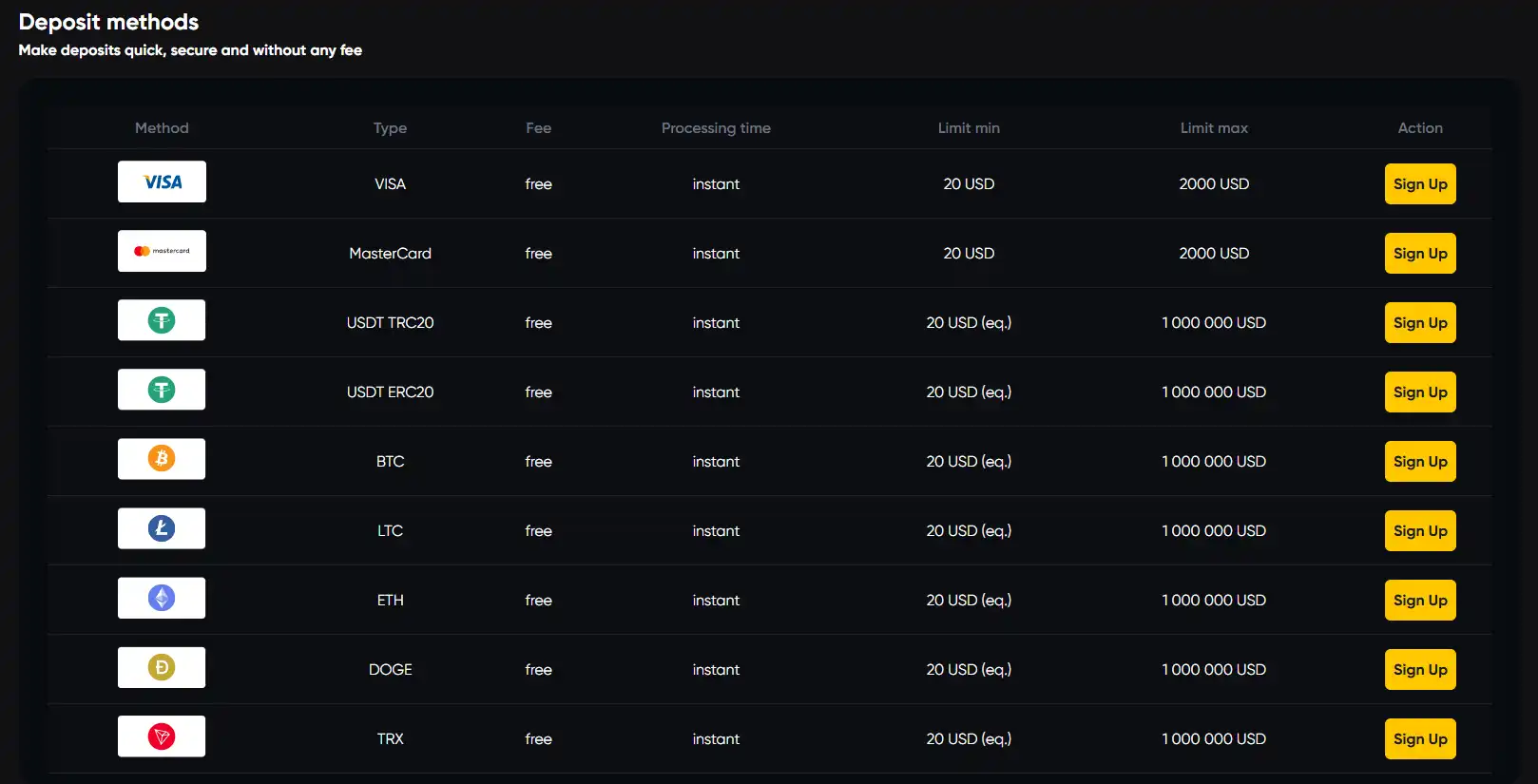
Visa and Mastercard deposits are instant, while BPAY payments take one to two business days. The time depends on the payment method.
Written by the editors at Caswino Casino.