Casino Dice Games in Australia: Rules and Legal Context
 Available in AU
This guide separates dice-based casino games from other formats and explains the legal limits on online casino services offered to Australians.

- Online Dice Searches Meet Australia’s Gambling Rules
- What “Casino Dice” Means in This Guide
- How Online Dice Play Is Presented
- Casino Games That Use Dice—and Those That Do Not
- Craps and the Casino Dice Table
- Rules, Bonuses and the Meaning of “Best”
- What Counts as a Casino Dice Game
- Risk, Strategy and the Limits of Poker-Machine Reform
- What “Live Dice” Can—and Cannot—Be Established to Mean
- The Roll of the Dice: A Search-Term, Not a Verified Rule
Online Dice Searches Meet Australia’s Gambling Rules
A request for an online casino dice game can sound like a question about the game itself. In Australia, the first issue is more basic: whether a real-money casino service may be offered to people located here. The Interactive Gambling Act 2001 restricts operators from providing online casino services to people in Australia. Casino-style services—including games such as blackjack, roulette, poker and slots—are treated as prohibited interactive gambling when offered to Australian customers.
That distinction matters. A site may use casino language, display a game, or accept Australian payments, but those details do not make the service lawful for the operator to provide in Australia. Offshore casinos often take payments from Australians while operating under licences issued elsewhere. A foreign licence does not replace the requirements of Australian law.
I have seen how the commercial wording can blur this point. “Available to Australian players” describes a service’s reach, not its legal status here. Payment acceptance is not a local authorisation either. The operator’s location, licence claims and payment options may explain how a business presents itself; they do not alter the Australian restriction on offering real-money online casino services to people in the country.
When looking for casino dice games in Australia, it helps to check the operator details available before choosing where to play. These verdicts stick to the stated licensing, deposit and payout information.
License: Curacao Gaming Control Board OGL/2023/174/0082 (Dama N.V.) SpinsUp is listed with a Curacao Gaming Control Board licence, OGL/2023/174/0082, held by Dama N.V.
License: Curacao (operating since 2017) · Min. deposit: A$20 Uptown Pokies is noted as operating since 2017 under a Curacao licence. Its stated minimum deposit is A$20.
License: Curacao eGaming (Dama N.V.) JeetCity Casino is listed with a Curacao eGaming licence held by Dama N.V.
License: Curacao · Min. deposit: A$20 (POLi) Lucky Dreams has a Curacao licence and a stated A$20 minimum deposit via POLi.
License: Curacao – Antillephone N.V. (Versus Odds B.V.) · Min. deposit: EUR 20 Thor Casino is listed with a Curacao licence from Antillephone N.V., with Versus Odds B.V. named as operator. Its stated minimum deposit is EUR 20.
License: Curacao Gaming Authority (Jumpman Gaming Ltd) DragonSlots Casino is listed with a Curacao Gaming Authority licence held by Jumpman Gaming Ltd.
Payout speed: crypto 30-120 minutes, fiat 24-72 hours · Min. deposit: A$30 MrPacho lists crypto payouts at 30–120 minutes and fiat payouts at 24–72 hours. Its stated minimum deposit is A$30.
License: Curacao eGaming OGL/2024/923/0383 (Antillephone N.V.) · Min. deposit: A$30 WinSpirit Casino is listed with a Curacao eGaming licence, OGL/2024/923/0383, held by Antillephone N.V. Its stated minimum deposit is A$30.
License: Curacao Gaming Control Board JustCasino is listed with a Curacao Gaming Control Board licence.
License: Curacao Gaming Control Board OGL/2023/176/0095 (Hollycorn N.V.) Rollero Casino is listed with a Curacao Gaming Control Board licence, OGL/2023/176/0095, held by Hollycorn N.V.
What enforcement means in practice
The Australian Communications and Media Authority, or ACMA, oversees compliance with federal interactive gambling law. It can ask Australian internet service providers to block websites that provide prohibited interactive gambling services or advertise them in Australia. Blocking is therefore part of the enforcement system, rather than a guarantee that every prohibited site will remain reachable or disappear at once.
The scale of enforcement is substantial. Since November 2019, ACMA has blocked more than 1,455 illegal gambling and affiliate websites after enforcement action. This figure covers gambling and affiliate sites, not a count of dice products alone. A dice-themed page may sit within a broader site, so the blocking total should not be read as a measure of how many dice games exist or how often they are played.
There is also a reported count of services leaving the Australian market after enforcement began in 2017. Published figures disagree: one account says more than 210 services withdrew, while another puts the number above 190. Those are conflicting reported totals, not a single reconciled figure. Either way, the enforcement record shows that operators have withdrawn and access has been restricted over time.
The mechanics are less dramatic than a banner warning, but they matter. A block can prevent access through Australian internet providers; a site’s own payment arrangements or offshore licence do not cancel that intervention. Nor does a site’s continued appearance in a search result establish that it can lawfully provide a service to Australians. Availability on a screen and permission under Australian law are different questions.

The operator’s position and the player’s
The law places the restriction on operators providing prohibited services to people in Australia. Players are not criminalised simply for using an offshore gambling site. That distinction is important: it prevents the legal position from being misstated as though a player faces the same offence or penalty as an operator.
It does not turn offshore casino play into a locally regulated activity. A customer may still encounter practical uncertainty when a service is blocked, changes its terms, or handles funds under rules set outside Australia. Those are service and consumer risks, separate from whether the player is criminally liable. I would not treat a payment option, a promotional claim or the presence of a game as evidence that Australian safeguards apply.
A dice label does not create an exception to the wider framework. Where real money is involved and the service is an online casino offered to someone physically in Australia, the relevant issue is the nature of the service and who is being offered it—not whether the screen shows dice rather than another casino-style game. The legal frame concerns online casino services as a category. It is not a special dice rule.
That is also why descriptions such as “licensed” need context. An offshore licence is issued under another jurisdiction’s system. It does not amount to Australian approval to provide prohibited online casino services here. On the other side, a block or withdrawal from the market is an enforcement outcome; it does not tell anyone how a particular dice game works.
Legal Restriction
Under the Interactive Gambling Act 2001, operators are prohibited from providing real-money online casino services to people located in Australia.
For Australian readers, the plain distinction is this: an offshore casino may accept local payments and still be operating under a foreign licence, while Australian law restricts the operator from offering real-money online casino services to people in Australia. ACMA can pursue compliance and seek website blocks, and its actions have removed access to many gambling and affiliate sites. Players are not criminalised merely for using offshore sites, but that does not make the service locally authorised. Different questions. Different consequences.
What “Casino Dice” Means in This Guide
“Casino dice” is a compact label, not a precise definition of one game. In ordinary use, it points towards casino gambling associated with dice, but it does not settle what the game is, how it works, or whether a particular product belongs in that category. The words identify a subject area; they do not supply a rulebook.
That distinction matters because casino terminology tends to compress several ideas into one phrase. “Casino” can describe the setting or commercial category. “Dice” can signal an object, a visual theme, or a perceived element of chance. Put together, the words may describe a game that uses dice, a game presented with dice imagery, or simply a topic someone wants to understand. Those meanings overlap, but they are not interchangeable.
I have seen how labels do quiet work. A heading can make a product sound familiar before anyone has explained its actual format. “Dice” feels specific; “casino” makes the context seem settled. But a name is not evidence of a particular mechanism. It does not, by itself, tell us what a player does, how an outcome is determined, or which rules apply. Familiar wording is not the same as a clear description.

For that reason, this guide uses casino dice in a deliberately broad sense: the subject is the relationship between dice and casino gambling, not a claim that every reference points to the same defined game. The phrase can help organise the topic without turning it into a single product category with fixed boundaries. That is a useful starting point, not a shortcut to conclusions.
The distinction also separates the phrase from casino games as a whole. Casino gambling is a wider category; dice are only one possible association within it. A game does not become a dice game merely because it appears beside other casino games, and a casino-style title does not prove that dice determine its outcome. Conversely, the word “dice” in a description should not be treated as enough information to establish the full nature of the game.
This is where plain wording is more reliable than marketing language. A label such as “classic,” “authentic” or “casino-style” may create an impression, but each word needs to be read for what it actually says. “Casino-style” suggests an association with casino gambling; it does not identify a particular set of rules. “Authentic” is a claim about presentation, not a substitute for explaining the game. The packaging may be confident. The definition may still be thin.
In Australia, the broader legal distinction is important too: online casino-style games, including blackjack, roulette, poker and slots, are treated as prohibited interactive gambling services when provided to people in the country. That category-level point does not turn the phrase casino dice into a legal classification of its own. The wording describes a topic; the law concerns the provision of services. They answer different questions.
Casino dice is used in this guide as a broad label for the association between dice and casino gambling, rather than a precise definition of a single game.
A careful definition therefore avoids two opposite mistakes. The first is to treat every use of the phrase as the name of one specific game. The second is to make it so broad that any casino reference, regardless of its connection to dice, qualifies. The useful middle ground is modest: casino dice refers to the area where casino gambling and dice are associated, while the exact meaning depends on the context in which the term appears.
That modesty is practical. A person comparing descriptions needs to know whether a phrase names a game, describes a feature, or merely signals a theme. Those are different kinds of information. A title may be designed to attract attention; a rules description has a different job. When the two are blended together, the name can seem more informative than it is.
I would treat the wording as a door label, not a full inventory. It tells us which subject to examine, but not what is behind every door. The boundaries become clearer only when a specific game or service is described in its own terms. Until then, “casino dice” is best understood as a broad category of interest rather than a precise promise about how any one game operates. That is the clean distinction.
How Online Dice Play Is Presented
Online dice language often compresses several different ideas into one phrase: a game involving dice, a digital version of a casino experience, and the act of placing money on an outcome. Those ideas are not interchangeable. A page can discuss dice as a theme, show a simulated interface, or describe real-money gambling; the wording alone does not establish which one it means.

I have found that the important distinction is not whether a screen looks like a table. It is what the service lets a person do. A visual demonstration and a real-money gambling service may use similar imagery, but they carry different consequences. The word “online” describes a setting, not a rule set, a product’s status, or the terms attached to an activity.
That is why broad phrases such as “play casino dice online” can create a false impression of a single, standard experience. The phrase does not identify a particular game or establish how it works. Nor does a digital interface, by itself, explain whether money is involved. The label is doing less work than it appears to.
What “play” can imply
In ordinary use, “playing” may mean learning about a game, trying a non-cash simulation, or gambling with money. Those meanings should not be collapsed. A free-play label, if used, would describe a different arrangement from a real-money service; it would not by itself verify the rules, the software, or the legal position of the provider.
The word “free” can also be slippery. It may refer to access without an initial payment, rather than to every aspect of the experience being cost-free or detached from gambling. The practical question is what the activity involves, not which reassuring adjective appears beside it.
I would treat presentation language as a starting point, not a description of the underlying product. A page can use casino styling without proving that it offers a recognised casino game. Likewise, a reference to dice does not tell us what decisions are available, how outcomes are determined, or whether the content is an explanation, a simulation, or a gambling service. Interface first. Meaning second.
- Treat presentation language as a starting point
- Distinguish between free-play and real-money services
- Focus on what the service lets a person do
- Assume a digital interface explains if money is involved
- Mistake casino styling for a recognised game
- Rely on reassuring adjectives to verify software
Why online presentation needs context in Australia
In Australia, the distinction matters because real-money online casino services are not a lawful offering to people located here. The Interactive Gambling Act 2001 prohibits operators from providing online casino-style gambling, including games such as blackjack, roulette, poker and slots, to customers in Australia. That legal position is about the service being offered, not the appearance of its screen or the wording used to describe it.
An online casino may accept Australian payment methods and still operate under an offshore licence. That does not make the service locally authorised. ACMA enforces the federal rules and can ask internet service providers to block access to prohibited gambling services or their advertising. The practical result is that a page’s polished presentation should not be mistaken for evidence that an Australian-facing real-money casino service is permitted.
Players are not criminalised simply for using an offshore site, but that does not remove the operator’s restrictions or make the activity risk-free. A service can be inaccessible, change its terms, or leave users with limited recourse. The interface cannot settle those questions.
Reading the framing, not the promise
When online dice are presented as something to “try”, the phrase can sound casual. When they are presented as a casino game to “play”, it can sound settled and familiar. Neither formulation establishes what happens after a person opens the page. In my experience, the less visible details—the type of activity, whether real money is involved, and who operates it—matter more than the label.
This is not an invitation to find a way around the rules. It is a way to separate a topic from an offer. Information about dice and an online gambling service are not the same thing; a free-play description and real-money gambling are not the same thing either. The wording may blur those lines. The consequences do not.

Casino Games That Use Dice—and Those That Do Not
A casino game with dice is not a single, standardised format. The phrase can describe a game in which dice are part of the central activity, but it can also be used loosely for a table game where dice appear only as one component. That distinction matters: seeing dice in a game’s presentation does not, by itself, explain how outcomes are determined or what the rules require.
The same applies to casino table games with dice. A table, dealer and dice may make a game look familiar, but presentation is not a rulebook. The dice might be the main focus, or they might have a limited role within a wider set of procedures. Without a confirmed description of the particular game, assigning it a familiar name or assuming its mechanics would be guesswork.
There is a useful contrast with casino games that do not use dice. A casino game can be built around other equipment, a screen-based display or a different way of generating outcomes. The broad label “casino game” does not imply that dice are involved. Nor does the absence of visible dice tell the whole story about how a digital game produces its result. The format and the underlying mechanics are separate questions.
That separation is easy to lose in promotional language. “Dice” may be used as a visual cue, while the actual rules sit elsewhere in the game information. A graphic of dice does not establish that a player rolls them, that each face has a particular effect, or that the result follows a familiar table-game convention. The presentation is not the mechanism. A short label is not enough.

The number of dice does not settle the question either. A description mentioning two dice or three dice gives one detail about the displayed or used equipment, but it cannot identify a game by itself. It does not tell how a roll is made, how outcomes are assessed, whether other components matter, or whether the game follows a recognised set of rules. Those details need to come from the specific game’s own explanation.
I have seen the same mistake in product descriptions: a familiar object does too much work. Dice suggest a known format, and a name or image can make an unfamiliar product seem self-explanatory. But a resemblance is not confirmation. The important distinction is between a game that genuinely uses dice as part of its rules and one that merely borrows dice imagery or language.
So “games played with dice” is best treated as a broad category, not a list with one shared structure. Some games may centre on dice; others may not involve them at all. Within the dice category, equipment count and table appearance are not substitutes for the actual rules. Clear descriptions should state what role the dice have and how outcomes are determined. Otherwise, the label leaves the central point unanswered.
Craps and the Casino Dice Table
Craps is the name most closely associated with a casino dice table. That association is strong enough that the phrase can suggest a particular kind of casino experience: a marked layout, dice in motion and a group gathered around the table. But a familiar image is not the same as a confirmed description of a specific game or service.

I have learned to separate the label from the claims attached to it. A page calling something “casino craps” may be using a recognised game name, a broad category label or promotional shorthand. The words alone do not establish what the game looks like, how it works, whether it is live or computer-generated, or whether a real-money version is available to Australians. Those details need to be established independently. A label does not do the work.
What the table image tells—and does not tell
A craps table is part of the usual mental picture of the game. It helps distinguish craps from a generic reference to dice, but it should not be treated as proof that every product described as craps reproduces a physical table. Online presentation can use table-like graphics or other visual framing; the presence of such imagery, by itself, confirms neither the underlying format nor the rules.
The same applies to claims about “real casino dice”. The phrase may be intended to evoke a physical casino setting, but it does not establish the dice’s material, handling, inspection, or role in a particular product. Nor does it establish that the experience is a live table. Those are separate claims, not automatic consequences of the name.
This matters because marketing tends to compress distinctions. “Real” sounds conclusive. “Live” sounds like a description of how a service operates. “Casino” can suggest a familiar venue. Each word may create an impression beyond what the surrounding information actually explains. The wording is doing work. The details still matter.

Reading descriptions carefully
When a craps description is assessed, the useful distinction is between what it names and what it demonstrates. A name can identify the intended subject. A description may make claims about presentation, equipment or the way an experience is delivered. Those claims should be read on their own terms, rather than filled in from memories of a casino floor.
I would not infer rules from a table layout, or infer authenticity from dice imagery. Nor would I assume that a game described as craps is necessarily a traditional table game in every respect. Without reliable product-specific detail, more exact statements would be guesswork. That is not a small caveat: mechanics are the substance of a game, not decoration around its name.
There is also an important Australian distinction. Real-money online casino services, including table games, are prohibited when offered to people in Australia under the Interactive Gambling Act 2001. That legal position is about the operator’s provision of the service; it does not make a product description evidence that a lawful Australian online craps table exists. The terminology and the regulatory status are different questions.
So “craps table” is useful as a pointer to the kind of casino setting being discussed, not as a certificate of rules, physical dice or live operation. The boundary is plain. A name is not a demonstration.
Rules, Bonuses and the Meaning of “Best”
A question about casino dice rules is really a question about the mechanics of a particular game: what actions are allowed, how outcomes are determined and what the stated rules say about them. The label alone cannot settle those points. I have seen promotional copy make a game sound self-explanatory, then leave the operative detail to a separate rules page. The wording that sells the experience is not a substitute for the wording that governs it.

That distinction matters when “best” is attached to a dice game. Best by what measure: clarity of rules, pace, or something else? Without a defined criterion and comparable details, a ranking would be decoration, not analysis. I would not treat a confident label as evidence that one game is objectively superior.
Bonuses raise a different set of questions. Bonus funds are not cash available for immediate withdrawal; terms may require wagering before winnings derived from them can be withdrawn. The key is the arithmetic and the conditions attached to it, not the headline value.
A specialist review gave a worked example: a $100 bonus carrying a 40x wagering requirement means $4,000 in bets must be placed before bonus-derived winnings can be withdrawn. That calculation explains the mechanism; it does not establish a standard offer or a current market-wide condition. A separate description in specialist coverage put wagering requirements in a 30–50x range, but those terms can vary and should not be read as a promise about any particular bonus.
The multiplier is only part of the wording. Terms may also define which games or bets count, how bonus-derived winnings are treated, and what happens if conditions are not met. A large bonus headline can therefore tell little about how much wagering is required or which activity qualifies. The small print does the work.
I keep the two questions separate: game rules describe how play is supposed to work; bonus rules describe conditions attached to promotional funds. Neither answers the other. A game cannot be called the best merely because a promotion sounds generous, and a bonus multiplier says nothing about dice mechanics.
Bonus Calculation
A player receives a $100 bonus.
The bonus carries a 40x wagering requirement.
$100 × 40 = $4,000 in bets must be placed before bonus-derived winnings can be withdrawn.
For a useful comparison, the rules would need to be clear and the promotional conditions transparent, with like-for-like information available. Where those details are not established, a ranked verdict would overstate what can be known. No honest shortcut.
What Counts as a Casino Dice Game
A casino dice game is, in plain usage, a gambling game in which dice are central to the outcome and the game is presented as part of a casino offering. The label points to the role of the dice; by itself, it does not identify a particular set of rules, a table layout or a way to place a wager.
That distinction matters. I have seen broad labels do more work than they appear to: they suggest a familiar category while leaving the actual product undefined. “Dice game” tells little about how an outcome is decided. “Casino” says how the game is framed, not that every game carrying the label shares the same structure. The details sit elsewhere. No shortcut.
A useful test is whether dice are part of the game’s defining premise, rather than incidental artwork or a theme. Even that does not settle what a particular title does. A name, image or promotional description can evoke dice without establishing the mechanics behind it. Nor does the phrase prove that a game is available in a particular place or format.
In Australia, terminology should not be mistaken for permission to play online. The Interactive Gambling Act 2001 prohibits operators from providing real-money online casino games to people physically in the country. A category name does not change that legal position.
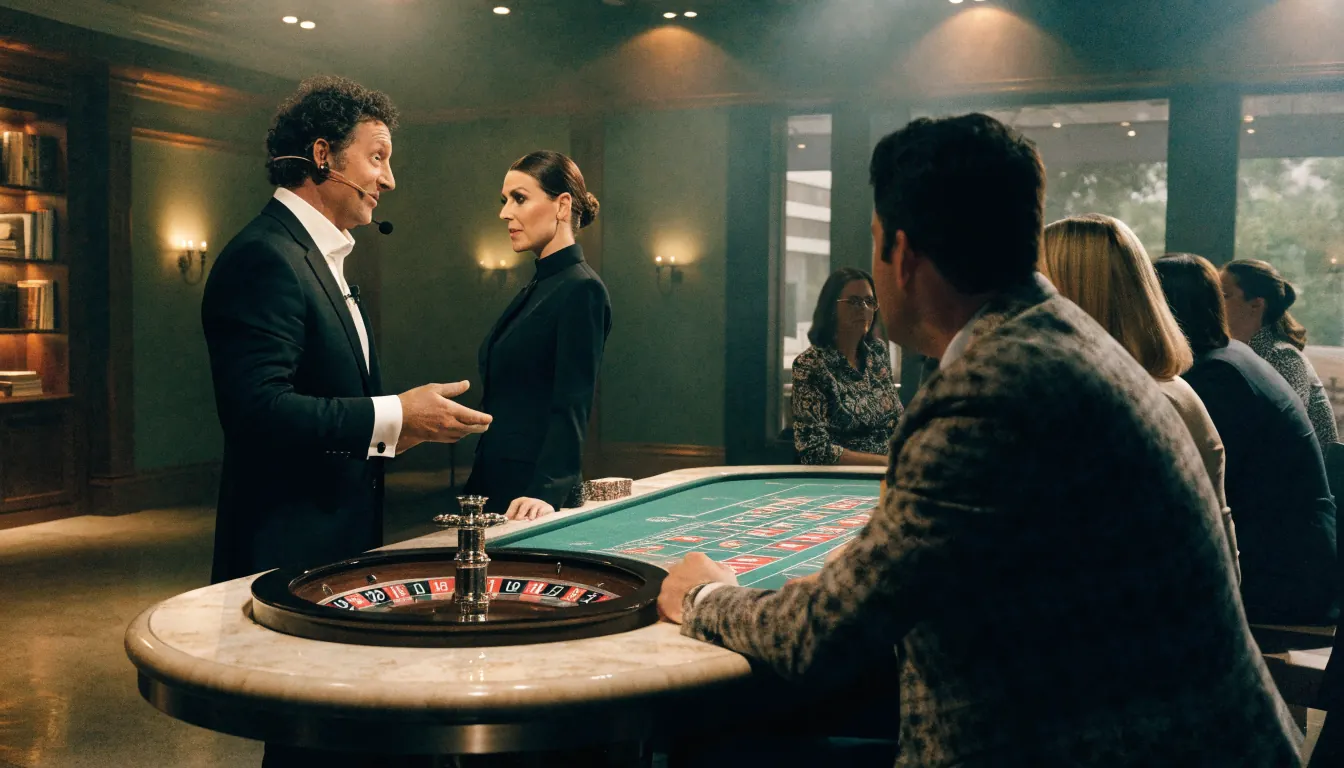
The phrase therefore works as a broad description, not a rulebook. It can help distinguish dice-centred casino-style gambling from casino games whose premise does not depend on dice, but it cannot supply the missing particulars of an individual game. Those need to be established from an accurate description of that game, not inferred from a category label.
In practical terms, the definition is deliberately modest: casino dice games are casino-framed gambling games built around dice as a meaningful part of the outcome. Anything more specific—how the dice are used, what choices are available, or how a result is settled—belongs to the rules of a named game. Without those rules, the category can be described, but the play cannot responsibly be filled in by guesswork.
Risk, Strategy and the Limits of Poker-Machine Reform
A strategy can help structure decisions, but it cannot turn gambling into dependable income or make past losses recoverable. The distinction matters when discussion moves between dice games and pokies: the Victorian figures reported by gamble.com.au describe poker-machine losses, not results from dice play.
That report put Victorian players’ poker-machine losses at $2.6 billion over the year it covered, more than $44.7 million above the 2015 figure. It also identified the Epping Plaza Hotel in Melbourne’s north as generating over $21 million from 100 machines during the year covered. Those numbers point to the scale of one part of the gambling market; they do not establish how a dice game performs or what an individual player might lose.
The reform debate has focused on machine conditions as well. Senator Nick Xenophon and MP Andrew Wilkie backed a proposal to cap poker-machine bets at $1. A proposed limit is a policy intervention, not a strategy for a player, and it does not make gambling risk-free. Different formats raise different questions, but the basic commercial point remains: a plan for how to play cannot guarantee a favourable result.
Attention: A gambling strategy cannot guarantee a favourable result or turn gambling into dependable income.
I have seen “strategy” used as if it were a route around chance. In practice, it can mean setting boundaries or deciding in advance when to stop; it cannot promise a return or reverse a loss. Treating gambling as a way to repair finances is especially dangerous, because each further stake puts more money at risk without undoing what has already been spent.
For vulnerable people, problem gambling can cause serious harm, including financial and personal consequences. That risk should not be softened by the vocabulary of skill, systems or discipline. A method may describe a player’s choices, but it does not change the underlying exposure to loss. Hard limit.
What “Live Dice” Can—and Cannot—Be Established to Mean
“Live” suggests a real-time experience, but the word alone does not establish what is being offered. In a casino context, it might be used to describe dice presented alongside a live dealer, a streamed table, or simply a product category. Those are possible interpretations of the label, not confirmed features of any particular service.

I have seen product language do a lot of work with very little detail. “Live” can sound like a precise technical description while leaving basic questions unanswered: whether a real table is involved, how the dice are handled, whether a video stream is used, or what rules govern the game. None of those details follows from the label itself. The word is not a specification.
That distinction matters in Australia. The Interactive Gambling Act 2001 prohibits operators from providing real-money online casino games to people physically located in the country. A live presentation does not change the legal character of a casino service. Nor does the word “live” establish that a product is available lawfully or that a particular operator has any local authorisation.
So, “live dice” can be understood as a description someone may use for dice content presented in real time. It cannot, by itself, confirm a dealer, a stream, a particular game, its mechanics, or the status of a service. Those are separate claims, and each would need clear evidence of its own.
I would read the label narrowly, not as a promise. A polished table image or a dealer on screen may communicate atmosphere; it does not settle the underlying facts. In this market, that is not a small distinction. It is the difference between a product impression and a substantiated description.
The Roll of the Dice: A Search-Term, Not a Verified Rule
A description of a casino game built around rolling or throwing dice gives a scene, not a rulebook. I read the wording as pointing to the visible action: dice are cast, and the result appears to matter. That alone does not establish how a particular game works.
The missing detail is the structure around the roll. The description does not say what outcomes count, whether one roll or several are involved, how a wager is settled, or whether the result is determined by physical dice or a digital representation. Those are not minor differences. They define the game. Without a named, identifiable product and its rules, filling in those details would mean guessing.

The word “casino” can make a loose description sound more definite than it is. In practice, promotional language often compresses a whole product into a familiar image. The image may be useful for recognising a theme, but it cannot substitute for rules, terms or a clear explanation of the outcome. A roll is not a rule. That distinction matters.
Nor does the wording, by itself, establish that a real-money version is available to Australians. Under the Interactive Gambling Act 2001, operators cannot provide real-money online casino games to people physically located in Australia. The fact that a game is described with dice does not change that legal position.
I have learned to separate what a label visibly promises from what it actually specifies. “Dice are rolled” tells very little about the mechanism behind a game, and nothing reliable about its odds or settlement. No mechanics should be inferred from the image alone.
Prepared by the Caswino Casino editorial staff.