







Live Baccarat Online Casinos in Australia: A Guide
 Available in AU
Australia’s Interactive Gambling Act prohibits real-money online casino games for people physically in the country, shaping how international baccarat platforms are

- The Australian Live Baccarat Market in 2026
- What “Best” Means When Comparing Baccarat Casinos
- What a Live Dealer Table Actually Delivers
- Live and RNG Baccarat: Two Different Game Formats
- Playing Baccarat Online: Stakes, Payments and AUD
- Reading a Baccarat Lobby Before Choosing a Table
- Baccarat Odds, Bonuses and Bitcoin Payments
- How Baccarat Scores and What the Cards Count
- Mobile Tables and the Limits of Mini Baccarat
- The Basic Rules Behind a Baccarat Hand
The Australian Live Baccarat Market in 2026
Australia has no locally licensed online casinos officially operating. The distinction matters: a website may be reachable from Australia, or may describe itself as accepting Australian customers, without being authorised to provide real-money online casino games to people in the country.
The legal position starts with the Interactive Gambling Act 2001. It prohibits operators from providing online casino games for real money to people physically located in Australia. That includes table games such as baccarat. Australian-licensed operators therefore cannot offer online casino games under this law. There is no local licensing route that makes an online casino lawful simply by calling it Australian or by displaying a licence from another jurisdiction.
That leaves two separate ideas which are often blurred in promotional language: a platform’s willingness to take Australian customers, and its legal authority to provide the service in Australia. They are not the same. Australians do play baccarat online through international platforms that accept Australian players, but that practical activity does not create a locally regulated casino market. Nor does a foreign licence amount to Australian approval.

The government’s approach also has a practical enforcement side. Offshore online casino services are subject to blocking and enforcement measures, so an international platform that appears to accept Australians may not remain consistently accessible from within the country. A page loading at one moment is not proof that the service is authorised, stable or protected by Australian consumer rules. Access and legal status are separate questions. That distinction is easy to miss.
From behind the counter, I learned that the word “available” often carries more weight in advertising than it should. It can mean that a site has a registration form, that its software displays a game, or that an account can be opened. It does not necessarily mean that a service is lawful to provide in Australia. The label “Australian casino” can likewise suggest a local licence that does not exist for online casino games. The wording is doing work. The underlying permission is not there.
International platforms may offer both live dealer baccarat and RNG baccarat. In broad terms, those are two formats made available through the same offshore market, not two different legal categories in Australia. The presence of a live studio, a dealer on screen or a software-generated table does not change the restriction on operators providing real-money online casino games to people in the country. The format changes; the legal frame does not.
There is also an important difference between the conduct regulated by the Act and the position of an individual player. The law targets the provision of prohibited interactive gambling services by operators; it does not impose a fine or criminal prosecution on a person merely for playing at an offshore casino without a local licence. That does not turn the service into an authorised one, and it does not supply the protections associated with a locally regulated online casino. Legal exposure and practical risk are not identical.

In practical terms, the market is therefore not a conventional choice between a set of Australian-licensed online casinos. That category is absent. What exists instead is a boundary between a prohibited service offered to Australians by an operator and the separate fact that some international platforms still seek Australian customers. Enforcement can affect access, while the lack of local licensing leaves no Australian casino regulator overseeing those platforms as online casinos. A familiar interface is not local oversight.
This matters when the phrase “live baccarat online casino Australia” is used to describe what is available. It may refer to a game hosted by an international platform, but it should not be read as evidence of an Australian licence or a lawful domestic casino offering. A search result, a site’s own terms and the legal status of the service are different things. None substitutes for the others.
This section is general information, not an invitation to gamble or a recommendation of any platform. Gambling can cause financial loss, and Caswino Casino is not liable for losses arising from gambling. Gambling is for adults aged 18 and over. If gambling is causing harm, seek support from an appropriate Australian service.
What “Best” Means When Comparing Baccarat Casinos
Choosing a live baccarat site involves more than finding a table: check the operator details and practical terms that matter to you before signing up. This list offers a concise reference for evaluating options for Australian players.
License: Curacao Gaming Control Board OGL/2023/174/0082 (Dama N.V.) SpinsUp is listed with a Curacao Gaming Control Board licence, OGL/2023/174/0082, held by Dama N.V.
License: Curacao (operating since 2017) · Min. deposit: A$20 Uptown Pokies has been operating since 2017 and is licensed in Curacao. The stated minimum deposit is A$20.
License: Curacao eGaming (Dama N.V.) JeetCity Casino is licensed by Curacao eGaming, with Dama N.V. identified as the licensee.
License: Curacao · Min. deposit: A$20 (POLi) Lucky Dreams is licensed in Curacao and lists a A$20 minimum deposit when using POLi.
License: Curacao – Antillephone N.V. (Versus Odds B.V.) · Min. deposit: EUR 20 Thor Casino is licensed in Curacao by Antillephone N.V., with Versus Odds B.V. identified. Its stated minimum deposit is EUR 20.
License: Curacao Gaming Authority (Jumpman Gaming Ltd) DragonSlots Casino is listed under a Curacao Gaming Authority licence held by Jumpman Gaming Ltd.
Payout speed: crypto 30-120 minutes, fiat 24-72 hours · Min. deposit: A$30 MrPacho lists a A$30 minimum deposit. Its stated payout times are 30–120 minutes for crypto and 24–72 hours for fiat.
License: Curacao eGaming OGL/2024/923/0383 (Antillephone N.V.) · Min. deposit: A$30 WinSpirit Casino is licensed by Curacao eGaming under OGL/2024/923/0383, with Antillephone N.V. identified. Its stated minimum deposit is A$30.
License: Curacao Gaming Control Board JustCasino is listed with a Curacao Gaming Control Board licence.
License: Curacao Gaming Control Board OGL/2023/176/0095 (Hollycorn N.V.) Rollero Casino is listed with a Curacao Gaming Control Board licence, OGL/2023/176/0095, held by Hollycorn N.V.
“Best” is not a useful label until the terms behind it are separated. In my experience, a polished table screen can distract from the conditions that determine what a balance is worth, how much can be withdrawn, and whether the stated limits fit the player’s intended use. A comparison should start with those mechanics, not a badge or headline.
There is an important Australian boundary. The Interactive Gambling Act 2001 prohibits operators from providing real-money online casino games to people in Australia. A comparison of casino terms is therefore not an endorsement or an invitation to use such services. It is a way to understand how claims are constructed and why a prominent “best” label does not settle whether the underlying terms are suitable or lawful.
Start with the currency of the account
An AUD-denominated wallet is a material condition, not a cosmetic preference. When a balance is held in USD or EUR, a conversion margin of 2.5–4% may apply. That reduces the value of funds when they are converted, even if the displayed baccarat stake looks straightforward. The practical comparison is between the currency used for the balance and the currency in which deposits, play and withdrawals are ultimately accounted.
Attention: When a balance is held in USD or EUR, a conversion margin of 2.5–4% may apply, reducing the value of funds.
I have seen currency treated as a small-print detail because it does not make a table look more exciting. It can matter more than a promotional headline. A quoted balance and a withdrawable balance are not necessarily the same thing once conversion is involved.
Read withdrawal limits as part of the offer
A withdrawal cap determines how much can leave an account within the stated period. A specialist review reports weekly caps of $5,000–$10,000 at offshore sites; that is a reported range, not a fixed condition that applies everywhere or indefinitely. The account terms are what matter for any particular service, including how the cap is defined and whether other conditions affect access to funds.
A cap can be easy to overlook when attention is fixed on deposits or a table’s minimum stake. Yet a balance can accumulate faster than the permitted withdrawal pace allows it to be released. That is why the cap belongs beside the currency and account terms in any serious assessment. Read the clause itself. Not the banner.

“Fast withdrawals” is advertising language unless the terms explain what happens after a request is submitted. Processing stages, verification and the cap are separate matters; a claim about one does not answer the others. I would not infer a practical payout outcome from a short label.
Compare conditions, not superlatives
The phrase “best baccarat casino online” implies a single winner, but the conditions are not interchangeable. One service may display an AUD balance, while another may express balances in a foreign currency. Withdrawal limits may differ, and the wording may place important qualifications elsewhere in the account terms. A useful comparison records what is explicitly stated and leaves unclear points unresolved rather than filling them with assumptions.
The same discipline applies to words such as “premium” or “VIP.” They describe positioning, not a measurable advantage by themselves. The relevant question is what the written terms actually permit: the currency basis, the withdrawal ceiling and the conditions attached to funds. A label cannot override a clause.
These checks do not establish that a service is suitable for Australians. The legal position remains separate from a comparison of account mechanics: the Act prohibits operators from offering real-money online casino games to people physically located in Australia. No comparison of terms changes that rule.
- Check the account currency
- Review the withdrawal cap
- Read qualifications on fund release
- Trust a “best” label alone
- Rely on promotional headlines
- Substitute ratings for verified terms
For a concise review, I would keep three entries visible: account currency, the stated withdrawal cap and any qualifications that could affect release of funds. If one is missing or ambiguous, mark it as unresolved. Do not substitute a confident-looking rating for a term that cannot be verified.
This is informational material, not an offer or recommendation to gamble. Gambling can cause financial loss, and Caswino Casino is not liable for losses arising from gambling. 18+ only. If gambling is causing harm, seek support.
What a Live Dealer Table Actually Delivers
A live dealer baccarat table is a streamed game, not a recording dressed up as a casino. A professional dealer handles physical cards in a studio, while the stream carries the dealing to a virtual table on screen. The distinction is visible: the game’s central action is performed by a person with cards, rather than represented solely by an automated interface.

That changes what the screen is for. It becomes a view into a studio and a way to follow events as they happen. The dealer handles the cards; the software presents the table and connects the stream to the online session. The experience is therefore part broadcast and part interactive game interface. It is not the same as sitting at a physical table, but it preserves the sight of a real dealer dealing.
The camera feed also gives the session a shared pace. The dealer’s actions mark the movement from one stage of play to the next, and prompts on screen indicate when the session is ready for participation. A player does not need to infer everything from a changing graphic: the live image shows the human activity behind it. That is the format’s main practical difference from a table that displays only software-generated animation.
There is a trade-off. A streamed table depends on a functioning connection and on the studio feed reaching the device. The interface can make the table feel immediate, but the viewer is still watching through a screen, not standing beside the dealer. The camera supplies presence, not physical access. A crisp stream does not turn an online session into an in-person one.

The dealer’s role is more than decoration. A live professional runs the table in view, creating a consistent human point of reference while the game proceeds. That can make the session easier to follow for someone who finds a purely automated display impersonal. It does not, by itself, make the experience more favourable or change what the game is. Presentation and outcome are separate matters.
Some live tables also include a chat function. A specialist review describes chat as a feature that may let participants exchange messages with the dealer and other players; it should not be assumed to appear on every table. Where available, it adds a social layer to a screen-based session. Where it is absent, the streamed dealing remains the defining feature.
The word “live” can suggest uninterrupted access, but it describes the dealer and action being streamed in real time; it is not a promise about availability, connection quality or a particular table’s schedule. Nor does a live image establish that every element of the interface is handled manually. The useful distinction is narrower: the cards are physical, the dealer is real, and the studio feed shows the dealing as it happens.
From an operational point of view, the stream has to do two jobs at once: show the table clearly and keep the online session coordinated with the dealer’s actions. That is why the live format feels different from a static digital display even when the player’s view is limited to a screen. There is a person at the centre of the process. The interface frames it.
This description is informational, not an invitation to gamble. In Australia, real-money online casino services are prohibited under the Interactive Gambling Act 2001. 18+ only. Gambling can cause financial harm; Caswino Casino is not liable for gambling losses. If gambling is causing harm, seek support from an appropriate service.
Live and RNG Baccarat: Two Different Game Formats
The clearest difference between live dealer baccarat and RNG baccarat is where the outcome comes from. In a live game, a professional dealer handles physical cards at a studio table, and the action is shown through a video stream. In RNG baccarat, software generates the result through an algorithm; there is no physical deal being shown as the source of that outcome.
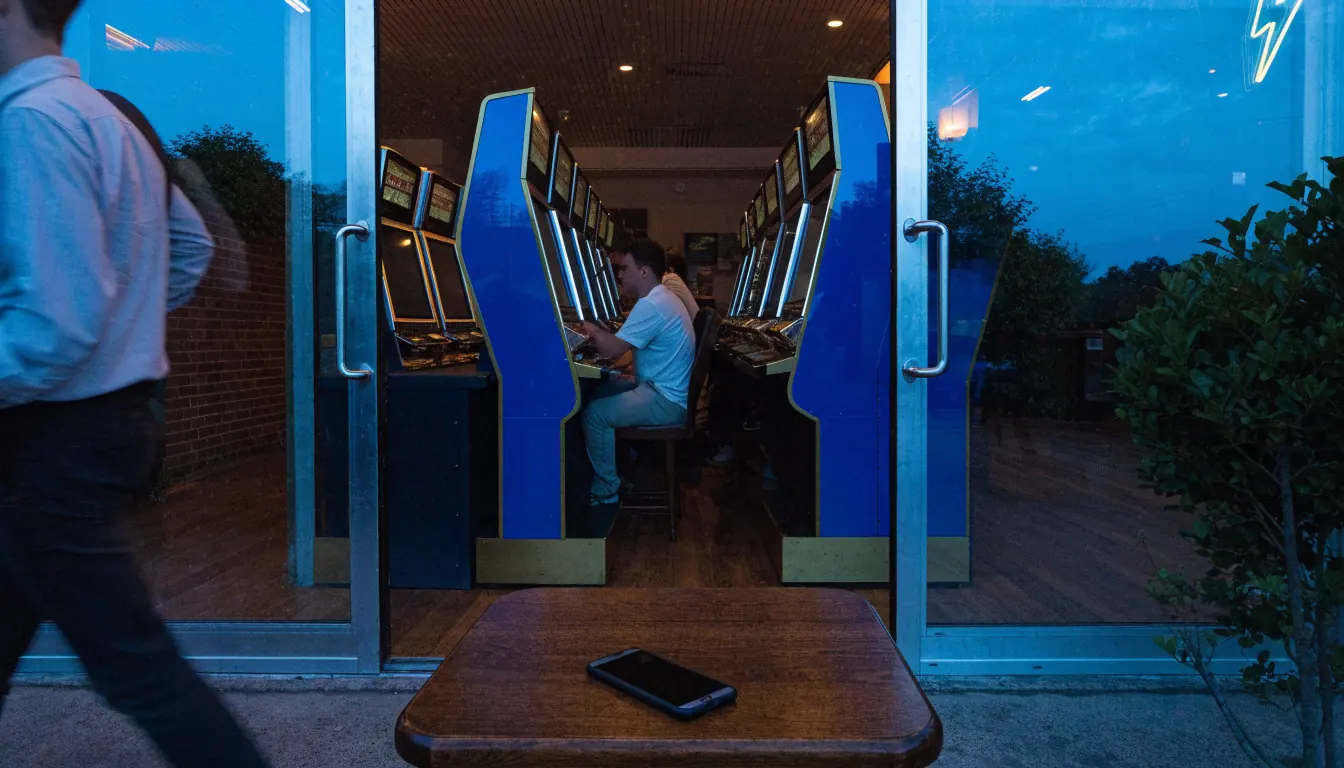
That distinction affects the experience, not the basic identity of the game. Both formats are baccarat, but they present it differently. The live version puts a human dealer and a real table on screen. The RNG version presents a software-driven game, often through a digital interface. Neither format changes the central idea of baccarat; the difference is the mechanism producing and displaying each result.
I have found it useful to separate the visible event from the underlying result. In a live table, cards are physically dealt and the stream shows that process. In an RNG game, the displayed cards represent an outcome determined by software. A realistic-looking interface does not turn an algorithmic result into a physical deal. Conversely, a video stream does not make the live format a different game simply because it feels more like watching a table.
That matters when comparing baccarat casino games. The word “live” describes the delivery: a streamed dealer and physical cards. RNG describes the result-generation method. A lobby can place both formats under the same baccarat heading, but they are not interchangeable experiences. One centres on a studio performance; the other on software output. No card-value explanation is needed to tell them apart.
The commission difference
A separate distinction appears in No Commission Baccarat. In a conventional arrangement, a winning Banker bet carries a 5% commission. No Commission Baccarat removes that charge, but the adjustment may be reflected elsewhere: certain Banker totals can receive altered payouts. The label therefore describes one part of the settlement, not necessarily a simpler or uniformly better set of terms.
The exact treatment matters. Removing a commission does not mean every Banker win is paid in the same way as under a standard table. A specialist review describes versions in which the payout changes for particular Banker totals, so the table’s own rules determine how the apparent saving works in practice. “No Commission” sounds absolute; the actual settlement can be conditional.
No Commission Baccarat removes the 5% Banker commission, but certain Banker totals may receive altered payouts.
This is where format and table variant should not be confused. Live or RNG tells how an outcome is produced. No Commission Baccarat identifies a payout variation. A live table may offer a variant, while an RNG game may present its own version; the label alone does not establish whether the game is streamed or software-driven. The rule panel is the useful dividing line: it should specify the commission treatment and any affected payouts.
I would read those descriptions as mechanics, not marketing. “Live” points to the dealer and physical cards; “RNG” points to algorithm-based outcomes; “No Commission” points to how winning Banker bets are settled. Those are separate questions, even when a casino interface places them side by side.
For adults aged 18 and over only. Gambling carries a risk of financial loss. Caswino Casino is not liable for gambling losses.
Playing Baccarat Online: Stakes, Payments and AUD
Funding a baccarat account involves more than choosing a deposit button. The payment method, account currency and table minimum all affect how much money reaches the playing balance and how much is exposed on each hand. Those mechanics are easy to overlook when a cashier presents several options as though they were interchangeable.

A specialist review reports live baccarat minimums of $5–$10 per hand, while $1 tables are uncommon. Treat that as a snapshot, not a fixed market rule: minimums vary by table and can change. The stake is placed before a hand begins; once the result is settled, the balance reflects the return or loss. A small initial deposit does not necessarily make a particular table accessible if its minimum exceeds the available balance.
Payment route and account currency
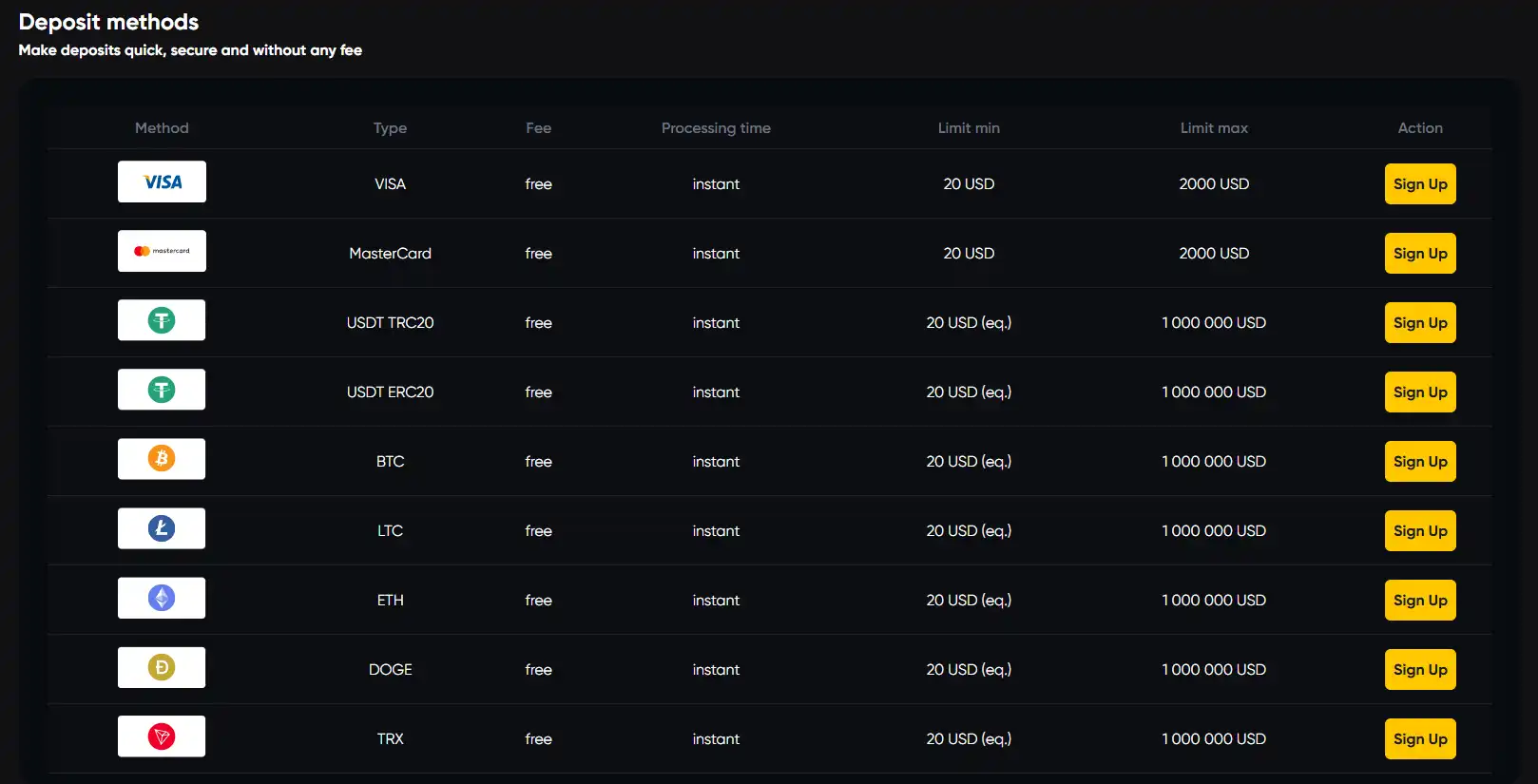
Australian payment options described in specialist reviews include PayID, bank transfers, Visa and Mastercard, e-wallets and cryptocurrency. Each route has its own transaction path. A bank transfer moves funds through banking infrastructure; an e-wallet adds an intermediary account; cryptocurrency uses a digital asset transfer. Availability and processing depend on the platform and the chosen method, so the cashier’s displayed terms matter more than the label attached to a payment option.
Payment-card availability should not be confused with permission to provide online casino gambling in Australia. The Interactive Gambling Act 2001 prohibits operators from providing real-money online casino games to people in Australia. The payment mechanics do not change that legal position.

Currency is another part of the transaction. With an account balance held in US dollars or euros, a conversion margin can apply when Australian dollars are exchanged for the account’s currency or converted back. The stated margin for those balances is 2.5–4%. An AUD-denominated wallet avoids that particular conversion margin, making the displayed balance and the amount debited or credited easier to reconcile. It does not remove other possible transaction costs.
This distinction matters across the full cycle: deposit, stake, settlement and withdrawal. A deposit can appear in one currency while the game balance is shown in another. If conversion occurs at more than one point, the amount visible in the cashier may not match the amount initially sent. The denomination should therefore be understood before funds are transferred, rather than inferred from a currency symbol beside the balance.
From deposit to table
The practical sequence is straightforward: select a payment route, confirm the currency, fund the account, then choose a table whose minimum fits the balance. At the table, the stake is committed for the hand and the balance updates after settlement. The baccarat rules determine the outcome; payment choice affects how funds enter and leave the account, not how cards are dealt.

I have seen the cashier treated as a formality. It is not. Currency and payment route shape the arithmetic behind every displayed balance. No conversion surprise.
Reading a Baccarat Lobby Before Choosing a Table
A baccarat lobby is a catalogue of table conditions, not a measure of quality. Table names may distinguish a standard game from a Speed format, while filters can sort by stake range, pace or availability. The useful comparison is practical: whether the listed table’s limits and schedule fit the intended session. A prominent “top” label says little about those details.
Pace changes how quickly decisions recur. A specialist review describes standard live baccarat as dealing roughly 40–50 hands an hour, compared with more than 80 at Speed tables. These are reported rates, not a guarantee for every session: pauses, table procedures and the platform’s presentation can affect the experience. Faster dealing leaves less time between hands. That matters more than a dramatic table name.

Stake labels need the same scrutiny. A specialist review reports live-table minimums of $5–$10 per hand, with $1 tables uncommon; that is a snapshot from one review, not a settled market-wide standard. The lobby’s displayed minimum and maximum are the operative details for that table. A high limit is not a recommendation to use it, and a low minimum does not tell the full story if the session budget is tight.
Schedules are easy to overlook. A specialist review notes that live baccarat access can be subject to time restrictions, so a table shown in a lobby may not be available at every hour. Check the table’s stated schedule and whether its status is live, paused or unavailable. A familiar game title does not mean continuous access.
Trial play can also give an incomplete picture. A specialist review reports that trial access may be limited because live tables have a finite number of seats. In practice, a trial option may not reproduce the same seat availability or access conditions as a real-money table. That distinction is material: a lobby preview is not proof that a seat will be open when needed. No seat. No session.

From inside the industry, I learned to read the small labels before the promotional tile. Pace, limits, schedule and access status describe the actual table; artwork and badges are presentation. This is a description of lobby mechanics, not a recommendation to use a casino service. In Australia, the Interactive Gambling Act 2001 prohibits operators from providing real-money online casino games to people in the country.
18+ only. Gambling can cause financial harm; losses are possible, and Caswino Casino is not liable for gambling losses.
Baccarat Odds, Bonuses and Bitcoin Payments
The headline odds are not interchangeable. In standard live baccarat, the Banker wager carries a house edge of 1.06%, compared with 1.24% on Player. The difference is narrow, but it is persistent: a lower house edge means less expected loss per unit staked over repeated play, not a promise about an individual hand. The Tie wager is materially less favourable, with a 14.36% house edge. I have seen “high payout” copy draw attention to the return on a winning Tie while leaving its lower probability out of view. The price is in the edge.
Legal Warning The Interactive Gambling Act 2001 prohibits operators from providing real-money online casino games to people physically located in Australia.
A baccarat casino bonus adds a second calculation. The advertised amount is not the same as cash that can be withdrawn: wagering conditions determine how much play is required, and games may count at different rates. A specialist review reports live baccarat contribution in the 5–15% range, but that is a reported condition, not a standing rule across offers. At a low contribution, baccarat play may move the wagering requirement slowly. The offer terms, not the banner, decide.
Withdrawal terms matter just as much. A specialist review reports weekly caps of $5,000–$10,000 at offshore sites. Such a cap can delay access to a larger balance even after wagering conditions are met. It is a ceiling on processing over a period, not a measure of how quickly a payment will arrive. Read the cap alongside the bonus rules; one condition can affect the value of the other.
Bitcoin sometimes appears in discussions of baccarat payments, but the payment method does not improve the game’s odds or change a bonus’s contribution rate. The relevant mechanics are the platform’s own deposit, conversion and withdrawal terms. A balance held in cryptocurrency also has a value that can move against the amount originally deposited. That is a separate financial exposure from the house edge.
There is an important Australian distinction. The Interactive Gambling Act 2001 prohibits operators from providing real-money online casino games to people in Australia, and there are no locally licensed online casinos operating here. This information is not an offer or recommendation to use an offshore service. Gambling carries a risk of financial loss; Caswino Casino is not liable for losses. 18+ only. If gambling is causing harm, seek support from an appropriate Australian service.

How Baccarat Scores and What the Cards Count
A baccarat scoreboard records the Player and Banker totals so the two hands can be compared. The aim is not to build the largest total: the winning side is the one whose score is closest to nine. That distinction matters when reading the display, because a low-looking total can beat a higher one if it sits nearer the target.
Card values are reduced to a single-digit hand score. Picture cards count as zero. When a hand’s combined value goes beyond ten, the left-hand digit is discarded; the remaining digit is the score shown for that hand. For instance, a total of 15 is read as five, not fifteen. The display is not showing a running total in the ordinary arithmetic sense. It is showing the baccarat value after that adjustment.
That is the part that can look wrong at first glance. A hand may contain cards whose values add to a figure above ten, yet the scoreboard reports only the final digit. The same principle applies when interpreting the cards at a casino table or in a digital display: compare the resulting hand scores, not the unreduced sum of the cards. The arithmetic is simple; the convention is unusual.
I have seen players read the larger printed card total as the stronger hand and then wonder why the scoreboard marks the other side as ahead. The system has not changed the cards; it has applied baccarat’s scoring convention. Once that is clear, the Player and Banker columns become easier to read, and the result can be understood without treating the display as ordinary addition.
A tie on the board means the hands have the same final score. Otherwise, the side with the score nearer nine leads. The scoreboard is a record of those outcomes, not a prediction of what a later hand will show. Past entries do not alter the card values or guarantee a pattern.

18+ only. Gambling can cause financial harm. This website is not liable for gambling losses. If gambling is causing harm, seek support.
Mobile Tables and the Limits of Mini Baccarat
A mobile table is an access format, not a separate guarantee about how a game works. A specialist review reports that live dealer baccarat can be played on Android and iOS devices. That establishes platform availability, but not that every table or feature will behave identically across devices. A streamed table depends on a stable connection and a screen that makes the betting interface legible; the practical question is whether the chosen display lets the game remain clear without obscuring the controls.
“Mini” can sound like a promise of a simpler mobile experience. The label alone does not tell much. It should not be taken as proof that a table is easier to access, available in trial mode, or designed for a particular screen. In an online casino lobby, the table’s own description and access conditions matter more than the name. Small screen, same need for clarity.
Trial access has a separate constraint. A specialist review notes that practice play may be limited because live tables have a finite number of player seats. Unlike software-generated play, a live table has a dealer and an occupied physical setup; a trial option cannot necessarily be opened for every visitor at once. Availability may therefore depend on whether a seat is free, rather than simply whether a practice button appears in the lobby. “Free” is not the same as unlimited.
This distinction matters when comparing a mobile table with a demonstration mode. A demonstration can show the interface, but it may not reproduce access to a live seat. Conversely, being able to open a table on a phone does not establish that trial play is available there. These are separate conditions, and the lobby may present them separately.

This is informational material, not an offer to play. Gambling is restricted in Australia, and gambling can cause financial loss. Caswino Casino is not liable for gambling losses. 18+ only. If gambling is causing harm, seek support from an appropriate local service.
The Basic Rules Behind a Baccarat Hand
A baccarat hand is a contest between the Banker and Player sides. Before the deal, bets are placed on the Banker, the Player or a tie. The winning side is the one whose hand finishes closest to nine; the aim is to follow the outcome, not to make decisions about which cards to draw.
The dealing sequence is largely fixed. The two sides receive their cards, and the table applies the game’s rules to determine whether either hand takes another card. A further card is dealt when a hand’s total is below five. The rule governs the deal; it is not a discretionary move by the person who placed the bet.
That distinction matters at a live table. The player chooses a betting outcome, while the dealer handles the cards and the game’s dealing conditions determine what happens next. Once the cards are dealt, the totals decide which side is nearer to nine, or whether the result is a tie.
I have seen new players treat the third card as a choice they should be making themselves. It is not. Baccarat keeps that part mechanical, which is why the hand can be followed without making poker-style decisions during play. The useful rhythm is simple: place a bet, watch the deal, then see which side is closest to nine. No tactical draw.
Are there live baccarat casinos in Australia?
There are no locally licensed online casinos in Australia. Some international platforms accept Australian players and offer live baccarat, but that does not make them Australian-authorised.
Can you play live dealer baccarat online?
Yes, international platforms that accept Australian players offer live dealer baccarat, streamed from a studio with a real dealer and physical cards. Australian law prohibits operators from providing real-money online casino games to people in Australia.
What is online live baccarat?
It is baccarat played at a virtual table, where a live dealer deals physical cards in a casino studio and the game is streamed to players. Players bet on the Banker, Player or a tie; the hand closest to nine wins.
Is online baccarat legal in Australia?
Australian-licensed operators cannot offer real-money online casino games, including baccarat, to people in Australia under the Interactive Gambling Act 2001. The law targets operators; an individual is not fined or criminally prosecuted merely for playing at an offshore casino, but that does not make the service locally authorised.
Written by the editors at Caswino Casino.