Best casino in Melbourne: venue or online?
 Available in AU
Melbourne searches can refer to a physical visit or remote gambling, while venue facilities and services need current, venue-level checks.

- A Melbourne Casino Visit Is Not the Same as an Online Casino Search
- Poker Rooms, Pokies and the Limits of What the Facts Establish
- Melbourne Casino Hotels: What to Check Before Booking
- Accommodation Near the Casino: Keep the Search Separate
- Casino Contact Details and Other Venue Queries
- Buffet Searches, Rewards and Bonus Conditions Are Different Things
- Opening Hours, Events and Employment Need Venue-Level Verification
- Restaurant Searches: Do Not Assume a Casino Dining Offer
- Address, Dress Code and Spa Queries Require Current Venue Information
- Food Courts and Pools: Separate Amenities, Separate Checks
A Melbourne Casino Visit Is Not the Same as an Online Casino Search
The phrase “best casino in Melbourne 2026” can point to two different decisions. One is about a physical venue: what it is like to visit, and which services or facilities are available. The other is about accessing casino-style games online from Australia. Those are not interchangeable searches, and the legal position for each is different.
I keep that distinction clear because the word “casino” can make an online service sound like a digital version of a local venue. It is not. A question about Melbourne casino bingo, dining or parking concerns venue information. It does not establish that any particular service or facility is available. “Online casino Melbourne”, by contrast, describes a remote gambling service, and its legal status turns on Australian law rather than the city named in the search.
Under the Interactive Gambling Act 2001, operators based in Australia cannot provide real-money online casino games to people in Australia. The restriction covers casino-style games such as pokies, blackjack and roulette. An Australian-run online casino offering those services to local players would be acting unlawfully. That is the central legal boundary—not the wording used to describe the website.
Choosing an online casino while looking for Melbourne options means checking the details that matter to you, including licensing and any stated deposit or payout information. This list provides a concise reference to help you consider the available options.
License: Curacao Gaming Control Board OGL/2023/174/0082 (Dama N.V.) SpinsUp lists a Curacao Gaming Control Board licence, OGL/2023/174/0082, held by Dama N.V.
License: Curacao (operating since 2017) · Min. deposit: A$20 Uptown Pokies has operated since 2017 and lists a Curacao licence. Its minimum deposit is A$20.
License: Curacao eGaming (Dama N.V.) JeetCity Casino lists a Curacao eGaming licence held by Dama N.V.
License: Curacao · Min. deposit: A$20 (POLi) Lucky Dreams lists a Curacao licence and accepts a minimum deposit of A$20 via POLi.
License: Curacao – Antillephone N.V. (Versus Odds B.V.) · Min. deposit: EUR 20 Thor Casino lists a Curacao licence through Antillephone N.V. (Versus Odds B.V.). Its minimum deposit is EUR 20.
License: Curacao Gaming Authority (Jumpman Gaming Ltd) DragonSlots Casino lists a Curacao Gaming Authority licence held by Jumpman Gaming Ltd.
Payout speed: crypto 30-120 minutes, fiat 24-72 hours · Min. deposit: A$30 MrPacho states payout times of 30–120 minutes for crypto and 24–72 hours for fiat. The minimum deposit is A$30.
License: Curacao eGaming OGL/2024/923/0383 (Antillephone N.V.) · Min. deposit: A$30 WinSpirit Casino lists a Curacao eGaming licence, OGL/2024/923/0383, through Antillephone N.V. Its minimum deposit is A$30.
License: Curacao Gaming Control Board JustCasino lists a Curacao Gaming Control Board licence.
License: Curacao Gaming Control Board OGL/2023/176/0095 (Hollycorn N.V.) Rollero Casino lists a Curacao Gaming Control Board licence, OGL/2023/176/0095, held by Hollycorn N.V.
The position for a player is different from the position for an operator. It is technically possible for Australian players to access real-money pokies on an offshore platform licensed in a gambling jurisdiction outside Australia. But an offshore licence does not make that platform regulated under Australian law, nor does it convert the service into a locally authorised online casino. The market therefore sits in a legal grey area for players, while Australian operators remain prohibited from providing these games domestically.
That distinction matters more than a site’s “licensed” label. The word can sound like local oversight, when the licence may come from another jurisdiction and Australian law does not regulate the platform. I would not treat an offshore licence as equivalent to Australian consumer protection or as a recommendation to use the service. Different question. Different safeguards.
Sports betting is treated differently and remains widely accessible and legal in Australia. That does not mean the same rules apply to online casino games. A site offering both types of gambling does not erase the legal distinction between them; each product needs to be understood on its own terms.
For a physical Melbourne venue, the useful starting point is verified venue information. For online casino games, the starting point is the Interactive Gambling Act and the difference between operator obligations and player access. Mixing those questions can make a local venue search look like an endorsement of offshore play—or make an offshore website appear to be a local casino service. Neither inference follows.
Poker Rooms, Pokies and the Limits of What the Facts Establish
A poker room and a room of poker machines are different things. A poker room is associated with live poker played between people, including organised tournaments; poker machines, known in Australia as pokies or Electronic Gaming Machines (EGMs), are individual games played against the machine. The shared word can make a search for poker at a Melbourne casino sound more specific than it is. It does not, by itself, establish that a venue has a poker room, runs tournaments or offers a particular format.
Tournament details are especially time-sensitive. A listing would need to identify the event, its date, entry conditions and whether it is still running. None of that can be inferred from the general phrase “poker tournament”. The same applies to a question about casino rooms: it might mean a poker room, but it can also mean accommodation. That is a separate subject, not evidence of a gaming facility.
A sports bar is another distinct venue feature. Poker, a bar and a casino’s operating status are not interchangeable claims. A sports bar reference does not confirm poker facilities, and general gaming information cannot establish whether a venue is open today or at a particular time. Those details require current venue-level information. No assumption should be built from one category to another.
Legal Restriction
Under the Interactive Gambling Act 2001, operators based in Australia are prohibited from providing real-money online casino games to people in Australia.
Online pokies work differently from live poker and from EGMs in a physical venue. Each online pokie uses a Random Number Generator (RNG) to determine its result. The RNG does not keep a record of prior spins to shape the next one, so every spin is independent. A run of losses does not make a win “due”, and a previous win does not make another win less likely on the next spin. The sequence has no memory. That is the mechanic, not a prediction tool.
RTP, or return to player, describes the theoretical share of wagered money a game returns across a very large number of spins. It is a long-run measure, not a promise about an individual session or a forecast of what a particular player will receive. Short-term results can differ sharply from that theoretical figure. Increasing stakes to recover losses does not change the RNG’s independence; chasing losses can deepen them. A session budget should be set from money available for entertainment, never from rent or grocery funds.
Progressive jackpot pokies add another mechanism: a small portion of each bet contributes to a growing jackpot. That explains how the prize pool can build, but it does not make a jackpot predictable or improve the odds of a particular spin. The word “progressive” describes the pool, not a rising chance of winning.
There is also a legal distinction that matters before online play is treated as an alternative to a Melbourne venue. Under the Interactive Gambling Act 2001, operators must not provide real-money online casino games, including pokies, poker and table games, to people physically located in Australia. A description of RNGs or RTP is not an endorsement or an offer to play. Mechanics can be explained; availability and legality are separate questions.

Melbourne Casino Hotels: What to Check Before Booking
A casino hotel booking combines two decisions: where to stay and whether the accommodation is genuinely connected to the casino. The word “casino” in a listing can describe a nearby attraction, a package, or the hotel’s branding. I treat the relationship as something to establish, not assume. The booking page should identify the accommodation provider and explain what, if anything, links the room to the casino.
Start with the property itself. Check the full hotel name and street address against the booking confirmation, then confirm that the room is sold by the hotel or an identifiable booking service. A search result, promotional image or map label is not a substitute for those details. If a listing uses casino imagery but names a different hotel, that distinction matters: the room may be ordinary accommodation with no casino arrangement attached.
Room descriptions need the same close reading. “Casino view,” “casino package” and “casino hotel” can sound like defined room categories, but the wording alone does not establish what is included. A room description should specify its type, occupancy, bed arrangement and any stated view or package inclusions. When those details are absent or inconsistent across pages, the cheaper headline rate is not enough to compare the stay.
The rate itself should be read as a set of conditions. Check whether the displayed price covers the whole stay, whether taxes or other charges are added, and whether the rate changes with the selected dates or room type. Compare like with like: a flexible booking and a restricted booking are not equivalent just because their initial prices appear side by side. Cancellation terms, payment timing and any requirement to pay in advance can determine the real cost of changing plans.
- Check the full hotel name and street address against the confirmation
- Confirm if the room is sold by the hotel or an identifiable service
- Verify specific room types, occupancy, and bed arrangements
- Read the cancellation terms and payment timing
- Use search results or map labels as a substitute for booking details
- Assume “casino view” or “casino package” defines specific inclusions
- Rely on the cheapest headline rate without comparing conditions
- Treat an advertising label like “Deal” as a guaranteed value
“Deal” is an advertising label, not a description of value. I look for the precise inclusion attached to it and the conditions that control that inclusion. A package might be tied to particular dates, room types or availability; if so, those restrictions should be visible before payment. If the supposed extra is not clearly described in the booking terms, it should not be treated as part of the room rate.
The same discipline applies to booking channels. A hotel’s own booking page, a third-party accommodation site and a casino promotion may present different descriptions or cancellation rules. The final confirmation is the practical record: it should show the property, dates, room category, total charge and applicable conditions. Save the confirmation and the terms shown at the time of booking. A promotional page can change; the booking record is what resolves what was actually purchased.
There is also a distinction between a hotel stay and access to casino facilities. A room reservation does not, by itself, establish any entitlement, entry condition or special benefit at a casino. Nor does an advertised package settle how those details work. Any claimed connection should be spelled out by the party selling the offer rather than inferred from the hotel’s name or photographs.
For a Melbourne casino hotel, the useful comparison is therefore not a list of impressive claims. It is a clear match between the named property, the room being sold, the price conditions and the written terms. If one of those elements is vague, the booking is harder to assess, even when the headline looks attractive. Read the small print. No assumptions.
Accommodation Near the Casino: Keep the Search Separate
Accommodation near a casino is a location question, not necessarily a request for a room inside the venue. That distinction matters. A nearby property may be independently operated, while a casino hotel is a separate booking category with its own terms. Treating the two as interchangeable can blur who provides the room, what a quoted deal covers and where the stay is actually located.
I separate the accommodation decision from the venue decision. First comes the exact place being visited; then the lodging location in relation to it. A result described as “near” is not, by itself, a measure of walking time, transport access or convenience. The word does not tell how the route works, whether parking is available, or whether the address belongs to the casino, a hotel or another business. Those are separate details to establish from current property and venue information.
A map can help compare locations, but it is not a substitute for checking the address and route. Map pins may represent an entrance, a broader property or a nearby street address. I have seen that small distinction cause larger planning errors: a booking can look close on a screen while the relevant entrance or parking arrangement is elsewhere. Check the property’s own address and the casino’s current location information, then assess the route that matters for the visit.
A result described as “near” the casino does not specify walking time, transport access, or whether the address belongs to the casino or a separate business.
“Accommodation deal” is also a label, not a description of value. It may refer to a room rate, a package or a promotion with conditions; the wording alone does not establish what is included. The offer terms should identify the accommodation provider, applicable dates, inclusions and any restrictions. A casino promotion should not be assumed to apply to a nearby independent property, and a property’s offer should not be read as a casino offer. Different operator. Different terms.
Searches for parking around the casino belong in the same practical check, but parking should not be inferred from proximity or from a room listing. Confirm whether the relevant accommodation has parking and whether the casino has separate parking information. A room booking does not establish a parking arrangement at the venue, and a venue listing does not establish parking at a nearby property.
Opening times, trading hours and details about gaming machines or poker machines may appear alongside accommodation results because they all relate to a planned visit. They answer different questions. A room listing cannot confirm whether the venue is open at a particular time or what facilities are operating; those details need current venue-level confirmation. Nor should a lodging result be treated as evidence about the casino’s location or services.
The cleanest comparison keeps three records apart: the accommodation address and terms, the route between that address and the venue, and the venue’s own current information. That may seem fussy. It prevents a broad “near the casino” label from doing work it cannot do. A location claim is only useful when the exact property and the relevant route are clear.

Casino Contact Details and Other Venue Queries
Contact searches are practical, but a number displayed beside a venue name is not automatically current or official. I treat the contact details and service information for a Melbourne casino as separate checks: the venue’s own published channels are the sensible starting point, while a directory or map listing is a lead to confirm, not proof. Phone numbers can be copied between listings long after they change. A brief check of the source and the page date can prevent a call to the wrong place.
The same distinction matters when asking about a bar. A venue map or service page may show whether a bar is listed and where it sits within the property, but it does not establish current trading arrangements, entry conditions or what is available on a particular night. Those details can change. A listing is not a promise.
Baccarat and craps raise a different issue: a game name in a search result does not confirm that the game is currently offered at a particular venue, or explain its format and availability. Casino gaming information needs to be tied to the venue’s current material rather than inferred from a generic description of casino games. In my experience, that is where broad listings create false certainty: they describe what a casino might offer, not what a specific floor has on the day.
Attention: A phone number or game listing found in a directory or map may be outdated; always verify details through the venue’s official published channels.
Concert information also needs a venue-level check. A past event page can remain visible after an event has ended, while a general entertainment listing may not reflect changes to the programme. The useful distinction is between an announcement, which records what was planned, and current event information, which confirms what is scheduled now. Dates and entry details belong to the individual event notice.
A car park label on a map establishes even less. It may indicate a mapped parking location, but not access arrangements, availability, fees or restrictions. Those are operational details, not something that can safely be read from a pin. A map can help orient a visit; it should not be treated as a complete parking guide.
For a map of the property, the same rule applies. A simplified floor plan can help distinguish areas, but it may not show temporary closures or changes to access. The map’s publisher and update status matter as much as the image itself. Old maps travel well online. They age badly.
I have seen the same pattern across venue enquiries: the short answer is easy to find, while the condition that makes it useful sits elsewhere. A contact number should connect to the venue or the relevant service; a bar, table game, concert or parking result should be checked against current venue information before plans depend on it. Those are different questions, and one generic listing rarely answers them all.

Buffet Searches, Rewards and Bonus Conditions Are Different Things
Breakfast, buffet and resort searches concern physical hospitality: whether a venue serves a morning meal, offers a buffet, or combines accommodation and other facilities. Those are separate questions, and the words “casino resort” do not establish that breakfast or a buffet is available. I have learned to treat a venue’s dining description as a specific service claim, not as something implied by its name. Menus, service times and booking conditions need current venue-level confirmation.
Rewards searches belong to a different category. A venue loyalty programme, if one is offered, is not the same as an online casino bonus, and neither should be inferred from the other. Employment searches are separate again: a job listing is a recruitment matter, not evidence about dining or rewards. For each, the useful detail is the current, relevant information from the venue or employer, rather than an assumption drawn from a broad label.
Online bonus wording needs particular care because the headline benefit can hide the condition governing withdrawal. “Free spins” describes how play is credited; it does not mean any resulting winnings can be withdrawn immediately. A report by psu.com gives a range of wagering requirements from 20x to 50x for free-spin winnings before withdrawal. Separately, a specialist review describes a 30-times wagering condition for those winnings. These are reported terms, not a universal rule: the actual promotion’s written conditions determine what applies.
A wagering requirement means the specified winnings must be played through before withdrawal is permitted. The base used in the calculation matters, as do the eligible games and any time limit or cashout cap. Pokies are reported to contribute 100% towards wagering requirements, but that contribution rate does not remove the requirement itself. The wording can make the offer look simple. The mechanics are not.
Wagering Requirements Explained
A wagering requirement means specified winnings must be played through before withdrawal is permitted. While pokies are reported to contribute 100% towards these requirements, the actual terms—including time limits and cashout caps—are determined by the specific promotion’s written conditions.
Bonus terms may also include high wagering requirements, maximum cashout limits or clauses that allow winnings to be voided. Those conditions can change the value of an offer substantially, so the headline promotion is not enough to assess it. Offshore operators are not regulated under Australian law; dispute-resolution options may be limited, and winnings may not be protected if an operator becomes insolvent. Online casino-style games are prohibited services when supplied to people in Australia under the Interactive Gambling Act 2001. This is not a recommendation to claim or use an online bonus.
The practical distinction is straightforward: breakfast and buffet information describes hospitality; rewards describe a particular programme; job details describe employment; and wagering terms govern promotional winnings. One label cannot verify another. Keep the categories separate.
Opening Hours, Events and Employment Need Venue-Level Verification
“Open” is not a permanent quality of a casino. It is a status that can change with operating decisions, maintenance, events or public requirements. A result saved from an earlier visit may therefore be poor evidence of whether a Melbourne venue is open now, or whether it has reopened after a closure. I have seen how quickly a listing can outlast the conditions it describes. Check the venue’s own current notices before making plans, and distinguish a general operating statement from confirmation that a particular service is available.
The same discipline applies to entertainment and event listings. A calendar entry should identify the event, its date and any conditions that affect attendance; an old announcement does not establish that a show is still scheduled. Third-party event pages can be useful for discovery, but they are not a substitute for a current venue announcement when plans depend on the details. “Coming soon” is not a date.

Development searches need a different test. A proposal, planning process, construction update and completed project are not interchangeable stages. A headline about a Melbourne casino development does not, by itself, establish that work has started, that a facility has opened or that services have changed. I would look for a dated statement from the venue or the relevant public authority and read what stage it actually describes. Announcements have limits.
Employment information is similarly role-specific. A general careers page does not prove that a particular vacancy remains open, and an old recruitment post should not be treated as a current offer. The useful details are the role, location, status and application process as stated in the employer’s current listing. No listing, no assumption.
A menu appearing in a result or review is not reliable evidence of the current offer. Menus and service arrangements can change, while a review may describe one visit at one point in time. For dining details, rely on current venue material rather than carrying an old description forward. That is a separate check from whether the venue itself is open.
Reviews can still help explain how another person experienced a visit, but they are accounts, not operating records. I separate an opinion about atmosphere or service from a verifiable statement about hours, events or facilities. The date matters; so does whether the review refers to the same venue and the same service being considered.
- Confirm operating status directly via venue notices rather than old listings
- Verify event dates and attendance conditions through current announcements
- Check dated statements from authorities for development project stages
- Use the employer’s current listing to verify job vacancies and application processes
- Rely on current venue material for dining menus and service arrangements
For a Melbourne casino review, the practical question is not simply whether the writer liked the experience. It is whether the account is recent enough for the detail being relied on, and whether the venue has confirmed anything that could have changed. Current status first. Then the judgement.
Restaurant Searches: Do Not Assume a Casino Dining Offer
A search for restaurants at a Melbourne casino can point towards several different things: dining inside a venue, a restaurant associated with its wider complex, or places in the surrounding area. Those are not interchangeable. The wording may look precise, but it does not establish which businesses are on site, whether they are operating, or what they serve.
I separate the location question from the food question. “At the casino” implies a venue connection; “near the casino” may simply mean a restaurant in the surrounding area. A result that appears beside a casino name could be a map listing, an old directory entry or a third-party recommendation. None of those, on its own, confirms a current dining offer.
This is where promotional language tends to blur the edges. “Exceptional choice” sounds like a useful description, but it says little about the practical details: whether the restaurant is open, whether it takes bookings, or whether its menu and service match the occasion. I would treat those as separate checks against current information published by the restaurant or venue, rather than infer them from a headline or a search result.
The distinction matters for a Melbourne casino restaurant search because a venue’s general presence does not prove that every dining listing is part of it. Nor does the word “restaurant” tell us whether a listing refers to a permanent business, a temporary arrangement or a place nearby. The label is not the offer.
For a sound comparison, the relevant details are straightforward: the restaurant’s own name, its precise location, current opening information, booking arrangements and a recent menu. Those details should appear together in an up-to-date official listing. If they do not, the listing is a lead, not confirmation. A map pin can help locate a business; it cannot verify what is being served today.
I have seen how easily a broad venue description gets repeated until it reads like a confirmed facility. That is a poor basis for planning a meal. The reliable sequence is to establish the restaurant itself, confirm its relationship to the casino, then check the details directly with the business. A nearby restaurant may be a perfectly sensible choice, but it should not be presented as part of the casino unless the venue or restaurant says so.
The same discipline applies when a page uses “casino dining” as a catch-all phrase. It may cover several separate businesses, or it may be only a general label. Without current, specific information, there is no sound basis for naming restaurants, describing menus or promising a particular style of service.
A restaurant search can narrow the subject. It cannot certify the offer.
Assessing Restaurants
Identify the restaurant’s own name and precise location to see if it is inside the venue, associated with the complex, or nearby.
Verify the connection to the casino through official venue or restaurant statements rather than relying on search results.
Check the current opening information, booking arrangements, and a recent menu directly with the business.
Address, Dress Code and Spa Queries Require Current Venue Information
A Melbourne casino address is a practical detail, but it needs to match the exact venue and the purpose of the visit. A map pin may identify a building without clarifying which entrance serves visitors, whether access arrangements have changed, or where a particular facility is located. I treat the venue’s own current directions as the starting point, then check that the destination shown in a map app matches the intended visit. A familiar name is not enough.
The same care applies to dress expectations. A dress code is not necessarily one rule for every space in a large venue: entry requirements may differ by area or occasion, and wording such as “smart” can leave room for interpretation. I would look for the current policy published by the venue and read any exceptions, rather than relying on an old comment or assuming that one person’s experience applies everywhere. If a visit depends on a particular item of clothing being acceptable, ambiguity is worth resolving before setting out. Small detail. Avoidable friction.
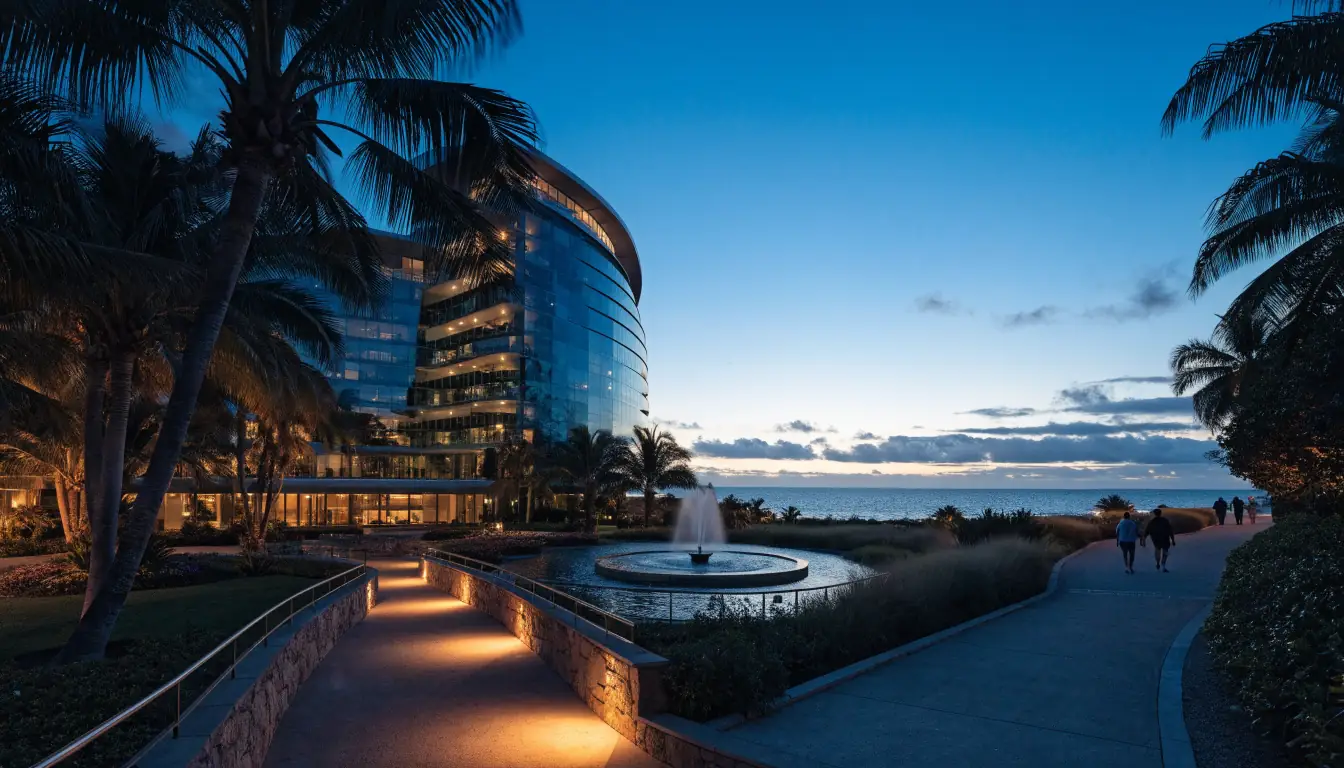
Spa searches call for a separate check. A result that mentions a day spa may refer to a nearby business, an older listing or a service with its own booking arrangements; the word “casino” in the page title does not establish that the facility is inside the venue. Confirm the operator, location and current service information through the relevant business’s own channels. This is especially important where the plan depends on a treatment, appointment or access to facilities: a general directory entry is not a booking confirmation.
Bars and games are also easy to infer from a venue name, but neither a search result nor a photograph establishes what is currently available or where it is located. I keep those checks tied to current venue information rather than treating a mention online as proof of a present service. For employment, the useful route is the organisation’s current careers information; a general venue page may not show open roles or application requirements.

Explore Australian casino and pokies topics by city and state, alongside searches for online play,…

Understand the difference between casino-operated accommodation and bundled stays, and check room inclusions, package conditions…



Before travelling, I would match the address to the intended destination, check the latest entry and dress information, and confirm that any spa service or other facility is operating as described. If the plan hinges on a specific feature, verify that feature directly. That is less glamorous than a confident listing, but it prevents an outdated detail from turning into a wasted trip.
Food Courts and Pools: Separate Amenities, Separate Checks
Food courts and pools answer different practical questions, so one should not be taken as evidence of the other. A venue may have several places to eat without operating a food court; a pool, if present, may belong to a hotel or leisure facility rather than the casino itself. The label matters. “Casino food” can describe a broad expectation, not a confirmed amenity.
I have seen how a general venue listing can flatten these distinctions. A dining reference may cover a restaurant, café or nearby business, while a food-court listing implies a shared area with multiple food outlets. Those are not interchangeable. Likewise, a pool shown in a wider precinct description does not establish that casino visitors can use it, or that access is included with a particular booking.

For Melbourne, the practical check is to confirm each feature with current venue information before planning around it. Look for the exact amenity name, its location, access rules and whether it is operated by the casino, a hotel or another business. If the listing is vague, ask the venue to clarify. Details can change; an old directory entry can outlive the facility it describes.
Food and pool information also belongs to separate decisions. Someone choosing where to eat needs current details about food outlets, not an assumption based on a pool listing. Someone planning to swim needs confirmation of access and operating arrangements, not a general claim that the venue has amenities. Keep the checks distinct.
That is less impressive than a glossy facilities list. It is also more useful. A broad label is not a promise.
Written by the editors at Caswino Casino.