








Online Pokies in Australia: Legal and Payment Guide
 Available in AU
A practical look at offshore operators, bonuses, payment checks and why game outcomes cannot be ranked from unverified claims.

- What “Real-Money Pokies in Australia” Means Legally
- The Australian Online Pokies Market, Without the Sales Pitch
- Bonuses and Free Spins: The Turnover Behind the Headline
- PayID Deposits and the Bank Checks Behind Them
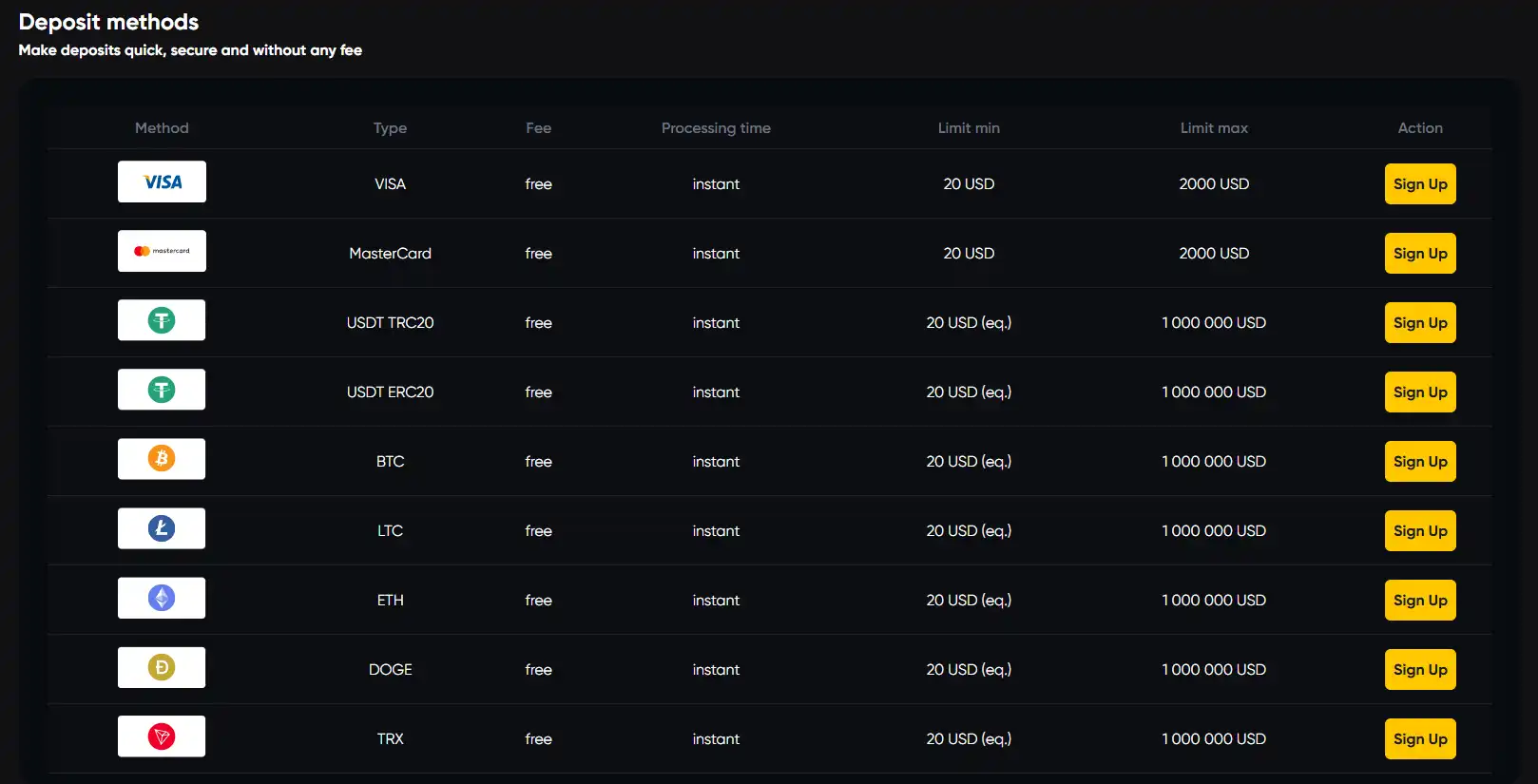
- E-Wallets, Cards and the Cost of a Deposit
- What “Top” Means When No Verified Ranking Is Available
- Reddit Claims, Bonus Credit and the Fine Print
- New Pokies and Why the Same Game Can Pay Differently
- Practice Play and the Randomness of Each Spin
What “Real-Money Pokies in Australia” Means Legally
The legal distinction is between the person playing and the company providing the game. Under the Interactive Gambling Act 2001, offering real-money online pokies to people in Australia without a domestic licence is illegal for the operator. No domestic licences for online casinos have been issued. There is no Australian-licensed online casino.
That is the starting point for understanding real-money play in Australia: an offshore site may accept Australian customers, but that does not make its service locally licensed or lawful to provide. The law is directed at operators, not individual players. Australians are not criminally liable simply for playing on an offshore site that accepts them. Those are separate points, and confusing them leads to poor decisions.
The practical position is less straightforward than “the site loads, so it must be permitted.” The Australian Communications and Media Authority (ACMA) enforces the Act and blocks access to illegal offshore gambling sites. Internet service providers are required to comply with ACMA’s blocklist. A site’s availability can therefore be affected by blocking, and access from Australia should not be mistaken for approval by an Australian regulator.
I read a claim of legality by looking at who the law regulates and what protection exists locally, not at how confidently a site describes itself. An offshore business might refer to a foreign licence, but that is not an Australian licence. It does not change the absence of domestic online-casino licensing, nor does it give an Australian player the same route to redress as a locally regulated service would.
The sharpest practical consequence concerns winnings. If an offshore casino refuses to pay, Australian players have no legal recourse in Australia to compel payment. A displayed balance is not the same as money secured under Australian casino regulation. A dispute may turn on the offshore operator’s own rules and the legal arrangements in another jurisdiction, rather than an Australian licensing process that can resolve the claim.

That difference is easy to miss when the account appears to work normally. Registration, a successful login or the ability to place a bet says something about the site’s technical operation. It does not establish that the operator holds domestic authority, or that an Australian body can enforce a promised withdrawal. In my view, that is the central distinction: permission to play is not a guarantee of local protection.
Nor should a site’s willingness to accept Australian customers be treated as evidence that the law permits the service. The operator’s conduct and the player’s position are not the same legal question. The Act prohibits the provision of these services to people in Australia without a domestic licence; the player is not made liable merely by taking part. Both statements matter. Leaving either out distorts the picture.
This also makes phrases such as “Australian casino” potentially misleading. They may describe a site aimed at Australian customers, using Australian currency or offering familiar payment options. None of those features creates an Australian licence. The relevant legal status depends on the operator’s authority to provide the service here, and no Australian online-casino licences have been issued.
There is a further limit to self-exclusion protections. BetStop applies to Australian-licensed operators; it does not bind offshore casinos. Since there is no Australian-licensed online casino, BetStop should not be understood as a tool that can close an offshore pokies account or prevent an offshore operator from accepting play. The name of a familiar Australian service can sound broader than its reach. It is not.
The practical checks are therefore different from a search for a local licence that does not exist. Before any first withdrawal, identity and address documents should be verified, and the terms governing the account should be read with the possibility of a dispute in mind. Those steps do not create Australian legal recourse or ensure payment. They simply clarify what the operator may require and what evidence it may ask for.
No Local Recourse
If an offshore casino refuses to pay winnings, Australian players have no legal recourse in Australia to compel payment.
I would not treat access as protection, or a foreign licence as a substitute for domestic oversight. The law separates the operator’s prohibition from the player’s lack of liability; the financial risk remains that an offshore operator may withhold winnings without an Australian remedy. That is the legal context behind real-money pokies in Australia. No local backstop.
The Australian Online Pokies Market, Without the Sales Pitch
“Best” is a sales word, not a market category. In a page title or banner, it may suggest that someone has compared games or services against a consistent standard. The word alone establishes none of that. An Australia-focused label says who the material is aimed at; it does not identify a particular operator, verify a game, or show how a ranking was assembled.
That distinction matters because the online market is not a single catalogue with a shared Australian standard. Names and descriptions presented to Australians may refer to offshore services, while access can vary. The Australian Communications and Media Authority (ACMA) administers the Interactive Gambling Act 2001 and takes steps to restrict access to unlawful offshore gambling services. Internet providers must act on the authority’s blocklist. A page appearing online, or a name recurring in promotional material, is therefore not proof that a service is officially recognised or consistently accessible in Australia.
Search results and promotional pages can also use “Australian” in different ways. It may describe the intended audience, the currency shown, a payment method mentioned, or simply the wording of the advertisement. Those labels do not amount to an endorsement by a public body. Nor does a familiar term such as pokies tell anything specific about a game’s features or the conditions attached to a service. The label does less work than it appears to.

I have seen how rankings are made to look more objective than they are. A page can arrange names in order, attach badges, and use confident verdicts, yet leave the basis of comparison unclear. A ranking is only as useful as its method: what was compared, whether the criteria were applied consistently, and whether the result reflects a verifiable difference rather than an editorial preference. Without that context, “top-rated” is an assertion, not evidence.
The same caution applies to game lists. A title can be repeated across several pages without those pages independently checking what is offered, or whether the same version is available in each place. A game name is not a performance record. It does not show how a particular service operates, and it should not be read as a promise about outcomes. A list can be polished and still tell very little.
There is a practical difference between describing a market and endorsing a destination. A market description can explain the language used in promotions, how public oversight works, and why online availability is not the same as official approval. An endorsement goes further: it directs people towards a service or presents it as a sound choice. For Australian audiences, that distinction is especially important. A page should not turn a broad category into a recommendation simply because the wording resembles what people use when looking for online pokies.

The strongest claims often rely on compressed language. “Australian-friendly” can sound like a formal status, even when it is merely a promotional description. “Trusted” may signal confidence without explaining who did the checking or what was checked. “Best” can be a headline, a commercial opinion, or a genuine comparison; the word itself does not tell which. I treat those terms as claims to interpret, not conclusions to inherit.
Even an apparently concrete detail can be narrow in meaning. A payment option, for instance, describes one part of a transaction. It does not establish that an operator is licensed, that a game is fair, or that return settings are disclosed. One feature cannot stand in for an assessment of the whole service. That is where promotional pages tend to compress several separate questions into one reassuring impression.
ACMA’s role gives the Australian context a clear point of reference, but it does not turn every page that mentions Australia into an official source. The authority enforces the national law and works with internet providers to limit access to prohibited offshore gambling services. The existence of a blocklist also helps explain why online visibility and practical access are not identical: a service may be discussed or advertised somewhere without being reliably reachable from within Australia.
So the phrase “online pokies in Australia” is best understood as a description of a subject, not a seal of approval. It does not settle who operates a service, what status it has, or whether a ranking has a defensible basis. The market language can be vivid; the underlying evidence still has to carry the weight. A confident label is not a comparison. A ranked page is not automatically a reliable one.

Bonuses and Free Spins: The Turnover Behind the Headline
A “sign-up bonus” sounds like an amount added to a balance. The important question is what the promotion requires before any resulting winnings can be withdrawn. A displayed bonus can be promotional credit rather than cash available to take out. Its practical value depends on the conditions attached to it, especially the wagering requirement and the amount of winnings, if any, that can be cashed out.
I have found that the headline is often the easiest part to read and the condition doing the real work is several lines below it. “Free” describes how an offer is presented; it does not, by itself, say that any winnings are immediately withdrawable. That distinction matters for deposit bonuses, no-deposit offers and free spins alike.
What the wagering multiplier counts
A wagering requirement is a turnover condition: a stated multiplier applied to a defined amount. Before comparing offers, the base amount needs to be clear. The requirement may apply to the bonus alone or to the deposit plus the bonus. Those are different calculations, even when the multiplier looks the same.
A specialist review uses a $500 bonus with a 40x wagering requirement to show the scale of the condition: the associated turnover is $20,000 before the winnings can be withdrawn. The point is not that every promotion has those terms. It is that a large headline amount can sit alongside a substantial amount of required betting. The calculation describes turnover, not a prediction that the player will lose exactly that amount, nor a promise of what balance will remain when the condition is met.
Wagering Calculation
Determine if the wagering requirement applies to the bonus alone (e.g., $500) or the deposit plus bonus (e.g., $1,000).
Multiply the base amount by the stated requirement (e.g., $500 × 40x).
Determine the final amount of betting required before withdrawal (e.g., $20,000).
The base matters just as much as the multiplier. In the example described by that specialist review, a promotion applying 35x to a $500 deposit plus a $500 bonus requires $35,000 in bets. Applying the same multiplier to the bonus alone would produce a different figure. “35x” is therefore incomplete information until the terms say what amount is being multiplied.
A specialist review suggests treating wagering requirements of 35x or lower as a more manageable benchmark and describes anything above 40x as punishing. That is a reviewer’s assessment, not a universal rule about promotions. The useful comparison is still the arithmetic: identify the base, apply the multiplier, then consider whether the resulting turnover is acceptable. A lower multiplier does not make an offer automatically worthwhile if another condition sharply limits the cash-out.
The wording around eligible play also deserves attention. A requirement only has practical meaning alongside the promotion’s definition of what counts toward it. The headline multiplier cannot explain those details on its own. If the terms are unclear about the calculation or what qualifies, the advertised figure is not enough to judge the commitment.
Deposit bonuses and the real cost of “extra”
A deposit bonus ties the offer to a deposit. The phrase “deposit plus bonus” signals that both amounts form the base for the wagering calculation; it should not be read as though only the bonus is counted. In the specialist review’s example, the player has to turn over the combined amount at the stated multiplier. The promotional credit increases the starting balance, but it also increases the required turnover when the terms apply the multiplier to the combined sum.
That is why a larger bonus is not automatically a better offer. The headline can make the extra credit feel like value added, while the calculation shows what must happen before withdrawal. A promotion may look generous in the account balance and still demand substantial play. The two facts belong together.

“No deposit” changes the entry point, not the need to read the conditions. A no-deposit bonus or free spins offer may be presented without a qualifying deposit, but the name alone does not establish what happens to winnings. The offer’s terms determine whether turnover applies, what amount is subject to it, and whether a cash-out cap limits the result. Without those details, “no deposit” describes how the promotion is introduced, not the amount that can be taken out.
I would not treat a no-deposit label as a shortcut through the fine print. The relevant distinction is between credit granted for play and withdrawable funds. A balance can appear in an account without being available for withdrawal; the conditions say what must be satisfied first. Promotional wording does not settle that.
Free spins and the cash-out ceiling
Free spins are a separate promotional format, but they raise the same basic question: what can be withdrawn if the play produces winnings? A specialist review notes that free-spin offers may cap the amount of winnings that can be cashed out. The cap and the wagering terms are different restrictions. Meeting a turnover condition does not necessarily remove a separate ceiling on the amount payable.
This is where “free” can be especially easy to misread. The spins may be supplied as part of an offer, but that does not mean every resulting win becomes unrestricted cash. The terms may set a maximum cash-out, and the sum above that ceiling may not be payable under the offer. The wording and calculation should be read together rather than treating the displayed win as the final withdrawal amount.
Free-spins promotions can also be attached to a deposit offer or presented on their own. Those formats should not be assumed to share identical rules. One may have a turnover requirement calculated on bonus winnings; another may have a cap, or both kinds of condition may apply. The relevant terms are the ones for the specific offer, not the general description used in a banner or account message.

A simple way to read the offer is to separate its moving parts: what is granted, what amount the multiplier applies to, what counts toward turnover, and whether a cap limits cash-out. That is not paperwork for its own sake. Each answer changes how much of a displayed balance could eventually be withdrawn.
Compare the conditions, not the headline
A “best” bonus cannot be identified from its size alone. The figure in the headline does not show the required turnover, and the multiplier does not show whether it applies to the bonus or the combined deposit and bonus. A free-spin count, in turn, does not establish the maximum cash-out. Those details have to be considered as one set of terms.
Payment branding does not resolve these questions either. An offer associated with PayID is still judged by its bonus conditions; the payment method does not tell anyone whether the promotion has a low wagering requirement or an unrestricted cash-out. The offer and the payment route are separate matters.
When I compare promotional language, I start with the calculation and then look for the limit. If the requirement is based on deposit plus bonus, I use that combined amount. If a free-spin offer names a cash-out cap, I treat that as a separate ceiling rather than assuming completed wagering removes it. If the terms do not make the base or cap clear, the headline alone cannot fill in the gap.
That is the mechanics behind a no-deposit bonus, a deposit match or free spins: the visible credit is only one part of the offer. Turnover determines what must be played through; a cash-out cap may determine how much can leave. The more attractive the headline sounds, the more important it is to read those conditions as numbers with consequences—not as small print detached from the promise.
- Separate the credited amount from the withdrawable sum
- Look for the specific wagering condition
- Check for cash-out caps on free spins
- Treat a large headline bonus as immediate value
- Assume “no deposit” means no conditions
- Rely on a multiplier without knowing the base
PayID Deposits and the Bank Checks Behind Them
PayID is not a separate bank account or a gambling wallet. It is an alias service connected to Australia’s New Payments Platform (NPP): a transfer can be addressed using an email address, mobile number or Australian Business Number (ABN), rather than by entering bank-account details. The transfer still depends on a bank account behind the alias.
The NPP is supported by all major banks in Australia and uses end-to-end encryption. That describes the payment infrastructure, not the decisions made by each bank about particular transactions. A payment can travel through a secure system and still be refused under a bank’s own controls. Those are separate questions.
For real-money play, using PayID at an online casino requires the PayID to be linked to a bank account first. The alias is the route for identifying the transfer destination; it does not make the payment independent of the account or the bank that holds it. That distinction matters when a deposit fails: the payment method may be functioning as designed while the bank declines the transaction.
A specialist review reports that some Australian banks, including members of the Big Four, have at times blocked PayID transfers to gambling merchants they recognise. This is a report about bank practices, not a rule applying uniformly to every bank or every payment. Controls can vary and change. A failed transfer therefore cannot, by itself, establish whether the cause was the alias, the receiving merchant or a bank decision.
There is another distinction worth keeping clear. PayID’s presence does not certify a gambling service. It says nothing on its own about a site’s licensing, game fairness or disclosure of return settings. Payment rails are infrastructure; they do not act as an independent audit of the business accepting a transfer. “Bank-linked” is a description of how the payment is routed, not a quality mark.

I have seen payment language used as reassurance because the method sounds familiar and domestic. That can make a transfer feel safer than it is. The practical question is narrower: whether the bank permits that particular payment to that particular recipient. If it does not, the fact that the NPP supports PayID does not override the bank’s decision.
The same caution applies to claims about PayID pokies in Australia. Naming PayID as a deposit option does not establish that every Australian bank will process a payment, nor does it confirm that the receiving service is authorised to provide real-money online pokies. The method describes a potential way to move funds, not a promise that a transaction will be accepted or that a gambling service is legitimate.
It is also useful to separate payment security from recourse. Encryption protects information as it moves through the payment infrastructure; it does not settle a dispute about an offshore gambling account or guarantee the return of funds. A completed transfer and a dispute over what happens afterwards are different matters, with different parties involved.

That is the limit of the method. PayID can identify a transfer through an alias, with a linked bank account beneath it, but acceptance rests with the institutions handling the payment. In practice, the bank’s decision is decisive. No shortcut around it.
E-Wallets, Cards and the Cost of a Deposit
E-wallets and bank cards take different routes, and neither makes a gambling transaction cost-free or certain to go through. In accounts of offshore pokies payments, specialist reviews describe Skrill and Neteller as popular partly because transfers can be quick and the wallet can keep the merchant from seeing the underlying card details. That relative separation is not anonymity from the wallet provider: the account is still attached to its own customer and payment records.
Availability depends on the payment options an operator lists and on whether the transaction is accepted. A specialist review also reports that Australian banks and card companies are increasingly blocking payments to known gambling merchants. That is a reported trend, not a guarantee that every bank handles a transaction the same way. A declined payment does not, by itself, explain whether the bank, card issuer or merchant rejected it.

Cards can carry a less visible cost. A specialist review notes that a gambling deposit made with a credit or debit card may be classified by the bank or issuer as a cash advance. If that happens, the charge may attract a fee of 3–5% and interest from the transaction date, rather than being treated like an ordinary purchase. The classification and terms belong to the issuer, so the amount shown on a deposit screen may not capture the full cost. A payment that clears is not necessarily a cheap payment.
Minimum deposits also vary. Specialist reviews report that many offshore operators set them at AU$10 to AU$20, while some set a AU$5 floor. Those figures are reported market terms, not a fixed standard; the applicable amount is the one stated in the payment conditions for the specific account. A low minimum only describes the entry point. It says nothing about withdrawal conditions, payment acceptance or the ability to recover funds if an offshore operator refuses to pay.
There is a practical distinction between having a payment method displayed and being able to use it. A listed wallet or card route does not establish that a transaction will be accepted by the bank, or that a withdrawal will be processed on the same route. Before any first withdrawal, identity and address documents need to be verified; an offshore operator may require this before releasing funds. That review can involve providing sensitive personal information, another consideration separate from the deposit itself.
I have seen payment screens make the deposit amount look like the whole decision. It is only the visible part. Bank treatment, merchant restrictions, account verification and the operator’s own payment terms all sit behind it. No shortcut.
What “Top” Means When No Verified Ranking Is Available
Choosing an online pokies site is easier when you can check concrete details such as licensing, deposit requirements and payout speed. Use the entries below as a concise reference when deciding what to look into further.
License: Curacao Gaming Control Board OGL/2023/174/0082 (Dama N.V.) SpinsUp is listed with a Curacao Gaming Control Board licence, OGL/2023/174/0082, held by Dama N.V.
License: Curacao (operating since 2017) · Min. deposit: A$20 Uptown Pokies has been operating since 2017 and is listed as licensed in Curacao. Its minimum deposit is A$20.
License: Curacao eGaming (Dama N.V.) JeetCity Casino is listed with a Curacao eGaming licence held by Dama N.V.
License: Curacao · Min. deposit: A$20 (POLi) Lucky Dreams is listed as licensed in Curacao. The minimum deposit is A$20 when using POLi.
License: Curacao – Antillephone N.V. (Versus Odds B.V.) · Min. deposit: EUR 20 Thor Casino is listed with a Curacao licence from Antillephone N.V., with Versus Odds B.V. identified. Its minimum deposit is EUR 20.
License: Curacao Gaming Authority (Jumpman Gaming Ltd) DragonSlots Casino is listed with a Curacao Gaming Authority licence held by Jumpman Gaming Ltd.
Payout speed: crypto 30-120 minutes, fiat 24-72 hours · Min. deposit: A$30 MrPacho lists crypto payouts at 30–120 minutes and fiat payouts at 24–72 hours. Its minimum deposit is A$30.
License: Curacao eGaming OGL/2024/923/0383 (Antillephone N.V.) · Min. deposit: A$30 WinSpirit Casino is listed with a Curacao eGaming licence, OGL/2024/923/0383, from Antillephone N.V. The minimum deposit is A$30.
License: Curacao Gaming Control Board JustCasino is listed with a Curacao Gaming Control Board licence.
License: Curacao Gaming Control Board OGL/2023/176/0095 (Hollycorn N.V.) Rollero Casino is listed with a Curacao Gaming Control Board licence, OGL/2023/176/0095, held by Hollycorn N.V.
“Top” is a label, not a payout term. A polished ranking can make a service look straightforward to compare, but the word alone says nothing about how much can be withdrawn, when a payment can be made, or what checks stand between a win and its transfer. I would treat a ranking as a claim to examine, not a guarantee of how a cash-out will work.
The detail that changes the practical value of a large win is often the withdrawal cap. A specialist review reports that some casinos set weekly or monthly limits in the $5,000–$10,000 range. Its example is a $50,000 jackpot that could become a multi-year payout plan. That is a reported condition, not a universal rule; the cap and the period attached to it matter. A headline win and the amount available at once are different things.
The wording can hide the distinction. “Fast withdrawals” may describe processing after approval, while a cap controls how much can leave within a set period. If a balance exceeds that cap, the remaining money may have to wait for later withdrawal periods. That is not a small operational detail. It changes access to the funds.
Identity checks create another step before a first withdrawal. A specialist review says casinos may request photographs of identification, proof of address and, in some cases, a selfie holding the identification document. The required documents should be verified before a first withdrawal is attempted. Verification does not remove a payout cap, and a ranking badge does not settle how either condition will be applied.
When “top” appears beside an online pokies claim, the useful comparison is therefore not the placement on a page. It is the stated withdrawal ceiling, whether it is weekly or monthly, and the documents required before cash-out. Read the terms as payment rules, not decoration.

No shortcut.
Reddit Claims, Bonus Credit and the Fine Print
A post saying that a pokies account received “bonus credit” describes a balance, not necessarily money that can be withdrawn. The distinction matters. Promotional credit may be subject to a wagering requirement: a turnover condition that has to be met before winnings become eligible for cash-out. A short Reddit account can leave that condition out without being false; it may simply describe the moment the credit appeared, not what happened when a withdrawal was attempted.
I have learned to treat the headline and the terms as separate pieces of information. The useful detail is not that credit was added, but what the offer requires before any resulting winnings can leave the account. Without that, a post cannot establish the practical value of the offer. “Free” is a sales word. The condition is the mechanism.
One affiliate review recommends looking for a wagering requirement of 35x or less and describes anything above 40x as punishing. That is the review’s assessment, not a universal rule or a dependable description of every offer. The multiplier alone also needs context: the terms should make clear what amount it applies to. A claim that quotes a figure without explaining its base may sound precise while leaving the actual turnover unclear.
Online discussions are useful for spotting questions worth checking, not for settling them. A player may report receiving credit, or say that a withdrawal was refused, without showing the terms that governed the account. Those details determine whether the experience can be compared with another offer. The same phrase can conceal different conditions.
- Bonus credit is a balance for play, not necessarily withdrawable cash
- Wagering requirements define the turnover needed before cash-out
- The base amount (bonus only vs deposit plus bonus) changes the total commitment
- No-deposit labels do not remove the need to check for turnover or caps
The practical reading is plain: separate the amount credited from the amount that can be withdrawn, then look for the wagering condition attached to the offer. If a post provides no terms, it provides no reliable basis for judging the cash-out value. Useful clue. Not proof.
New Pokies and Why the Same Game Can Pay Differently
A new title can attract attention, but its release date says nothing about the return setting attached to it. I have seen the game name do much of the persuasive work: familiar branding suggests a known product, while “new” makes it sound as though the value must be better. Neither tells the full story.
A specialist review reports that some providers let casinos choose between multiple RTP settings for the same pokie. RTP is the stated return-to-player setting. Where that choice exists, one version of a game can carry a different return percentage from the version offered elsewhere. The title may look identical; the setting need not be.

That distinction matters when comparing new Australia online pokies. A game’s name, artwork or launch announcement cannot establish which RTP setting is in use. Nor does the word “new” indicate that a setting is more favourable. The relevant detail is the return percentage attached to the specific version available, not the age of the title or the excitement around its arrival.
In practice, that figure may be absent from a promotional description, or presented separately from the game itself. Without a clearly stated setting for the version in question, comparisons based on the title alone are incomplete. A displayed RTP is also a property of the stated configuration, not a promise about what an individual session will return.
This is where product language can blur two different things: a newly released game and a particular configuration of that game. They are not interchangeable. The same name may identify versions with different settings, so “just launched” is not evidence of a higher return.
I would treat newness as a release detail, not a measure of value. The game title identifies the product; the RTP setting identifies the version’s stated return. Small distinction. Important one.

Practice Play and the Randomness of Each Spin
Practice play can make a pokie feel familiar: the reels turn, symbols appear, and a result follows. But familiarity with the screen is not knowledge of what the next spin will produce. The relevant distinction is simple. Each spin is decided independently by a Random Number Generator (RNG), rather than being a continuation of the result before it.
That independence matters when a sequence appears to tell a story. A run of losing spins does not, by itself, make a win due on the next one; a recent win does not establish that another is more likely to follow. The RNG determines each result as a separate event. Past outcomes may be memorable, but they do not provide a reliable forecast of the next spin.
I have seen players treat practice results as a rehearsal for later play. They are not a prediction. A session can show how a game presents its features, but a sequence of outcomes in practice says nothing dependable about a later sequence. Familiarity is not an edge.
Practice play should also be kept separate from free-spin promotions. The word “free” in an offer concerns promotional conditions, which can include rules about whether winnings may be withdrawn. Practice play is about trying a game without treating its outcomes as a forecast; a promotional free spin is governed by the offer attached to it. Different mechanics.
The sensible takeaway is narrow: randomness leaves no dependable pattern to exploit from one spin to the next. No spin is owed.
Created by the ”Caswino Casino” editorial team.