








$300 No-Deposit Casino Bonus in Australia
 Available in AU
The advertised balance is only a starting point: wagering rules, game restrictions and cashout limits determine what may be withdrawn.

- What a “$300 Bonus” Actually Puts on the Table
- The Signup Offer: Free Cash, Spins and the Verification Step
- Bonus Codes, Pokies and the Games That Count
- Why “No Deposit” Can Still Come with a Deposit Condition
- A $300 Welcome Bonus Is Not Necessarily a No-Deposit Bonus
- PayID Deposits and the Withdrawal Catch
- Online Bonus Terms That Can Stop a Small Balance from Paying Out
- Free Spins, Slot Contributions and Expiry Windows
- Comparing the Real Cost of No-Deposit Offers
- Real-Money Online Casinos and the Australian Legal Position
What a “$300 Bonus” Actually Puts on the Table
A “$300 bonus” describes the figure attached to an offer, not the amount that can necessarily be withdrawn. I have seen the headline do its job before the terms have had a chance to: it gives a promotion a simple, memorable value. The operative rules then determine whether bonus funds can become withdrawable winnings, how much can be cashed out and what conduct can cancel the offer.
That distinction matters especially when the offer is described as a no-deposit bonus. The advertised amount may be credited as bonus funds, but those funds are not automatically cash in the player’s account. Wagering requirements can stand between the balance and a withdrawal. Other conditions can set a maximum cashout, restrict eligible games or make the offer expire before its requirements are met.
The face value is only the opening figure. The terms define the usable value.
A maximum cashout cap is particularly easy to miss because it changes what a successful wagering run can produce. If the rules limit withdrawals from bonus winnings, a balance above that ceiling does not mean the excess is payable. The cap is not the same as the amount of the bonus: one describes the promotion’s advertised value, the other limits the amount that may leave the account as a withdrawal.
A headline bonus amount is only part of the picture: check the offer terms and whether a casino’s details suit you before signing up. This list provides a brief reference point for considering casinos featured on a page about A$300 no-deposit bonuses in Australia.
License: Curacao Gaming Control Board OGL/2023/174/0082 (Dama N.V.) SpinsUp is listed with a Curacao Gaming Control Board licence, OGL/2023/174/0082, held by Dama N.V.
License: Curacao (operating since 2017) · Min. deposit: A$20 Uptown Pokies has operated since 2017 and is listed as Curacao-licensed. Its minimum deposit is A$20.
License: Curacao eGaming (Dama N.V.) JeetCity Casino is listed as licensed by Curacao eGaming, with Dama N.V. identified as the operator.
License: Curacao · Min. deposit: A$20 (POLi) Lucky Dreams is listed as Curacao-licensed. The stated minimum deposit is A$20 for POLi.
License: Curacao – Antillephone N.V. (Versus Odds B.V.) · Min. deposit: EUR 20 Thor Casino is listed under an Antillephone N.V. Curacao licence, with Versus Odds B.V. identified. Its minimum deposit is EUR 20.
License: Curacao Gaming Authority (Jumpman Gaming Ltd) DragonSlots Casino is listed with a Curacao Gaming Authority licence, with Jumpman Gaming Ltd identified.
Payout speed: crypto 30-120 minutes, fiat 24-72 hours · Min. deposit: A$30 MrPacho lists crypto payouts at 30–120 minutes and fiat payouts at 24–72 hours. Its minimum deposit is A$30.
License: Curacao eGaming OGL/2024/923/0383 (Antillephone N.V.) · Min. deposit: A$30 WinSpirit Casino is listed with Curacao eGaming licence OGL/2024/923/0383, under Antillephone N.V. Its minimum deposit is A$30.
License: Curacao Gaming Control Board JustCasino is listed as licensed by the Curacao Gaming Control Board.
License: Curacao Gaming Control Board OGL/2023/176/0095 (Hollycorn N.V.) Rollero Casino is listed with Curacao Gaming Control Board licence OGL/2023/176/0095, held by Hollycorn N.V.
That is a different calculation from simply asking whether the bonus can be claimed. The relevant question is what the terms permit after wagering, and whether the balance is subject to a cap. A large headline can still lead to a much smaller withdrawable amount. The distinction is contractual, not cosmetic.
The maximum-bet condition creates another point where the headline can mislead. Bonus wagering may come with a stake ceiling, and exceeding it can void the bonus. A specialist review reports limits in the A$5 to A$6.50 range; that is a report about offers it reviewed, not a universal rule for every promotion. The specific terms attached to an offer control.
From the operator’s side, a maximum stake gives a clear boundary for bonus play. From the player’s side, it makes each bet part of compliance, not merely a choice of game strategy. A single wager above the permitted ceiling can put both the bonus and winnings connected to it at risk. A balance may look intact while wagering is under way, then become ineligible for cashout if the rules have been breached.
Small print, large effect.
I have learned not to treat a displayed balance as proof that the same amount is available to withdraw. Bonus funds, winnings generated from them and the amount allowed to be cashed out can be governed by different terms. The wording needs to be read as a sequence: what counts toward wagering, what restrictions apply while wagering, and what cap applies at withdrawal. A failure at any stage can change the final result.
The $300 label does not answer those questions. It does not, on its own, say whether the figure is bonus credit, whether a maximum cashout applies, or what happens if a maximum-bet condition is breached. Nor does the headline establish that the full amount—or any particular portion—will be withdrawable. Those details belong to the offer’s terms.
So the practical value of a casino bonus $300 promotion cannot be judged from the number alone. A high face value may attract attention, but wagering requirements, cashout caps and stake limits determine the route from bonus to withdrawal. The offer may still be useful to someone who understands and accepts those conditions. It is not equivalent to receiving that amount as unrestricted cash.
I would read the headline as a starting point, not a payout promise. The terms are where the value is settled.
The Signup Offer: Free Cash, Spins and the Verification Step
A no-deposit offer is described as a reward for opening an account without first paying money into it. The advertised reward may be free cash or free spins, but the account-creation process is not always as simple as submitting a registration form and seeing a balance appear. The offer can depend on how the account is recorded, whether the contact details are verified and whether a claim step is completed.
Registration Process
An offer can depend on how the account is recorded, whether the contact details are verified and whether a claim step is completed.
In my experience, the important distinction is between registering and being recognised as eligible. A form can be accepted while the promotional credit remains pending. That does not necessarily mean something has gone wrong: the operator’s system may be waiting for an email confirmation or for the offer to be attached to the new account. “Instant” is a marketing description, not a reliable description of every stage.
What happens after registration
The basic sequence is account details, submission, then whatever confirmation the site requires. A no-deposit reward may be applied automatically, or a code may have to be entered during registration or in the cashier. A specialist review describes both routes, so neither should be assumed for every offer. The practical point is to establish the claim method before completing the account form: a code box left blank can matter if the offer requires one, while entering an unrelated code may attach a different promotion.
The wording around a code can be easy to misread. A field labelled “bonus code” does not by itself confirm that a code is necessary; it may be optional or intended for another promotion. Conversely, a page that mentions a no-deposit reward does not prove that it will be credited without an additional step. The terms linked to that specific offer, and the confirmation shown during registration, are more useful than the label on the form.
This matters for offers promoted as a $300 no-deposit sign-up bonus in Australia. The headline alone does not establish how the offer is claimed or whether every new account qualifies. “Free” describes the absence of an initial deposit as presented in the offer; it does not settle the registration conditions. Read the activation instructions as part of the offer, not as routine account housekeeping.

Email confirmation is an eligibility step
Some offers require the registered email address to be confirmed before the promotional credit becomes available. A specialist review reports one condition in which the verification link must be used within 24 hours. That is a reported offer-specific deadline, not a dependable rule for all accounts. The actual deadline and consequence of missing it need to be checked in the terms for the offer concerned.
Verification also helps distinguish an account that has merely been entered into a form from one that has completed the operator’s required checks. If a message does not arrive, the account may remain in a pending state; the offer should not be treated as active until the account page or confirmation message shows that it has been applied. A confirmation email may also contain a link that expires, so keeping the message and following its stated instructions promptly can avoid uncertainty.
One small but consequential step. The offer’s value is not the only detail that matters at sign-up; the claim method, verification status and account confirmation determine whether the advertised reward has actually been attached. Keep a record of the terms presented at registration, especially where the page gives separate instructions for free cash and spins. If the account display and the offer wording disagree, the promotional balance should not be assumed to be available until the operator has clarified its status.
Bonus Codes, Pokies and the Games That Count
A bonus code is only useful if it is attached to the offer it is meant to activate. In a no-deposit promotion, that may mean a code identifies a particular package of free spins or bonus credit; it does not, by itself, establish that every game in the casino qualifies. The code and the game terms need to be read together.
Tied to a specific named pokie; not a general balance to move between titles.
Playable on a selection of games as stated in the conditions.
A specialist review describes two different formats: free spins are tied to a named pokie, while a free-chip offer may be playable on a selection of games. That distinction affects what the bonus can be used on. Spins for one pokie are not a general balance to move between titles. A chip offer may give more choice, but only within the selection stated in its conditions.
The distinction can be obscured by broad wording such as “pokies bonus”. That phrase can describe the category of promotion without saying which game is eligible. The practical detail is usually in the offer terms: the pokie name for spins, or the permitted game list for a chip. If the code is entered but the qualifying game is not used, the bonus may not behave as expected. A code is not a blanket pass.
This matters once wagering begins because only qualifying play can count toward the requirement. The game selection is therefore part of the bonus mechanics, not a cosmetic detail. A balance may appear in the account while some or all of the play attached to it does not advance the wagering requirement if it falls outside the stated rules. The displayed balance is not proof that every bet counts.
The restrictions can be particularly clear around game types that are often excluded from no-deposit promotions. Progressive jackpots, table games and live dealer titles are commonly listed as ineligible. The reasoning is commercial: an offer is designed around a defined set of games, and the operator’s terms determine which activity is accepted for that promotion. A game being available on the site does not mean it is eligible for the bonus.

I have seen the same confusion arise when a promotion is described as covering pokies generally, while the terms narrow it to selected titles. The headline sets expectations; the conditions define the usable offer. That gap is where a code can seem to have worked even though the chosen game is outside the promotion.
Before treating a code as relevant, the important checks are whether it applies to the specific no-deposit offer, whether the reward is spins or chip credit, and which pokie or games qualify. The conditions should also be checked again if the offer is presented differently at sign-up or in the cashier. A code entered in the wrong place, or one associated with a different promotion, may not attach the intended reward.
This is not the same as choosing a game purely for preference. With a restricted bonus, the eligible title determines whether the play is valid under the offer. Free spins have a defined destination; chip credit may have a defined pool of games. Excluded titles remain excluded even when they are prominent in the casino lobby.
Read the game clause, not just the banner. That is the operative detail.
Why “No Deposit” Can Still Come with a Deposit Condition
“No deposit” sounds like a complete description of how an offer works. In practice, it may describe the bonus amount rather than every step required to activate it. That difference matters: an offer can be presented as no-deposit while its terms attach a deposit condition to eligibility or activation.
Attention An offer presented as no-deposit may still attach a deposit condition to eligibility or activation, such as a minimum deposit of A$5.
I have seen how the label does its work. It draws attention to the absence of an upfront payment, while the operational detail sits elsewhere—in the offer rules, the account terms or a note beside the claim button. A headline mentioning a $300 no-deposit casino bonus does not, by itself, establish that the bonus will be credited without any payment. The label is not the full condition.
One specialist review reported listed offers with a minimum deposit of A$5 required for activation. That is a specific reported condition, not a rule that applies across the market. It shows why the distinction is worth checking: a small required payment can change what “no deposit” means at the point of claiming, even when the advertising phrase remains prominent.
The key is to separate the offer’s name from its activation trigger. A deposit might be required before the bonus becomes available, rather than being part of the bonus itself. Those are different things. The first is a condition to enter the promotion; the second would be the promotional credit. The wording should make clear which applies, and whether the payment is mandatory or merely one route to qualify.
A useful check is to read the terms attached to the exact offer, not rely on a general page describing no-deposit promotions. Look for language about a minimum deposit, activation, eligibility and the point at which the bonus is credited. If a summary says “no deposit” but the detailed terms require a payment, the terms reveal the practical condition. If those materials conflict or leave the trigger unclear, the offer is not clearly described.

This is also where a headline amount can distract. A large advertised figure may dominate the page, but it does not answer the basic question of whether the promotion can be activated without putting money in. Nor does the word “free” resolve that question. The terms decide what action is required, and when.
There is no need to treat every no-deposit label as false. Some offers may genuinely be available without a payment; the point is that the label alone cannot confirm that. The A$5 condition reported in a specialist review is a reminder to check the individual offer rather than assume all promotions use the same entry rules.
In operational terms, the claim is only as clear as its trigger. If the deposit condition appears after the headline, it still counts. Read the condition first.
A $300 Welcome Bonus Is Not Necessarily a No-Deposit Bonus
“Welcome” describes when an offer is presented, not necessarily what must happen for it to become available. A casino welcome bonus of $300 might be attached to a new account, but that label alone does not establish whether it is no-deposit cash, spins, or a bonus linked to another qualifying action. The distinction matters: a large headline can describe the advertised value without saying what the account receives or what conditions apply.
I learned to treat the promotional label as a category, not a complete description. “Welcome” points to the customer relationship: the offer is meant for someone arriving at the service. “No-deposit” makes a narrower claim about whether a deposit is needed to receive the bonus. Those terms can overlap, but one does not prove the other. A welcome offer may be no-deposit; the word “welcome” by itself does not promise that.
- Treat the “Welcome” label as a category
- Check the terms for the actual credit method
- Separate the offer label from the activation trigger
- Assume “Welcome” means it is no-deposit
- Mistake a percentage bonus for a no-deposit offer
- Treat a headline as a payout promise
The same applies to wording such as “$300 percent bonus.” A percentage-style promotion refers to a calculation or advertised match, whereas a no-deposit offer refers to the absence of a deposit requirement for the bonus itself. The headline may put both ideas beside each other, but the terms determine what is actually credited. The wording is not the benefit. The conditions are.
That is why a casino $300 welcome bonus should be read as a claim about the promotion’s stated value, not as a statement that $300 is immediately withdrawable. Nor does the phrase “bonus code” settle the question. A code can identify or activate an offer, but its presence does not tell whether the offer is deposit-free or how its winnings are treated. Those are separate points in the terms.
For a no-deposit bonus, the relevant distinction continues after crediting: winnings are generally subject to wagering and verification requirements before withdrawal. So even when an offer genuinely requires no deposit to receive, that does not make any resulting balance automatically available as cash. The bonus can be free to claim and still have conditions attached to converting winnings into a withdrawal.
I would separate the offer into three questions: what the “welcome” label means, what is required to receive the bonus, and what conditions apply to winnings before withdrawal. The first is promotional framing; the other two are practical terms. Mixing them together is how a welcome headline starts to look like a cash promise.
A $300 welcome bonus casino promotion therefore cannot be classified from its headline alone. The exact offer terms need to say whether it is no-deposit and what applies to any winnings. If those details are unclear, the headline leaves the central question unanswered. Big label. Small print.

PayID Deposits and the Withdrawal Catch
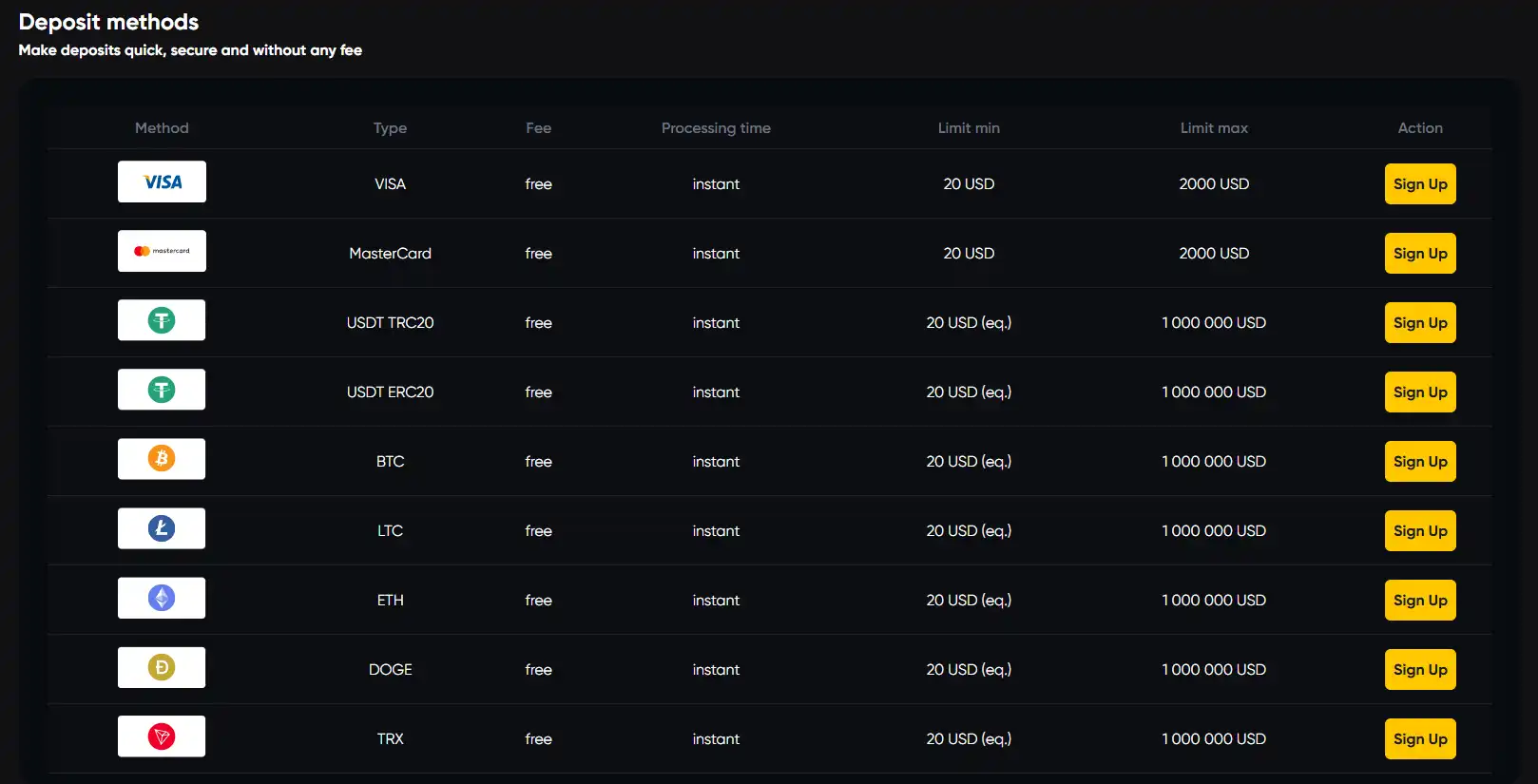
PayID is a way to send a deposit, not a promise that a withdrawal will return by the same route. At Australian banks, PayID deposits are described as free and near-instant. A transfer can settle in seconds using an email address or mobile number, rather than entering BSB and account details. That makes the payment step feel simple. The cash-out step can be different.
In my experience, payment labels create an expectation of symmetry: money goes in through one method, so it should come back through it. Offshore casino cashiers do not necessarily work that way. PayID may appear among deposit options, while withdrawals at most AU-facing offshore casinos are handled by bank transfer instead. The cashier’s deposit menu and withdrawal menu should therefore be treated as separate instructions, not two halves of one process.
That distinction matters when a no-deposit offer is involved. A balance can be described as winnings from a no-deposit bonus, yet the operator may still ask for a PayID deposit to connect or confirm the bank account used for a later withdrawal. A specialist review describes this as a possible condition, not a universal rule. It is an activation or payment-linking requirement; it does not mean the original bonus was necessarily a deposit offer.
The phrase “$300 match bonus” can also blur two separate ideas. A match bonus is linked to a deposit, while PayID is simply one possible way of making that payment. The advertised bonus amount does not, by itself, establish that PayID is accepted, that the full amount can be deposited through it, or that withdrawals will use PayID. Those details belong to the cashier and the offer terms.
PayID and Withdrawals
PayID is often used for near-instant deposits, but withdrawals at most AU-facing offshore casinos are typically handled by bank transfer instead. Some operators may also require a PayID deposit to connect or confirm the bank account used for withdrawals.
I would check the payment instructions before treating a fast deposit as evidence of a fast payout. The key points are whether PayID is listed for deposits, what method is named for withdrawals, and whether a separate PayID payment is required to link a bank account. If that condition applies, the amount and purpose should be stated clearly in the operator’s terms. A payment request that appears only when a withdrawal is attempted can change the practical cost of claiming an offer.
There is also a basic difference between speed and access. A PayID transfer settling in seconds describes the transfer into the casino account; it says nothing about how quickly a withdrawal is reviewed, approved or sent by bank transfer. I would not read “instant” beside a deposit option as a cash-out promise. The route changes. So can the waiting point.
For a no-deposit balance, the awkward moment is often not the initial credit but the later request to withdraw. If a bank account has not been linked and the operator requires a PayID deposit for that purpose, the player may need to put money in before being able to take winnings out. The deposit is then a condition of accessing the withdrawal route, not part of the bonus itself. That is the catch to identify before relying on the headline.
Online Bonus Terms That Can Stop a Small Balance from Paying Out
A balance can appear in an account and still fail to meet the conditions for a withdrawal. With a no-deposit offer, the key is the path from credited winnings to an amount the operator will actually permit to be cashed out. Three terms tend to decide that path: wagering, a cap on bonus winnings and the minimum withdrawal.

A specialist review of offers aimed at Australian players reports wagering requirements in the 40× to 60× range for no-deposit bonuses. That multiplier determines how much qualifying betting must be completed before a withdrawal request can proceed. Until the requirement is met, the account balance may be visible but remain locked to the promotion. The exact base used in the calculation matters too: the terms should say whether the multiplier applies to the bonus, winnings, or another stated amount.
Then comes the cashout cap. A specialist review of AU-facing offers reports caps of A$50 to A$200 on winnings from no-deposit promotions. If the balance exceeds the cap, the operator may limit the amount eligible for withdrawal to the stated maximum. A large figure on a promotional banner does not override that clause. The cap is the ceiling, not a target.
The final obstacle can be the withdrawal minimum. A specialist review reports minimum withdrawal thresholds of A$25 to A$100 at most offshore casinos serving the Australian market. A balance below the particular casino’s threshold may not qualify for a withdrawal request, even if the wagering condition has been completed. That creates a practical gap between “wagering cleared” and “money payable.”
I have seen the wording do more work than the headline. One term governs whether the bonus has been played through; another limits the eligible winnings; a third sets the smallest amount the cashier will accept. Each can apply independently. The order matters. A player could clear wagering, have winnings reduced by a cap, then find the remaining amount is still below the withdrawal minimum.
- Wagering requirements must be fully met before a withdrawal can proceed
- A cashout cap may limit the total amount eligible for withdrawal
- The final balance must meet the casino’s minimum withdrawal threshold
That is why an online casino $300 bonus cannot be assessed from its advertised amount alone. The amount may refer to a deposit match, a promotional ceiling, or a bonus balance with conditions; it does not establish the sum available to withdraw. For a no-deposit offer, the useful comparison is between its specific wagering basis, cashout cap and minimum withdrawal—not the largest number in the banner.
The terms should be read as a single route to payment, not as separate fine print. If the cap falls below the minimum withdrawal, or if the wagering basis is unclear, the apparent balance may have little practical value. Small print, real consequences.
Free Spins, Slot Contributions and Expiry Windows
The contribution rate changes how quickly different games move a bonus towards its wagering requirement. Pokies are commonly counted at their full stake: a dollar wagered can add a dollar to the required wagering total. Blackjack, baccarat and roulette may contribute only 0–10%, while live-dealer rounds may count as little as 3%. A table-game stake can therefore look active on the screen while barely shifting the bonus condition.
That distinction is easy to miss when a promotion lists many games together. The eligible-games list answers whether a game is allowed; its contribution rate answers how much it helps. Those are separate rules. A pokie may count fully, while a permitted table game contributes only a fraction. Some titles can be excluded altogether, so a broad “casino games” label is not enough to infer how wagering is calculated.
From the operational side, contribution rules are a way to control the pace at which promotional funds become withdrawable. A full contribution makes the required wagering easier to track, but it does not remove the other conditions attached to a bonus. Low-contribution games can extend the process substantially. The practical point is simple: game choice affects progress, not just entertainment.

Free spins add a timing constraint. Their value is tied to the window in which they can be used, and an unused spin may expire rather than remain available for later play. A specialist review reports a 72-hour expiry for free spins and a seven-day validity period for cash bonuses. Those are the terms described in that review, not a fixed rule for every offer. The individual promotion’s stated deadline is what matters.
The shorter spin window makes timing part of the offer’s real value. A large spin allocation is less useful if it cannot be used before expiry, or if the resulting winnings have separate wagering conditions. The free-spin period and the time allowed to complete wagering are not necessarily the same clock. One can run out while the other is still open.
In practice, I treat the game list, contribution table and expiry wording as one set of mechanics. A high contribution rate is useful only when the eligible game can be played within the permitted period; a generous number of spins says little on its own. The headline is the easy part. The clock and the counting rules decide what happens next.
Comparing the Real Cost of No-Deposit Offers
I compare no-deposit offers by converting the wagering requirement into the total amount that must be bet. The multiplier alone can look abstract; the resulting turnover makes the cost of clearing it easier to see. It is not a measure of likely winnings. It is the amount of wagers required under the stated terms.
Wagering Calculation
Determine the bonus amount (e.g., A$10 or A$20).
Multiply the base by the wagering requirement (e.g., 40×).
For A$10 × 40, the total required wagers are A$400; for A$20 × 40, the total is A$800.
For a A$10 bonus with 40× wagering on the bonus amount, the calculation is A$10 × 40, or A$400 in wagers before withdrawal. Change the multiplier to 50× and the same A$10 bonus requires A$500 in total bets. The bonus amount has not changed, but the required wagering has increased by A$100.
The same arithmetic applies to a A$20 no-deposit bonus carrying 40× wagering: A$20 × 40 comes to A$800 in bets before cashout. That is twice the required wagering of the A$10 offer at the same multiplier, because the bonus base is twice as large.
This is the useful comparison: separate the amount awarded from the amount used as the wagering base, then multiply by the stated requirement. Terms may apply the multiplier to the bonus, the bonus plus winnings, or another defined amount. Those are not interchangeable calculations. I have seen headline figures distract from that distinction; the terms determine the actual base.
A $300 no-deposit offer cannot be compared responsibly with these examples from its advertised value alone. Without the wagering multiplier and its calculation base, there is no reliable turnover figure to derive. A larger bonus could require more wagering than a smaller one, but the headline does not tell how much. The arithmetic starts only when both inputs are clear.
The calculation also does not say how much of the wagering will count in practice. Game contribution rules can affect progress, so the theoretical total is not necessarily the same as the amount placed on a particular game. For a clean comparison, I first compare the stated bonus base and multiplier; then I check whether the terms define a different base or restrict which bets count.
That is the real cost in turnover. Not cash spent in a single wager, and not a promise of a return. Just the required volume of bets.
Real-Money Online Casinos and the Australian Legal Position
A “$300 no-deposit bonus” does not change the legal character of the service attached to it. If an offer is for real-money online casino games, the bonus label does not create an exception to Australian law.
The Interactive Gambling Act 2001 prohibits an entity from providing online casino games to people physically in Australia. That applies whether the operator is based in Australia or overseas, and covers interactive pokies, poker and other casino games. The relevant point is where the customer is located, not where the company is incorporated.
This makes searches for a real-money casino bonus different from searches for a lawful consumer promotion. An offshore operator may describe an offer as available to Australians, but that wording does not make the underlying service lawful to provide here. A “no deposit” label is a commercial condition, not a legal status.
From the industry side, I learned to separate the party offering the service from the person who encounters it. The Act targets operators providing prohibited interactive gambling services; it does not impose criminal or civil penalties on Australian residents simply for accessing, registering with or playing at an offshore casino. That distinction is important, but it does not mean the service is authorised or protected under Australian law.
There is also a practical difference between a promotion appearing online and having a remedy if something goes wrong. Australian consumer protections do not extend to an offshore casino, so a dispute about an account or a withheld balance may leave a player without local recourse. The absence of a penalty for the player is not the same as approval, oversight or a guarantee of payment.
For anyone weighing a $300 no-deposit bonus online, the legal position therefore sits ahead of the advertised value: the law prohibits the operator from providing real-money casino games to people in Australia, while the stated prohibition is directed at the provider rather than the resident. The two points can coexist. No legal permission follows from the offer.
Is a $10 no-deposit bonus really free at Australian online casinos?
Yes, it can be claimed without an initial deposit, but the bonus is not unrestricted cash. Wagering requirements, cashout caps and other terms can limit what you can withdraw.
What are the limits?
No-deposit offers commonly require 40× to 70× wagering, cap withdrawals from bonus winnings at around A$50 to A$100, and may limit bets to A$5–A$6.50. Cash bonuses often expire after seven days, and minimum withdrawals can be A$25 to A$100.
Can Australian players win real money from a no-deposit bonus?
Yes, winnings may become withdrawable after you meet the wagering requirements and complete verification. A maximum cashout cap and minimum withdrawal limit may restrict the amount you can receive.
Can I withdraw real money from a $10 no deposit bonus using PayID?
Usually not directly through PayID: withdrawals at most AU-facing offshore casinos use bank transfer. You must meet the bonus wagering and verification requirements, and some operators require a minimum PayID deposit to link your bank account before withdrawal.
Written by the editors at Caswino Casino.